CATheory Hub
English

Construction signs

35 signs

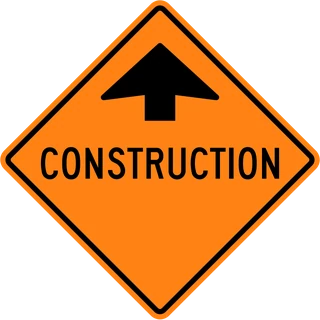
Construction ahead

Construction ahead

Orange diamond: a work zone begins ahead. Slow down, obey all temporary signs and flag persons; fines for speeding are doubled where workers are present in most provinces.

Remember: Orange = temporary. Treat it like yellow, but with people in the road.
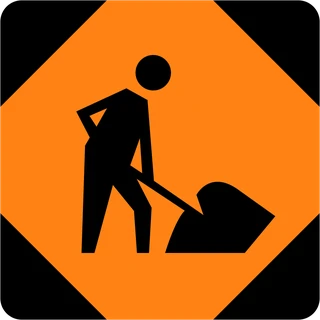
Workers ahead

Workers ahead

People are working on or beside the road. Reduce speed, keep away from workers and equipment, and be ready to stop.
Remember: Digging figure: slow for the crew.

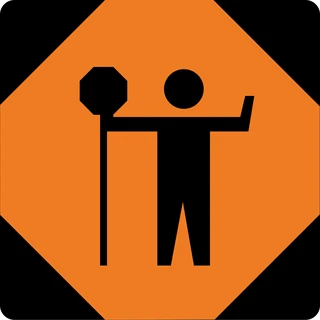
Flag person ahead

Flag person ahead

A traffic-control person is directing traffic ahead. You must obey their STOP/SLOW paddle exactly as you would a police officer.

Remember: Person with a paddle: their sign outranks the lights.

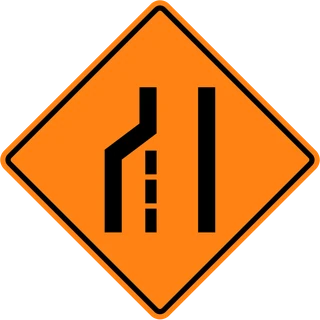
Lane closed ahead

Lane closed ahead

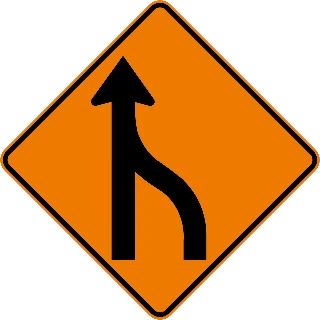
The left lane is closed ahead for work. Merge right early and smoothly.

Remember: Orange lane-ends: merge before the cones.

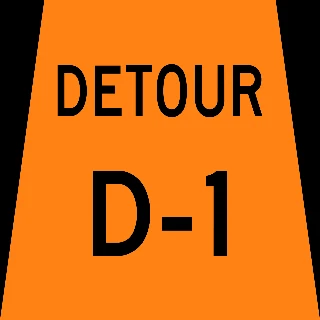
Detour route marker

Detour route marker

Marks a numbered detour route: follow these markers to get around a closed section of road.

Remember: Orange DETOUR marker: stay on this numbered route.

Work zone maximum speed

Work zone maximum speed

A temporary lower limit through the work zone. It is enforceable like any speed limit, and fines are typically doubled when workers are present.

Remember: Orange border on the speed sign: temporary and expensive.

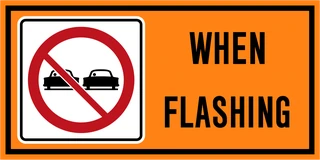
Do not pass when flashing

Do not pass when flashing

Used behind snow plows and work convoys: when the lights flash, do not pass. Staggered plows clear the whole width; never pass between them.

Remember: Flashing = stay behind the plow.

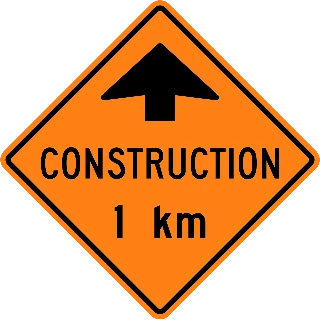
Construction 1 km ahead

Construction 1 km ahead

A construction zone begins 1 km ahead. Slow down, watch for lane changes, workers and equipment, and obey temporary signs and traffic control persons.

Remember: Orange diamond with a distance: get ready, the work zone is coming.

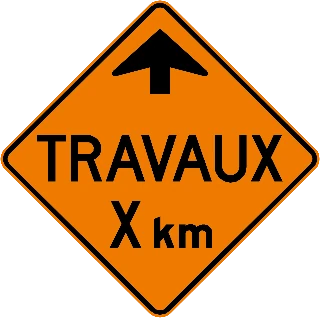
Road work ahead (TRAVAUX X km)

Only in Québec

Road work ahead (TRAVAUX X km)

Québec orange sign: a work zone begins in the distance shown. Slow down, expect lane closures and workers.

Remember: Orange = temporary; TRAVAUX + distance = get ready now.

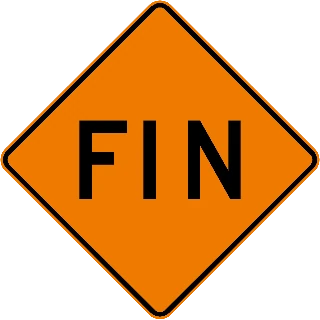
End of work zone (FIN)

Only in Québec

End of work zone (FIN)

Québec orange sign: the work zone ends here. The normal posted speed limit applies again after this point.

Remember: FIN on orange: the work zone is over.

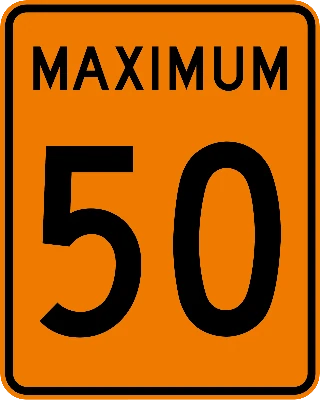
Work zone maximum speed (Québec)

Only in Québec

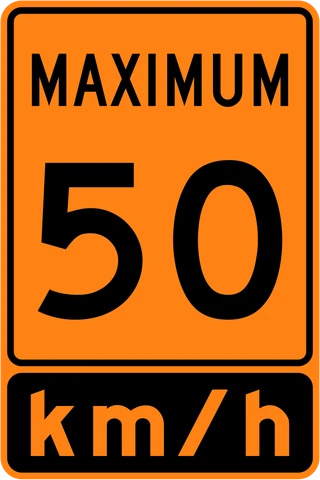
Work zone maximum speed (Québec)

Québec orange speed sign: a temporary maximum of 50 km/h applies through the work zone. It is enforceable like any limit, and fines are doubled in work zones.

Remember: Orange MAXIMUM: same force as white, double the fine.

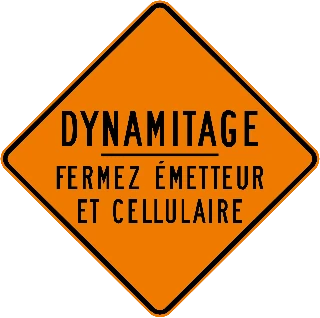
Blasting zone (DYNAMITAGE)

Only in Québec

Blasting zone (DYNAMITAGE)

Québec orange sign: blasting is under way. Turn off two-way radio transmitters and cell phones, which could set off the charges.

Remember: DYNAMITAGE: radio waves and explosives do not mix.

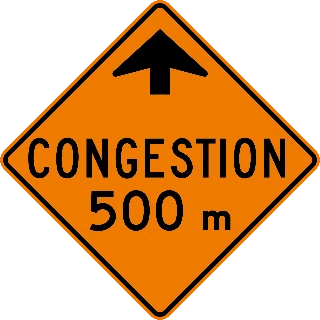
Congestion ahead

Only in Québec

Congestion ahead

Québec orange sign: traffic is slowed or stopped in the distance shown (here 500 m). Slow down, watch the vehicles ahead and be ready to stop.

Remember: CONGESTION + distance: the queue starts soon, avoid a rear-end crash.

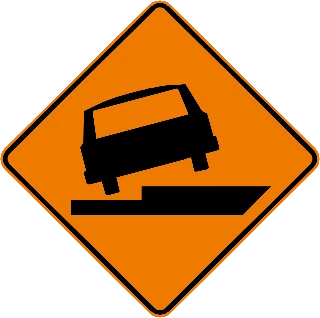
Low shoulder (work zone)

Only in Québec

Low shoulder (work zone)

Québec orange sign: the shoulder is temporarily lower than the pavement. If a wheel drops off the edge, ease off the accelerator, keep a firm grip and steer back gently once you have slowed.

Remember: A car tipping off the edge: stay on the pavement.

Lane ends (work zone, Québec)

Only in Québec

Lane ends (work zone, Québec)

Québec orange sign: one lane ends ahead in the work zone. Merge into the remaining lane early and smoothly, taking turns with other drivers.

Remember: Two lanes become one: merge early, one car at a time.

Construction zone begins

Only in Ontario

Construction zone begins

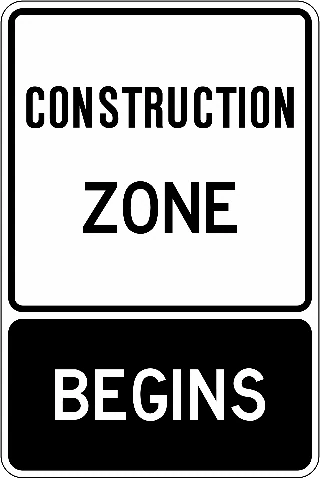
Ontario: a designated construction zone begins here. Speeding fines are doubled in a construction zone when workers are present.

Remember: BEGINS: from here on, workers are near and speeding costs double.

Construction zone ends

Only in Ontario

Construction zone ends

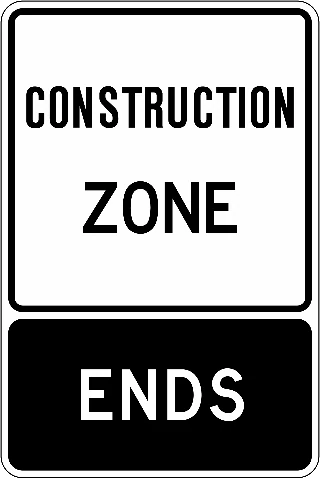
Ontario: the designated construction zone ends here; the doubled fines no longer apply beyond this point.

Remember: ENDS in white on black: back to the normal rules.

Detour ahead

Detour ahead

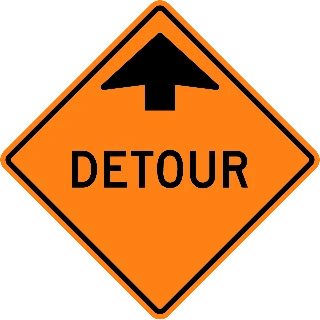
Temporary condition sign: the road ahead is closed and traffic is directed onto a detour. Be ready to follow the orange detour signs.

Remember: Arrow up plus DETOUR: the detour starts ahead, not here.

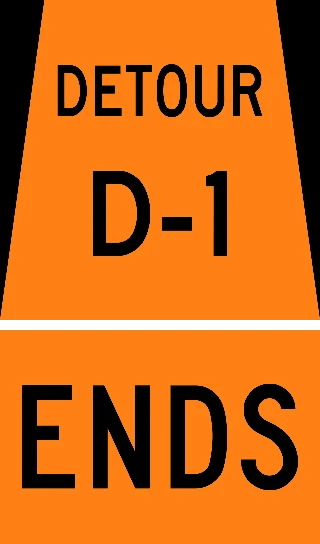
Detour ends

Detour ends

Marks the end of a numbered detour route (here D-1). You are back on your normal route.

Remember: D-1 ENDS: the numbered detour is over.

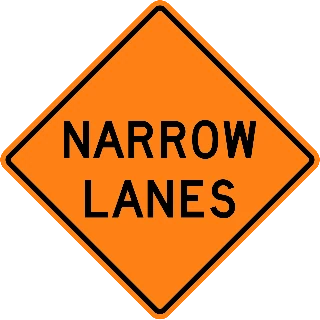
Narrow lanes

Narrow lanes

Temporary condition sign: the lanes through the work zone are narrower than usual. Slow down, stay centred in your lane and avoid driving beside large vehicles.

Remember: Narrow lanes leave no room for error: slow and centred.

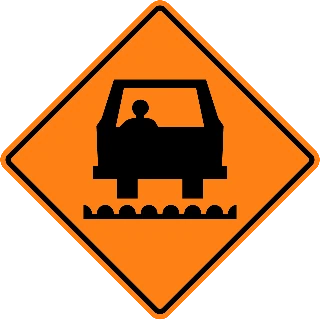
Grooved pavement

Grooved pavement

Temporary condition sign: the pavement has been milled into grooves. Steering may feel loose and grip is reduced, especially for motorcycles. Slow down and steer gently.

Remember: A car on ridges: the road surface will feel strange.

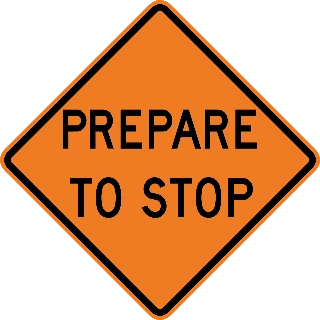
Prepare to stop

Prepare to stop

Temporary condition sign: traffic may be stopped ahead, for example by a traffic control person or a temporary signal. Slow down and be ready to stop.

Remember: Words on orange: someone ahead may hold traffic.

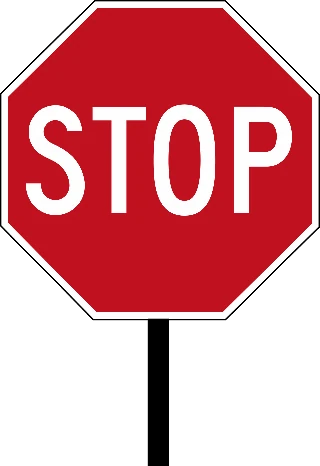
Traffic control person: STOP

Traffic control person: STOP

The STOP side of a traffic control person's paddle. Stop and stay stopped until the paddle is turned to SLOW or you are directed to go. It must be obeyed like a stop sign.

Remember: A stop sign on a pole in a worker's hand: same rule.

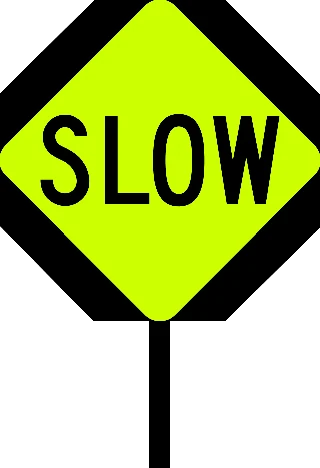
Traffic control person: SLOW

Traffic control person: SLOW

The SLOW side of a traffic control person's paddle. Proceed slowly and carefully past the work area, watching for workers and equipment.

Remember: SLOW is permission to move, not to speed up.

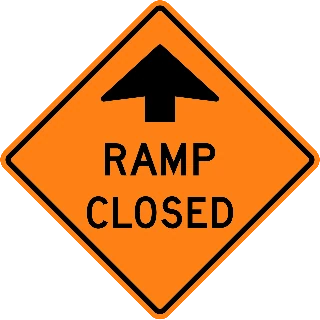
Ramp closed ahead

Ramp closed ahead

Temporary condition sign: the ramp ahead is closed. Plan to use another exit or entrance.

Remember: RAMP CLOSED: pick another exit before you reach it.

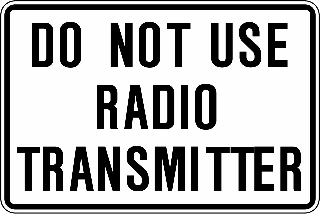
Do not use radio transmitter

Do not use radio transmitter

Posted near blasting work: do not transmit with two-way radios (and similar devices), because radio signals can set off blasting caps.

Remember: A blasting zone sign: silence your transmitter.

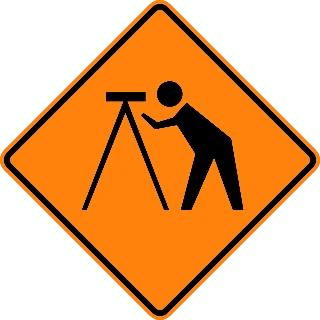
Survey crew

Survey crew

Temporary condition sign: a survey crew is working on or near the road. Slow down and watch for people and instruments near the lane.
Remember: A worker behind a tripod: people with eyes on their instrument, not on you.

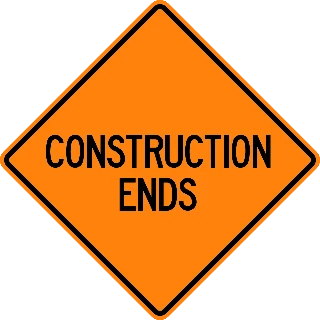
Construction ends

Construction ends

Temporary condition sign: the construction area ends here. Normal driving and the regular posted limit resume after the work area.

Remember: CONSTRUCTION ENDS: the orange zone is behind you.

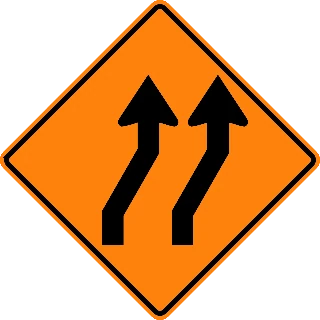
Lane shift

Lane shift

Temporary condition sign: the lanes shift to the side ahead (here to the right) because of the work. Follow the new lane lines and cones.

Remember: Both arrows bend together: the whole road moves over.

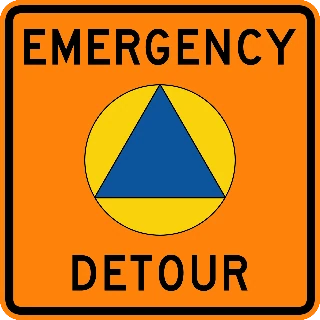
Emergency Detour Route (EDR)

Only in Ontario

Emergency Detour Route (EDR)

Ontario Emergency Detour Route marker: when a provincial highway is closed by a collision or other emergency, follow these markers to go around the closure and back to the highway.

Remember: EMERGENCY DETOUR: a ready-made bypass for highway closures.

Two-way traffic ahead (temporary)

Two-way traffic ahead (temporary)

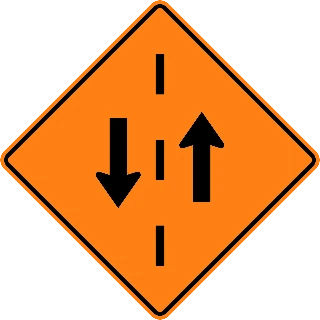
Temporary condition sign: because of work, traffic in both directions will share the road ahead, for example when one side of a divided highway is closed. Keep right.

Remember: Arrows up and down on orange: oncoming traffic is coming to your road.
Right lane closed ahead (temporary)

Right lane closed ahead (temporary)

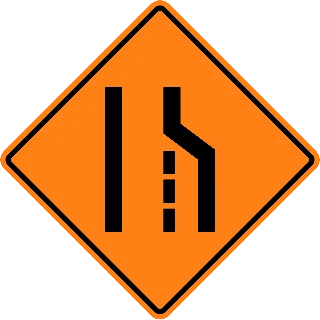
Temporary condition sign: the right lane is closed ahead because of work. Move left early and merge smoothly.

Remember: The broken right line ends: the right lane is the one closing.

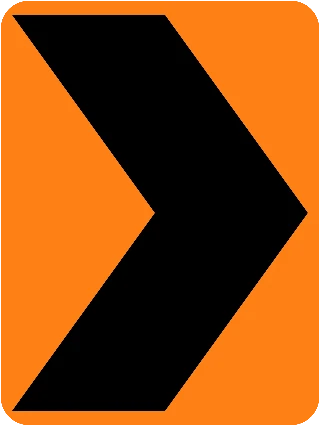
Temporary curve chevron

Temporary curve chevron

Orange chevron in a work zone: the temporary road alignment turns in the direction of the point (here to the right). Slow down and follow it.

Remember: Black chevron on orange: a work zone curve, often sharper than it looks.

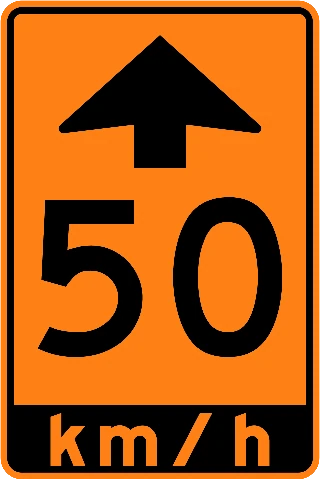
Work zone speed limit ahead

Work zone speed limit ahead

Temporary condition sign: a lower work zone speed limit (here 50 km/h) begins ahead. Start slowing down now so you reach it at that speed.

Remember: Arrow above the number: the limit is coming, not yet here.

Automated flagger ahead

Only in Ontario

Automated flagger ahead

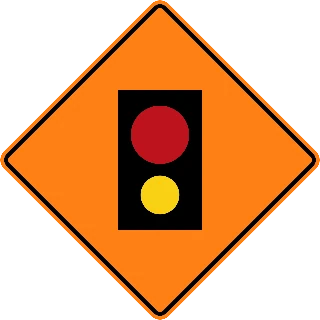
Ontario temporary condition sign: an automated flagger assistance device or temporary signal controls traffic ahead. Be ready to stop when it shows red.

Remember: A traffic light on orange: a temporary signal ahead.