The Class 7 learner's knowledge test has 30 multiple-choice questions and you need 25 correct to pass. It is taken at an Alberta registry agent, in many languages. This practice test uses the same format: 30 questions, 25 to pass, no time limit.
Facts checked in November 2026 against each province's official site. Rules and fees change, so confirm with your province before your test.
Questions that apply in Alberta
Free questions with answers and explanations. Tap an answer to check it.
Applies in Alberta, Saskatchewan
1Alberta and Saskatchewan have no province-wide minimum distance for passing a cyclist; where a minimum exists it is set by a municipal bylaw (for example 1 m in Calgary, Edmonton and Saskatoon).
Explanation
True. Both provinces still rely on the general duty to pass safely; the 1 m / 1.5 m rules in Calgary, Edmonton and Saskatoon are municipal bylaws.
Research brief §2.19 (AB & SK: no provincial passing distance; municipal bylaws)
Applies in Alberta
2An Alberta Class 7 learner must be accompanied by:
Explanation
The supervisor must be at least 18 and hold a full (non-GDL) licence; learners may not drive between midnight and 5 a.m. and passengers are limited to the number of seat belts.
Alberta — Class 7 learner's licence / Get a driver's licence (alberta.ca)
Applies in Alberta
3Alberta's guide gives a memory aid for snowplow warning lights. Which lights mean a snowplow is ahead?
Explanation
Alberta snowplows use flashing amber and red lights: 'flashing amber and red means snowplow ahead'. Keep a safe following distance; many plows show the minimum safe distance on a rear sign.
Alberta Driver's Guide (2026) (contains information licensed under the Open Government Licence – Alberta), Ch. 8 Snowplows
Applies in Alberta
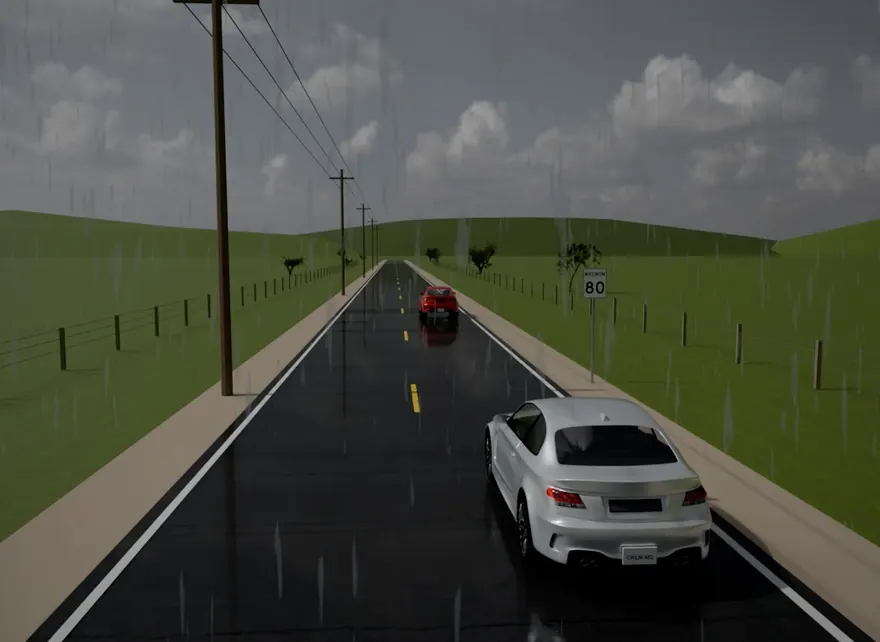
4In Alberta, driving at any speed that is unsafe for the current conditions is illegal, even if it is below the posted limit.
Explanation
Alberta's guide says speed limits are the maximum permitted when conditions are ideal, and any speed that is unsafe for the current conditions is illegal.
Alberta Driver's Guide (2026) (contains information licensed under the Open Government Licence – Alberta), Ch. 2 Speed limit signs
Applies in Alberta
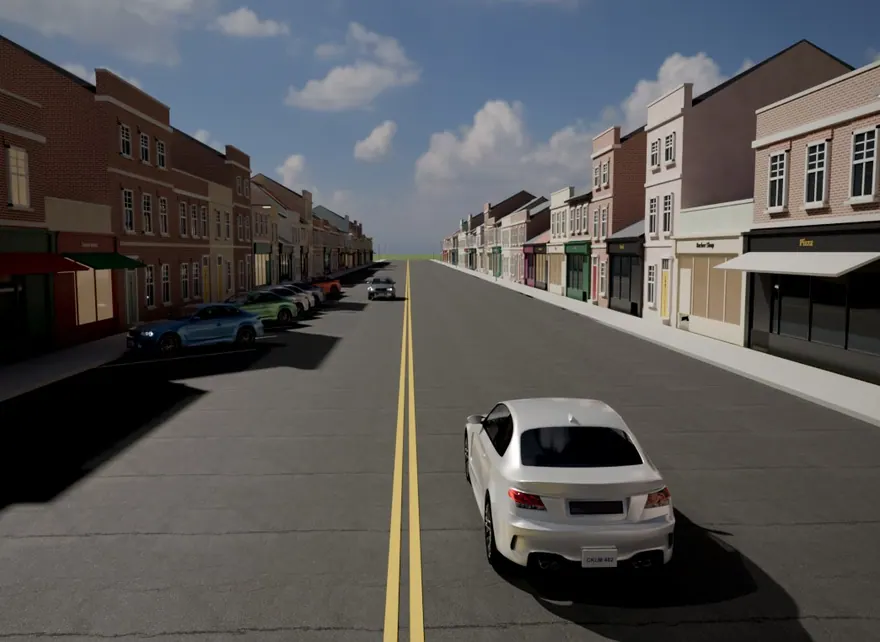
5In Alberta, you may cross the oncoming lane of a city street to enter an angle-parking stall on your left.
Explanation
Alberta's guide says to enter a perpendicular or angle stall on your left only when you are in a parking lot. On a street, angle stalls are entered from the right side.
Alberta Driver's Guide (2026) — Perpendicular parking
Applies in Alberta
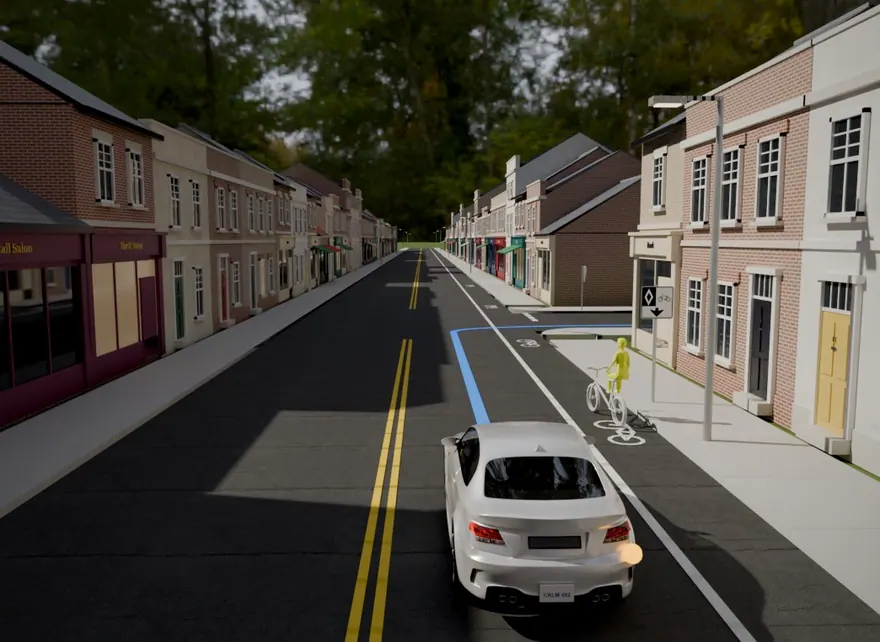
6In Alberta, a 'Turning vehicles yield to bicycles' sign at a conflict zone means a driver turning across the bicycle lane must let cyclists go first.
Explanation
Alberta places this sign where drivers must cross a bicycle lane to turn. Check mirrors and blind spot, and yield to any cyclist in or approaching the bike lane before turning.
Alberta Driver's Guide (2026), ch. 2 — Traffic control (shared-use lanes)
Frequently asked questions
How many questions are on the knowledge test?
The Class 7 learner's knowledge test has 30 multiple-choice questions and you need 25 correct to pass. It is taken at an Alberta registry agent, in many languages. This practice test uses the same format: 30 questions, 25 to pass, no time limit.
What do I need to bring to the test?
Some testing centres take walk-ins (Alberta registry agents, Ontario DriveTest centres), others need an appointment (SAAQ in Québec, ICBC in BC, Manitoba Public Insurance in most places). Bring original proof of identity, date of birth and signature (for example a passport, birth certificate, PR card or provincial health card) and, under 18, a parent's consent where required. A vision test is usually done the same day. Each attempt has a fee, which varies by province. Use the official link on your province's card in this app for the current rules and prices.
What happens if I fail?
There is no limit on attempts, but each one costs a fee and most provinces impose a wait: next day in Alberta and Saskatchewan, 7 days for GDL applicants in Manitoba, and 28 days in Québec and one day in BC. Ontario lets you retake either failed part (signs or rules) separately. Review the sections you missed in the app's weak-topic drill before rebooking.
Are these the real test questions?
No. Every question here and in the app is an original practice question written from the provincial handbooks. Real test questions are never reproduced. The questions practise the same rules, signs and numbers the handbooks teach.
Is Theory Hub connected to DriveTest, ICBC or the SAAQ?
Independent study app. Not affiliated with, endorsed by or connected to DriveTest, the Ontario Ministry of Transportation, ICBC, Alberta Registries, SAAQ, Manitoba Public Insurance, SGI or any provincial, territorial or federal government. All questions are original practice questions written from the official handbooks; real test questions are never reproduced. Rules and fees change — always confirm with your province's official site before your test.