The Class 5 Level I written test has multiple-choice questions on rules of the road, safe driving and road signs, and you need 85% to pass. It is taken online through MyGovNL or in person at Motor Registration. The number of questions is not published; this practice test has 40 questions and you need 34 (85%) to pass.
Facts checked in November 2026 against each province's official site. Rules and fees change, so confirm with your province before your test.
Questions that apply in Newfoundland and Labrador
Free questions with answers and explanations. Tap an answer to check it.
Applies in Newfoundland and Labrador
1In St. John's, you want to let a friend out of your car for a few seconds at a curb marked by a BUS STOP sign. What does Newfoundland and Labrador's Highway Traffic Act say?
Explanation
NL HTA s.106(30): where bus stop signs are erected, no other vehicle shall stop or park at a bus stop. A plain No Parking sign, by contrast, still allows a brief stop to pick up or drop off passengers unless it says otherwise (s.106(28)).
Newfoundland and Labrador Highway Traffic Act, RSNL 1990 c. H-3, s.106(30)
Applies in Newfoundland and Labrador, Prince Edward Island
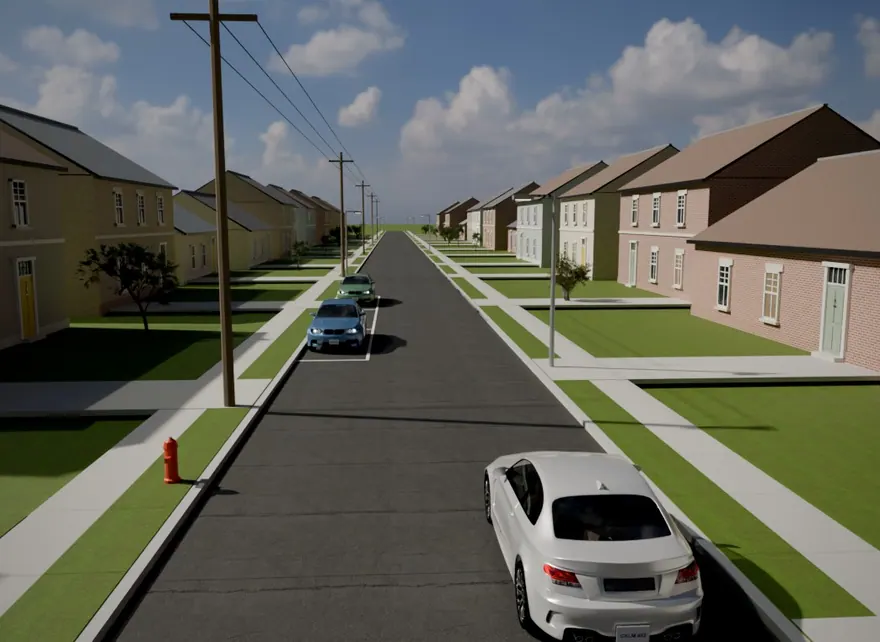
2On a two-way street in Newfoundland and Labrador or on Prince Edward Island, there is a free space on the LEFT side, facing oncoming traffic. Unless the traffic authority permits it, may you park there?
Explanation
NL HTA s.145 and PEI HTA s.206: except where a traffic authority permits otherwise, stop, stand or park only on the right side of the highway, parallel to it and, where there is a curb, with the wheels within 30 cm (PEI: 300 mm) of it.
Newfoundland and Labrador Highway Traffic Act, RSNL 1990 c. H-3, s.145; PEI Highway Traffic Act (current to 29 May 2026), s.206
Applies in Newfoundland and Labrador
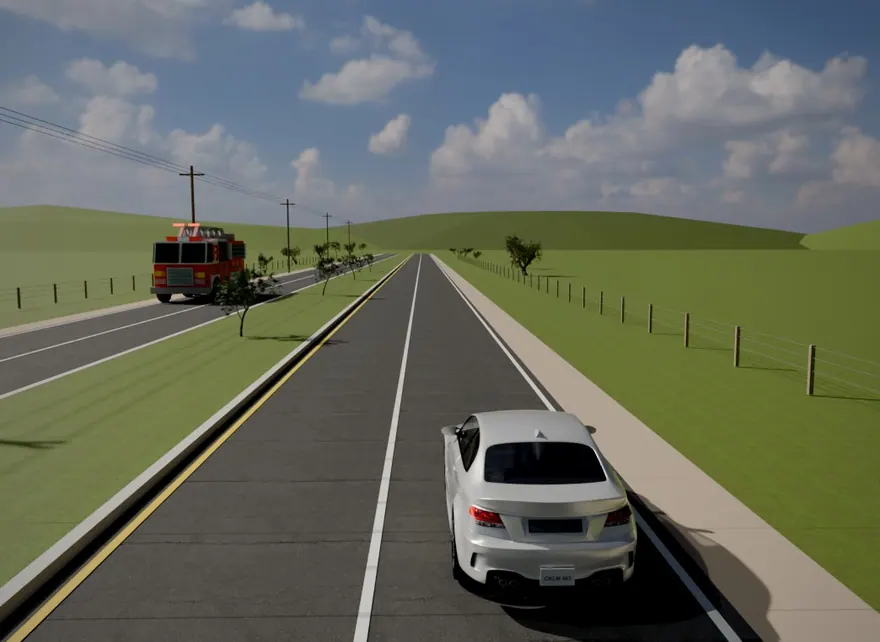
3You are on a Newfoundland and Labrador highway with two separate roadways divided by a wide median. A fire truck with siren and flashing red lights is coming the other way on the opposite roadway. What does the law require of you?
Explanation
NL HTA s. 121 requires drivers to pull over and stop for an approaching emergency vehicle, but s. 122 says a driver on a highway with separate roadways need not stop when the emergency vehicle is on a different roadway.
Newfoundland and Labrador Highway Traffic Act, RSNL 1990 c. H-3, ss. 121 and 122
Applies in Newfoundland and Labrador
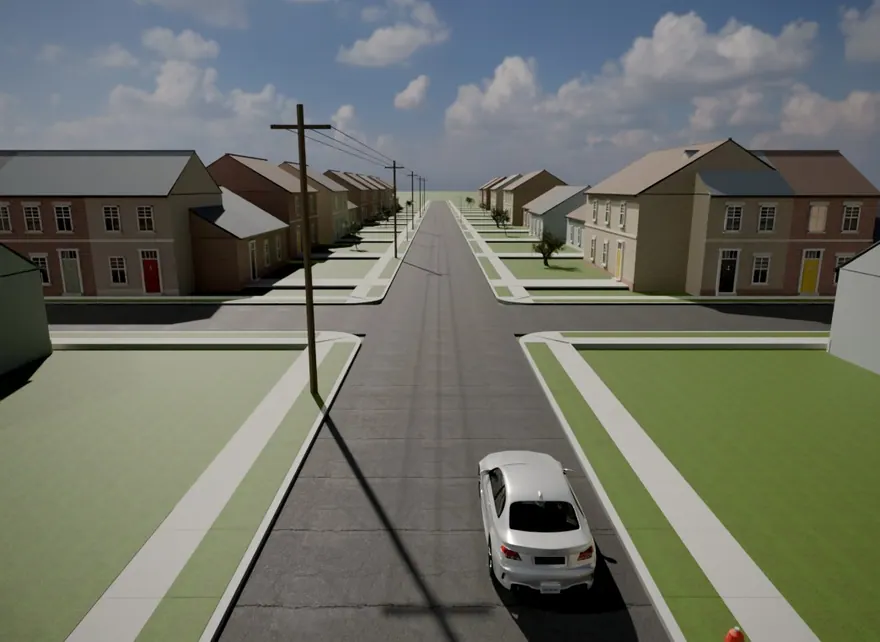
4You need to park near a street corner in Newfoundland and Labrador. Unless signs allow otherwise, how close to the intersection may you stop?
Explanation
NL HTA s.144(c) forbids stopping, standing or parking within an intersection or within 6 m of one, except where an urban traffic authority provides otherwise or to obey a traffic officer or device.
Newfoundland and Labrador Highway Traffic Act, RSNL 1990 c. H-3, s.144(c)
Applies in Newfoundland and Labrador, Prince Edward Island
5In a public lot in Newfoundland and Labrador or on Prince Edward Island, a parking space is painted blue. What does that mean?
Explanation
NL's handbook says accessible ('blue zone') spaces are painted blue in whole or part and are only for a permit holder or a person accompanying one. PEI HTA s.206.1 also lets a blue-painted area designate an accessible space.
NL Driver's Handbook (Jan 2025) — Accessible parking; PEI Highway Traffic Act (current to 29 May 2026), s.206.1(1)(b)
Applies in Newfoundland and Labrador
6An 18-year-old in Newfoundland and Labrador is applying for a driver's licence for the first time. In which case is a parent's or guardian's signature NOT needed?
Explanation
Newfoundland and Labrador requires a parent's or guardian's consent for first-time applicants under 19, given in person at a Motor Registration office. It is not required if the applicant can document that they are married or self-supporting. Consent can be withdrawn in writing until age 19.
The Class 5 Level I written test has multiple-choice questions on rules of the road, safe driving and road signs, and you need 85% to pass. It is taken online through MyGovNL or in person at Motor Registration. The number of questions is not published; this practice test has 40 questions and you need 34 (85%) to pass.
What do I need to bring to the test?
Some testing centres take walk-ins (Alberta registry agents, Ontario DriveTest centres), others need an appointment (SAAQ in Québec, ICBC in BC, Manitoba Public Insurance in most places). Bring original proof of identity, date of birth and signature (for example a passport, birth certificate, PR card or provincial health card) and, under 18, a parent's consent where required. A vision test is usually done the same day. Each attempt has a fee, which varies by province. Use the official link on your province's card in this app for the current rules and prices.
What happens if I fail?
There is no limit on attempts, but each one costs a fee and most provinces impose a wait: next day in Alberta and Saskatchewan, 7 days for GDL applicants in Manitoba, and 28 days in Québec and one day in BC. Ontario lets you retake either failed part (signs or rules) separately. Review the sections you missed in the app's weak-topic drill before rebooking.
Are these the real test questions?
No. Every question here and in the app is an original practice question written from the provincial handbooks. Real test questions are never reproduced. The questions practise the same rules, signs and numbers the handbooks teach.
Is Theory Hub connected to DriveTest, ICBC or the SAAQ?
Independent study app. Not affiliated with, endorsed by or connected to DriveTest, the Ontario Ministry of Transportation, ICBC, Alberta Registries, SAAQ, Manitoba Public Insurance, SGI or any provincial, territorial or federal government. All questions are original practice questions written from the official handbooks; real test questions are never reproduced. Rules and fees change — always confirm with your province's official site before your test.