The G1 knowledge test is taken at a DriveTest centre, on paper or on a computer, with multiple-choice questions on road signs and rules of the road. DriveTest asks for 80% overall. This practice test has 40 questions, 20 on signs and 20 on rules, and you need 32 to pass. There is no published time limit.
Facts checked in November 2026 against each province's official site. Rules and fees change, so confirm with your province before your test.
Ontario: the two-part G1 test
DriveTest asks for 80% overall on the G1 knowledge test, which covers road signs and rules of the road. The practice test in this app has 40 questions, 20 on signs and 20 on rules, asks for 32 of 40 overall and shows your signs and rules results separately. Aim for at least 80% in both parts.
Free questions with answers and explanations. Tap an answer to check it.
Applies in Ontario
1In Ontario, a few freeway entrance ramps join the freeway on the LEFT. What should you expect?
Explanation
When an entrance joins on the left, you enter the fastest lane first. Use the acceleration lane to match the traffic, increasing speed more quickly than on a right-side entrance.
Ontario MTO Driver's Handbook — Freeway driving (entering a freeway)
Applies in Ontario
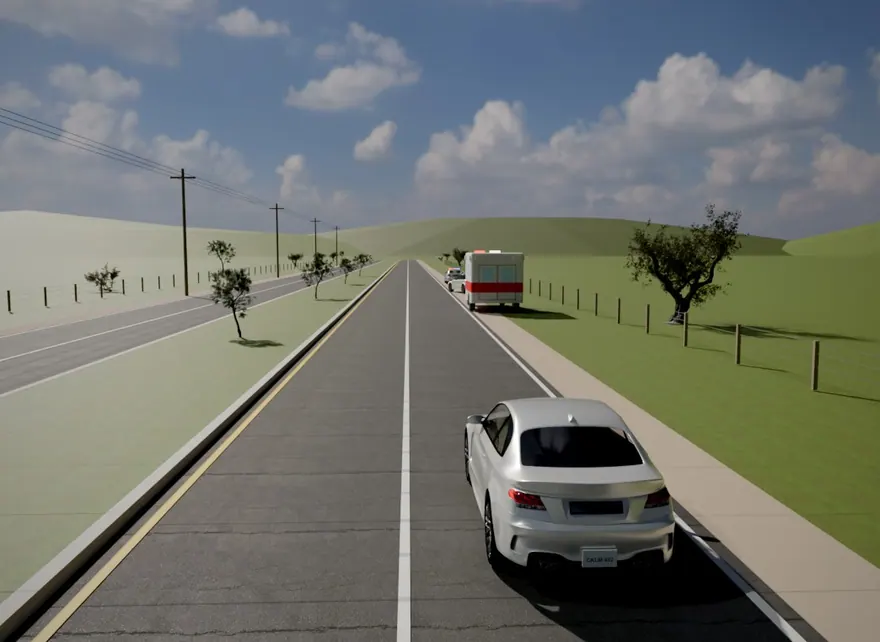
2You drive a manual-transmission car and must slow down for a stopped ambulance ahead. Ontario's handbook recommends you slow down how?
Explanation
Brake early and gradually. With a manual transmission, using the brakes instead of shifting down activates your brake lights and tells drivers behind that you are slowing.
Ontario MTO Driver's Handbook — Dealing with particular situations (Reacting to a stopped emergency vehicle or tow truck)
Applies in Ontario
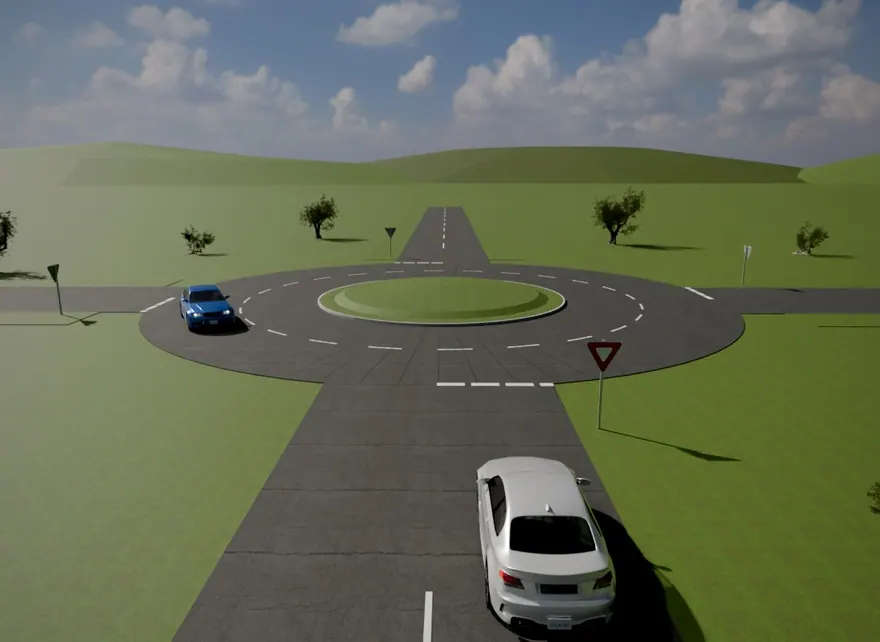
3Some older 'traffic circles' still exist in Ontario. How do they differ from modern roundabouts?
Explanation
Older traffic circles are larger, allow higher speeds and force traffic to merge and weave. Modern roundabouts have a smaller diameter and splitter islands that slow traffic, and entry follows the yield-to-the-left principle: circulating traffic has the right-of-way.
Ontario MTO Driver's Handbook — Changing directions (traffic circles vs modern roundabouts)
Applies in Ontario
4In Ontario, a driver caught not wearing a seat belt receives a fine and:
Explanation
Ontario assigns 2 demerit points for the driver not wearing a belt, and 2 more for failing to secure a child or a passenger under 16; fines run $200–$1,000.
Ontario demerit point table; MTO handbook — Getting ready to drive
Applies in Ontario, Newfoundland and Labrador, Prince Edward Island
5A two-way road has three marked lanes, and the centre lane has no special signs or arrows. For which purposes may you drive in the centre lane? Select all that apply.
Select all that apply
Explanation
The Ontario, NL and PEI Highway Traffic Acts limit the centre lane of a three-lane road to passing (with a clear view and the lane clear), preparing for a left turn, or where signs designate it for your direction.
Ontario Highway Traffic Act s.154(1)(b); Newfoundland and Labrador Highway Traffic Act, RSNL 1990 c. H-3, s.101(h); PEI Highway Traffic Act (current to 29 May 2026), s.159(i)
Applies in Ontario
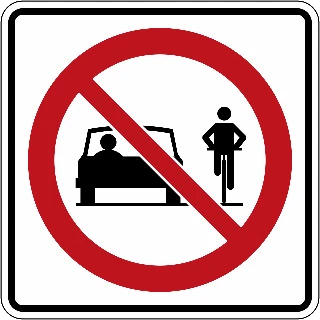
6What does this sign mean?
Explanation
The red circle with a car beside a cyclist prohibits passing bicycles. Wait behind the cyclist until the section ends and you can pass safely.
Ontario MTO Driver's Handbook, Signs (regulatory)
Frequently asked questions
How many questions are on the knowledge test?
The G1 knowledge test is taken at a DriveTest centre, on paper or on a computer, with multiple-choice questions on road signs and rules of the road. DriveTest asks for 80% overall. This practice test has 40 questions, 20 on signs and 20 on rules, and you need 32 to pass. There is no published time limit.
What do I need to bring to the test?
Some testing centres take walk-ins (Alberta registry agents, Ontario DriveTest centres), others need an appointment (SAAQ in Québec, ICBC in BC, Manitoba Public Insurance in most places). Bring original proof of identity, date of birth and signature (for example a passport, birth certificate, PR card or provincial health card) and, under 18, a parent's consent where required. A vision test is usually done the same day. Each attempt has a fee, which varies by province. Use the official link on your province's card in this app for the current rules and prices.
What happens if I fail?
There is no limit on attempts, but each one costs a fee and most provinces impose a wait: next day in Alberta and Saskatchewan, 7 days for GDL applicants in Manitoba, and 28 days in Québec and one day in BC. Ontario lets you retake either failed part (signs or rules) separately. Review the sections you missed in the app's weak-topic drill before rebooking.
Are these the real test questions?
No. Every question here and in the app is an original practice question written from the provincial handbooks. Real test questions are never reproduced. The questions practise the same rules, signs and numbers the handbooks teach.
Is Theory Hub connected to DriveTest, ICBC or the SAAQ?
Independent study app. Not affiliated with, endorsed by or connected to DriveTest, the Ontario Ministry of Transportation, ICBC, Alberta Registries, SAAQ, Manitoba Public Insurance, SGI or any provincial, territorial or federal government. All questions are original practice questions written from the official handbooks; real test questions are never reproduced. Rules and fees change — always confirm with your province's official site before your test.