SGI's Class 7 learner test is written as two separate tests: a basic test on rules and driving situations, and a sign test. If you fail one, you rewrite only that one. SGI does not publish the number of questions or the pass marks. This practice test has 20 rules questions and 20 sign questions, and you need 16 in each part.
Facts checked in November 2026 against each province's official site. Rules and fees change, so confirm with your province before your test.
Questions that apply in Saskatchewan
Free questions with answers and explanations. Tap an answer to check it.
Applies in Saskatchewan
1Your engine stalls while you are driving in Saskatchewan, and the steering and brakes suddenly feel very heavy. What does SGI suggest trying?
Explanation
SGI: if the engine stalls you lose power assistance and must use much more force on the brake and steering wheel. Try shifting to neutral and restarting the engine, then return the shift lever to drive.
SGI Saskatchewan Driver's Handbook 2026-27 §6.10 Emergency driving (Power steering or power brake failure)
Applies in Saskatchewan
2In Saskatchewan, an ambulance is stopped with its lights flashing on the far side of the road. When does the 60 km/h passing limit apply to you, travelling in the opposite direction?
Explanation
SGI's handbook says the 60 km/h limit for passing a stopped emergency vehicle does not apply to vehicles travelling in the opposite direction on a divided highway, but it does apply to opposite-direction traffic on an undivided highway.
SGI Saskatchewan Driver's Handbook 2026-27 §3.4 Sharing the road with emergency vehicles
Applies in Saskatchewan
3In Saskatchewan, how fast may you drive past a stopped emergency vehicle or tow truck with flashing lights?
Explanation
Saskatchewan's limit when passing stopped emergency vehicles, tow trucks and snow plows with flashing lights is 60 km/h.
4In Saskatchewan, what are the basic rules for e-scooter riders where a community allows them on the road?
Explanation
E-scooters are limited-speed motor vehicles allowed only where a municipal bylaw permits them. They need no registration or licence, but riders must be 16 or older, wear an approved helmet and follow local rules. Drivers must share the road with them.
SGI Saskatchewan Driver's Handbook 2026-27 §3.4 Sharing the road with e-scooters
Applies in Saskatchewan
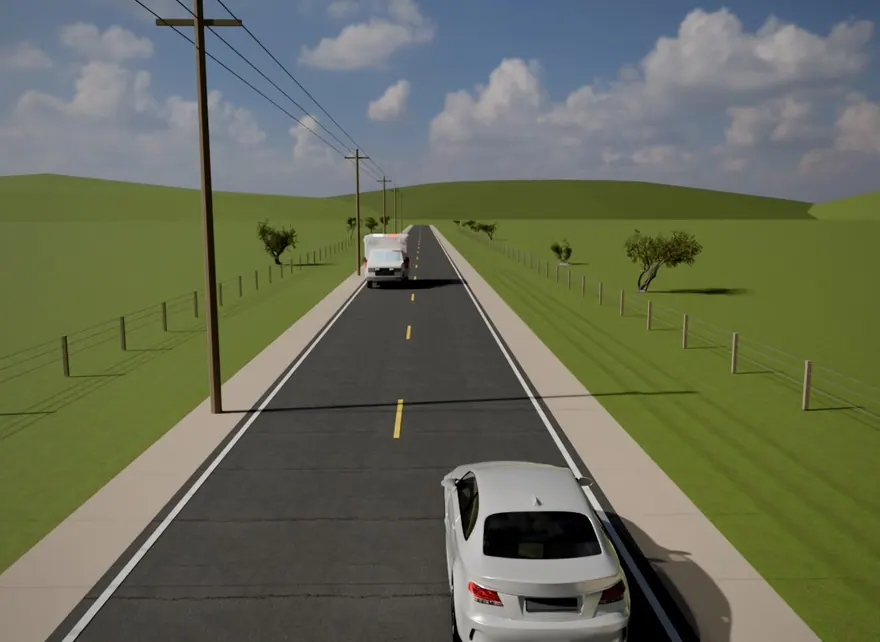
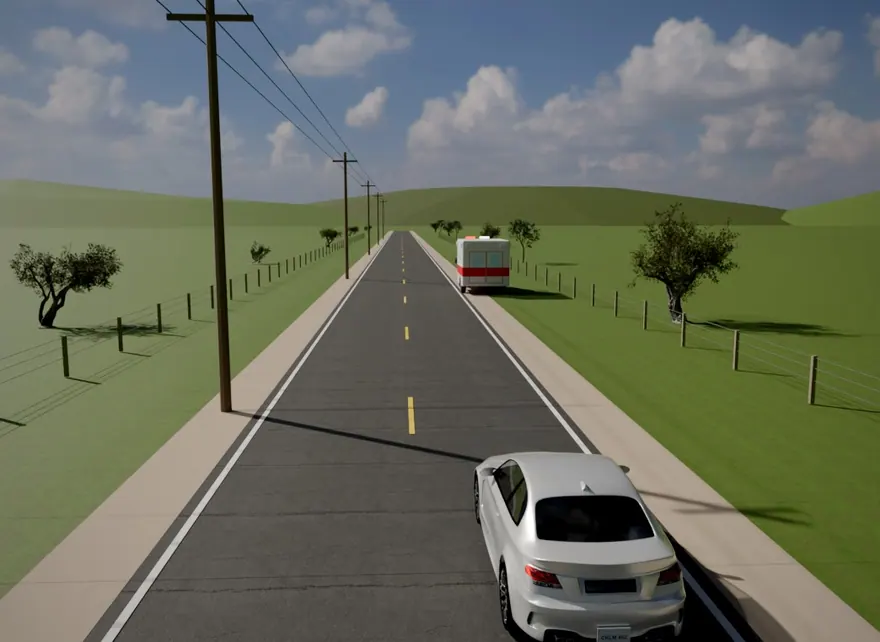
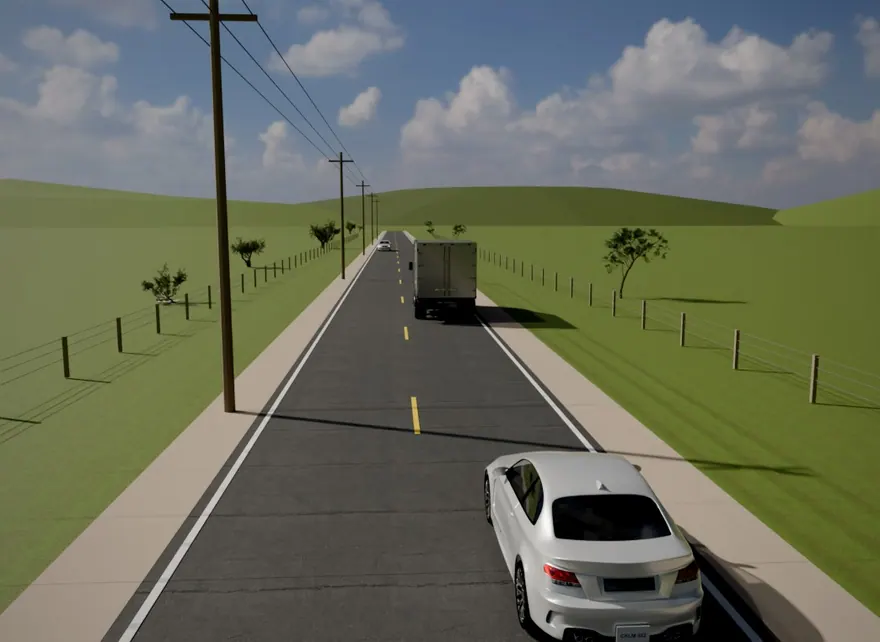
5On a Saskatchewan two-lane highway, you are getting ready to pass a slow vehicle. What following distance does SGI tell you to keep before you start the pass?
Explanation
SGI: before passing, keep a minimum three-second following distance, then accelerate to build up speed. Keep accelerating through the pass, but never above the speed limit, and return only when you can see the passed vehicle in your inside mirror.
6You are trying to pull away on packed snow on a slight downgrade in Saskatchewan, and gentle acceleration is not working. What does SGI suggest?
Explanation
SGI: you can usually start moving on ice or packed snow by accelerating gently; if that does not work, or if you are on a slight downgrade, try moving in second gear, which sends less power to the wheels and helps prevent spinning.
SGI Saskatchewan Driver's Handbook 2026-27 §6.8 Winter driving (How to get moving)
Frequently asked questions
How many questions are on the knowledge test?
SGI's Class 7 learner test is written as two separate tests: a basic test on rules and driving situations, and a sign test. If you fail one, you rewrite only that one. SGI does not publish the number of questions or the pass marks. This practice test has 20 rules questions and 20 sign questions, and you need 16 in each part.
What do I need to bring to the test?
Some testing centres take walk-ins (Alberta registry agents, Ontario DriveTest centres), others need an appointment (SAAQ in Québec, ICBC in BC, Manitoba Public Insurance in most places). Bring original proof of identity, date of birth and signature (for example a passport, birth certificate, PR card or provincial health card) and, under 18, a parent's consent where required. A vision test is usually done the same day. Each attempt has a fee, which varies by province. Use the official link on your province's card in this app for the current rules and prices.
What happens if I fail?
There is no limit on attempts, but each one costs a fee and most provinces impose a wait: next day in Alberta and Saskatchewan, 7 days for GDL applicants in Manitoba, and 28 days in Québec and one day in BC. Ontario lets you retake either failed part (signs or rules) separately. Review the sections you missed in the app's weak-topic drill before rebooking.
Are these the real test questions?
No. Every question here and in the app is an original practice question written from the provincial handbooks. Real test questions are never reproduced. The questions practise the same rules, signs and numbers the handbooks teach.
Is Theory Hub connected to DriveTest, ICBC or the SAAQ?
Independent study app. Not affiliated with, endorsed by or connected to DriveTest, the Ontario Ministry of Transportation, ICBC, Alberta Registries, SAAQ, Manitoba Public Insurance, SGI or any provincial, territorial or federal government. All questions are original practice questions written from the official handbooks; real test questions are never reproduced. Rules and fees change — always confirm with your province's official site before your test.