CATheory Hub
English

Free two-part learner's practice test (SK, NS, NB)

Saskatchewan, Nova Scotia and New Brunswick test road signs and rules of the road as two separate parts, and you must pass each one. This practice test has 20 questions in each part and asks for 16 in each. A question marked with a province applies only there; your province's page lists its own numbers.

40questions
16 + 16to pass
∞no time limit

Saskatchewan learner's test · Nova Scotia learner's test · New Brunswick Class 7 learner's test

Answer every question, then press Finish. You will see your score, each part's result and an explanation for every question.

Part 1Road signs 20 questions · 16 to pass

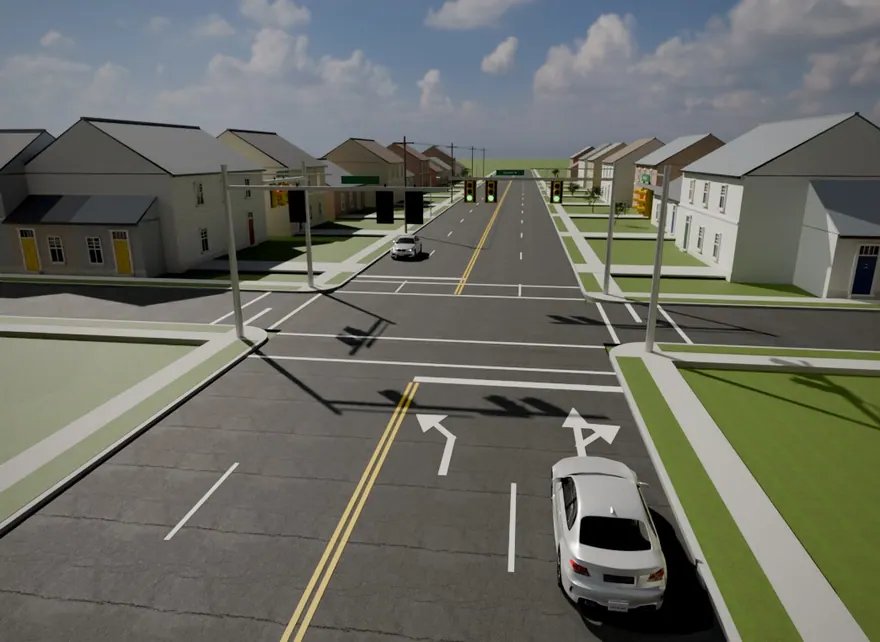
1Your lane has an arrow that points both straight ahead and to the right. What may you do from this lane?
Explanation

A white arrow on the pavement means you may move only in the directions it shows; a combined arrow allows both movements.

Ontario MTO Driver's Handbook — Pavement markings (arrows)
Applies in Nova Scotia

2In Nova Scotia, you are driving up a long hill in the right-hand climbing lane at less than 70 km/h. What should you do?

Explanation

On Nova Scotia climbing lanes, all traffic keeps right unless passing, and vehicles travelling at less than 70 km/h use their four-way flashers to warn others.

Nova Scotia Driver's Handbook (2026) §3.5.2 Highway with climbing lane

Applies in Saskatchewan

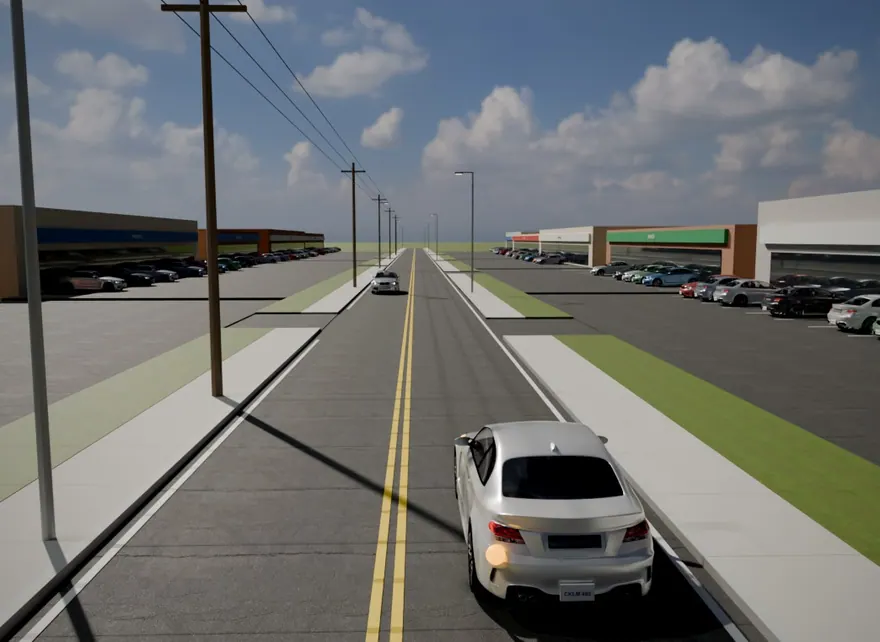
3In Saskatchewan, a highway has double solid yellow centre lines. Between two intersections you see a gas station on your left. May you turn left into it across the lines?

Explanation

SGI's handbook illustrates that a driver with a solid yellow line on their side, including double solid lines, must not pass or make a left turn between intersections. Go on to an intersection and come back. Other provinces (e.g. MB, NL, PE) allow crossing to enter a driveway.

SGI Saskatchewan Driver's Handbook 2026-27 §3.7 Directional dividing lines (illustrations)

Applies in Nova Scotia

4In Nova Scotia, a flashing light unit in a work zone shows two arrowheads pointing in opposite directions. What does it tell you?

Explanation

Two arrowheads mean the lane ahead is closed or obstructed and it is safe to pass the unit on either side. A single arrowhead means pass only on the side shown.

Nova Scotia Driver's Handbook (2026) §3.7.8 Flashing light unit (2 arrowheads)

5At a red light the white stop line is painted several metres before the crosswalk. Where must you stop?

Explanation

When a stop line is marked you must stop before it; the crosswalk, sidewalk edge and intersection edge are only fallbacks when there is no line.

Ontario MTO Driver's Handbook — Pavement markings (stop line)

Applies in Saskatchewan, New Brunswick

6On a cold October morning, the air temperature is around 0 °C and you pass a yellow 'surface subject to icing' sign just before a bridge. What is it warning you about?

Explanation

The Saskatchewan and New Brunswick handbooks explain this sign: a bridge or roadway surface may be slippery at zero degrees Celsius, so slow down. Bridges freeze before the rest of the road.

SGI Saskatchewan Driver's Handbook 2026-27 §4.9 Warning signs (surface subject to icing); New Brunswick Driver's Handbook, Part 7 — Traffic signs (7.4)

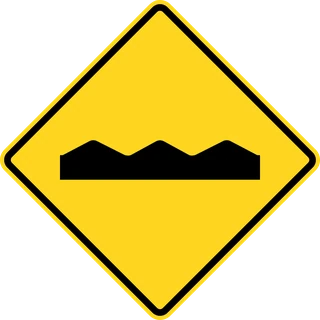
7What should you do when you pass this sign?

Explanation

The bump sign warns of a bump or uneven pavement. Slow down so you keep control of your vehicle and avoid damage.

Ontario MTO Driver's Handbook — Signs (bump or uneven pavement ahead); signs.json bump

Applies in Manitoba, Saskatchewan

8A warning sign reading PREPARE TO STOP has amber lights that are flashing. What does this mean?

Explanation

Flashing amber lights on this advance sign warn that the signal ahead is red or about to change to red. Slow down and be ready to stop.

Manitoba Driver's Handbook (MPI) — Warning signs (prepare to stop); SGI Saskatchewan Driver's Handbook 2026-27 §4.15

Applies in Ontario, Nova Scotia

9A two-lane highway gains an extra lane on a long hill (a passing or climbing lane). Which lane should slower vehicles use?

Explanation

Passing and climbing lanes let slower vehicles move into the right-hand lane so faster ones can pass safely in the left lane. A sign warns when the extra lane is ending.

Ontario MTO Driver's Handbook — Changing positions (passing and climbing lanes); Nova Scotia Driver's Handbook (2026) §3.5.2

Applies in Nova Scotia

10In Nova Scotia, a flashing light unit at a work zone shows a straight bar of lamps instead of an arrow. What does it mean?

Explanation

A straight line or bar is caution mode, used for hazards such as a vehicle blocking a lane. It does not tell you it is safe to pass; you must scan and judge the conditions yourself.

Nova Scotia Driver's Handbook (2026) §3.7.8 Flashing light unit (straight line/bar)

Applies in New Brunswick

11In New Brunswick, an orange construction sign warns of a pavement drop-off. What does it tell you?

Explanation

NB's handbook says the pavement drop-off sign warns that the adjacent lane, the shoulder or both are lower or higher than your lane. Steer straight and avoid drifting over the edge, which can pull the vehicle or damage tires.

NB Driver's Handbook, Part 7 — Traffic signs (7.4 Construction signs — pavement drop-off)

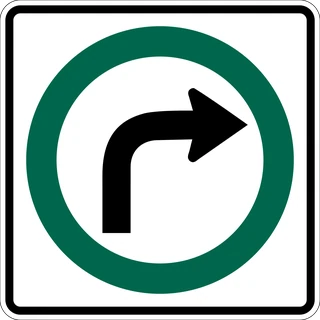
12What does this sign require of traffic in the lane it marks?

Explanation

A green circle means the movement shown is permitted or required; here the lane must turn right, as at channelised intersections and ramp ends.

Ontario MTO Driver's Handbook — Signs (regulatory: Right turn only)

13This sign has a PREPARE TO STOP WHEN FLASHING tab and its amber lights are flashing. What does that tell you?

Explanation

The beacons on this sign are linked to the signal ahead. When they flash, the light is turning red or is red, so begin slowing down now to stop smoothly.

Ontario MTO Driver's Handbook, Signs (warning signs)

14You pass a warning sign for a hidden school bus stop. What should you do?

Explanation

The sign warns that a school bus stop is hidden by a hill or curve. Slow down, drive with extra caution and be ready to stop for a bus with flashing red lights.

Ontario MTO Driver's Handbook — Signs (hidden school bus stop)

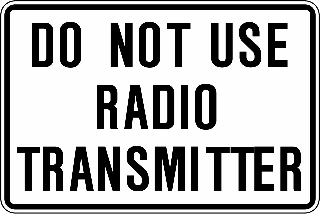
15Why are drivers told not to use radio transmitters when they pass this sign?

Explanation

Blasting caps can be triggered by radio energy. That is why the zone asks drivers to switch off transmitters until they are past it.

Ontario MTO Driver's Handbook, temporary condition signs; TAC MUTCDC

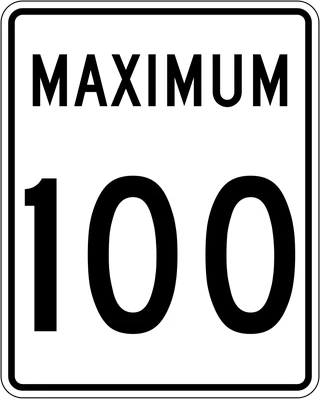
16What does this sign mean?

Explanation

A white regulatory sign reading MAXIMUM 100 sets the legal ceiling in km/h; you must slow down when weather, traffic or visibility require it.

Ontario MTO Driver's Handbook — Signs (regulatory: Maximum speed)

Applies in New Brunswick

17In New Brunswick, a pedestrian traffic light between intersections turns red for you. What does the handbook require?

Explanation

NB's handbook says that at pedestrian lights all vehicles must stop until the light changes to green, then proceed cautiously after pedestrians have cleared the crosswalk.

NB Driver's Handbook, Part 4 — 4.15 Traffic control signals (pedestrian lights)

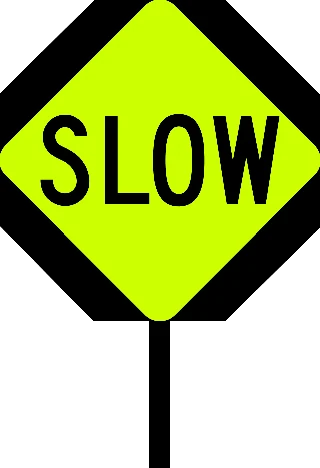
18What does this sign mean?

Explanation

When the traffic control person turns the paddle to SLOW, you may go, but at a low speed and with care, keeping clear of workers and machines.

Ontario MTO Driver's Handbook, temporary condition signs; TAC MUTCDC

Applies in Saskatchewan

19Driving a rural Saskatchewan road at night, you approach a stop sign whose post carries three triangular reflective delineators. What do the three delineators tell you?

Explanation

SGI: triangular delineators on stop or yield sign posts at rural intersections show the class of the road ahead. Three mean provincial and public highways, community access roads, grid roads or major streets; two mean main farm access or all-weather roads; one means minor roads. You must still stop.

SGI Saskatchewan Driver's Handbook 2026-27 §4.12 Crossroad delineators

Applies in Saskatchewan

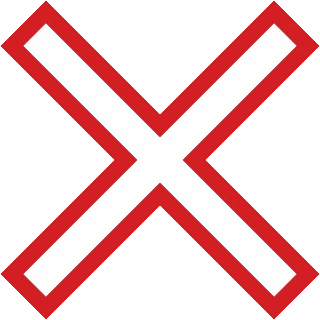
20In Saskatchewan, you stop at a railway crossing that has flashing red lights but no gates. The lights are flashing, no signal person is present and you can clearly see the train is still far away. What does the SGI handbook allow?

Explanation

SGI: at crossings without gates you may cross, after stopping, while the red lights are flashing if it is safe. If a train is closely approaching or a signal person signals you to stop, stop and wait. Never drive around lowered gates.

SGI Saskatchewan Driver's Handbook 2026-27 §4.11 Railway crossings (flashing lights)

Part 2Rules of the road 20 questions · 16 to pass

Applies in New Brunswick

21In New Brunswick, a first short-term suspension for a blood-alcohol level of 0.05 to 0.079 lasts 7 days and carries a penalty of:

Explanation

New Brunswick's 0.05 suspensions are 7, 15 and 30 days with penalties of $240–$480; at 0.08 the administrative suspension is 3 months with $1,200–$2,400.

Government of New Brunswick — Impaired driving

Applies in New Brunswick

22In New Brunswick, what are the default speed limits in an urban area and elsewhere when no sign is posted?

Explanation

New Brunswick's statutory defaults are 50 km/h in urban districts and 80 km/h elsewhere unless a different limit is posted.

New Brunswick Driver's Handbook — Speed limits

Applies in Saskatchewan

23In Saskatchewan, a stopped school bus is displaying only its four-way hazard lamps; its red lights and stop arm are not in use. What does the handbook say?

Explanation

SGI's handbook says drivers are not required to stop for buses displaying four-way hazard lamps, but they must use caution, go slowly and watch for children. Some communities ban red lamps and stop arms by bylaw, and there you may pass the bus.

SGI Saskatchewan Driver's Handbook 2026-27 §3.4 Sharing the road with school buses

Applies in Saskatchewan

24Under Saskatchewan's Safe Driver Recognition program, what does each year of incident-free driving earn you?

Explanation

Each incident-free year earns a safety point; in the Good Drivers zone each point gives 2% off basic plate insurance, up to 25% in the Safest Drivers zone. Risky driving moves you into the Penalty Zone, with $50 per point up to $1,000 for most incidents.

SGI Saskatchewan Driver's Handbook 2026-27 §8.5 Safe Driver Recognition

25You have stopped on the right shoulder of a freeway and must get out. Which door should you use?

Explanation

Leaving by the passenger side keeps you out of the path of vehicles that may drift onto the shoulder; if possible, stay inside with the doors locked.

Ontario MTO Driver's Handbook — Dealing with emergencies (freeway trouble)

Applies in Saskatchewan

26In Saskatchewan, a driver is charged with a Criminal Code impaired-driving offence after refusing a breath demand. What happens to the vehicle?

Explanation

A criminal impaired-driving charge in Saskatchewan brings an indefinite licence suspension until the charge is resolved and a vehicle impoundment of at least 30 days, rising to 60 days if the BAC is 0.16 or more or the driver failed to comply with a demand.

SGI Saskatchewan Driver's Handbook 2026-27 §8.2 Administrative consequences for Criminal Code impaired driving offences

Applies in Nova Scotia

27In Nova Scotia, the school bus ahead switches on its flashing amber (yellow) lights. What does the handbook say about passing it at that moment?

Explanation

Nova Scotia's handbook: amber flashing lights mean the bus is about to stop; passing is allowed but be extra careful and ready for the red lights. With red lights flashing, all drivers must stop, from behind or in front, except on the other side of a divided highway.

Nova Scotia Driver's Handbook (2026) §2.2.27 Drivers and school buses

Applies in Ontario, Nova Scotia

28Two roads going the same way join into one, and a merge sign is posted. Who is responsible for making the merge smooth and safe?

Explanation

The merge sign warns that two roads are about to join. Drivers on both roads are equally responsible for seeing that traffic merges smoothly and safely, and should be ready to yield.

Ontario MTO Driver's Handbook — Signs (merge warning sign); Nova Scotia Driver's Handbook (2026) §3.3 Warning signs

Applies in New Brunswick

29In New Brunswick, using a hand-held device while driving results in a $340.50 fine and:

Explanation

New Brunswick's 5-point penalty is one of the heaviest in Canada: a newly licensed driver, who starts with only 4 points, is suspended by a single conviction.

Government of New Brunswick — Driver distraction

Applies in New Brunswick

30In a severe rainstorm, at about what speed does New Brunswick's handbook say a passenger car's tires can lose all contact with the road?

Explanation

Partial hydroplaning starts around 55 km/h and increases with speed until, at about 85 km/h, the tires may ride completely on water with no grip for braking or steering. Ease off the accelerator; do not brake hard or oversteer.

New Brunswick Driver's Handbook Part 5 — Hydroplaning: 'water skiing on the highway'

Applies in Saskatchewan

31In Saskatchewan, what is the minimum fine for passing a school bus whose red lights are flashing?

Explanation

Passing a school bus with flashing red lights is a serious offence in Saskatchewan, with a minimum fine of $360. Stop at least 5 m from the bus and wait until the lights go off and the stop arm folds.

SGI Saskatchewan Driver's Handbook 2026-27 §3.4 Sharing the road with school buses

Applies in New Brunswick

32New Brunswick's handbook names three major types of crashes involving farm equipment. Which of these is one of them?

Explanation

The three major types are rear-end collisions with moving farm vehicles, collisions at intersections where the farm vehicle's direction was hard to read, and overtaking a farm vehicle that is turning left. Make sure the operator knows you intend to pass.

New Brunswick Driver's Handbook Part 6 — 6.8 Drivers and farm vehicles

Applies in Nova Scotia

33In Nova Scotia, when passing a stopped emergency vehicle with flashing lights, what speed applies?

Explanation

Nova Scotia requires 60 km/h or the posted limit if lower, and moving over where possible. Fines start around $350 and are doubled.

Nova Scotia — Slow Down, Move Over

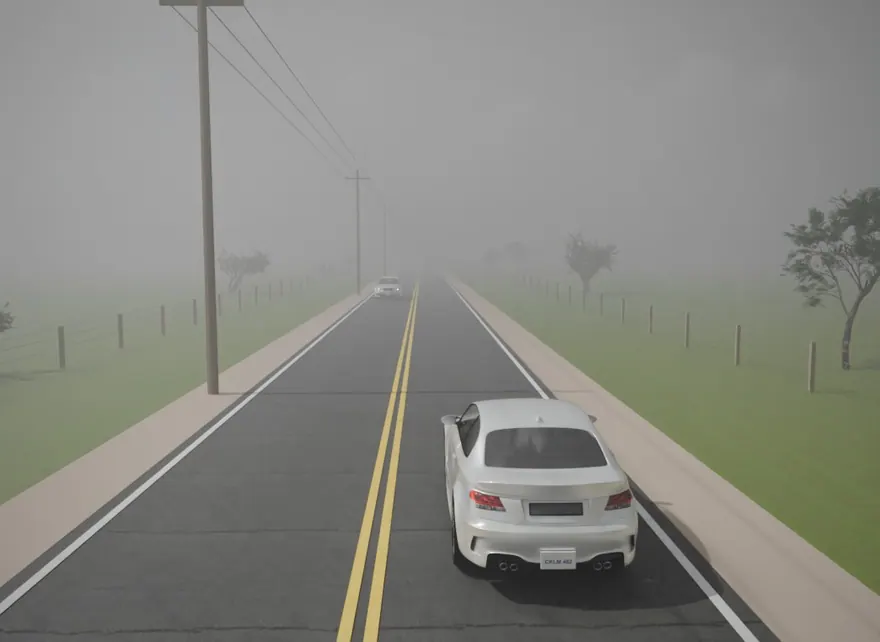
34Driving in fog, which part of the road should you use to guide your lane position?

Explanation

Using the right edge keeps you away from oncoming traffic, whose drivers are also struggling to see; use low beams and increase your following distance.

Ontario MTO Driver's Handbook — Driving at night and in bad weather (fog)

Applies in Nova Scotia

35You are 25, hold a valid licence from Quebec and have just moved to Nova Scotia. How long can you drive without a Nova Scotia licence?

Explanation

Nova Scotia's handbook: visitors and new arrivals aged 16 or older with a valid licence from elsewhere may drive for up to 180 days; after that they need a Nova Scotia licence. The same 180 days applies to out-of-province plates.

Nova Scotia Driver's Handbook (2026) §1.1.1 Visitors

Applies in Saskatchewan

36SGI gives steps for stopping on a slippery surface. What is the first step, before you brake?

Explanation

SGI: 1) shift to neutral or declutch before you brake; 2) brake early and gently using threshold braking; 3) look for the best traction; 4) leave extra space for other drivers to stop.

SGI Saskatchewan Driver's Handbook 2026-27 §6.8 Winter driving (How to stop on slippery surfaces)

37On a multi-lane highway, which lane should you normally drive in?

Explanation

Keep right except to pass. Slower traffic belongs in the right lane; the left lane is for passing.

Ontario MTO Driver's Handbook — Changing positions

38This light comes on in the instrument panel. What does it mean?

Explanation

A door is open or not properly closed. Stop safely and close the door properly.

Vehicle owner's manual (ISO 2575 symbols); provincial driver's handbook — vehicle maintenance

Applies in New Brunswick

39On a New Brunswick multi-lane highway, construction closes your lane ahead and traffic is heavy. How does the handbook describe a zipper merge for you?

Explanation

NB's handbook: in a zipper merge, drivers in the ending lane go as far as they can until they reach the barrier, then merge with traffic into the other lane. On multi-lane highways and at construction closures this keeps traffic flowing.

New Brunswick Driver's Handbook, Part 5 §5.18 (Zipper merge)

Applies in New Brunswick

40When you park beside a curb in New Brunswick, what is the farthest your vehicle may legally be from it?

Explanation

NB's handbook lists parking more than 50 cm (20 inches) from a curb among the prohibited positions. Other provinces use different distances, such as 30 cm in Ontario and BC.

New Brunswick Driver's Handbook, Part 4 §4.20 (Parking) — Parking regulations