CATheory Hub
English

Free Alberta Class 7 practice test

The Class 7 learner's knowledge test has 30 multiple-choice questions and you need 25 correct to pass. It is taken at an Alberta registry agent, in many languages. This practice test uses the same format: 30 questions, 25 to pass, no time limit.

30questions
25to pass
∞no time limit

Alberta Class 7 knowledge test

Answer every question, then press Finish. You will see your score, each part's result and an explanation for every question.

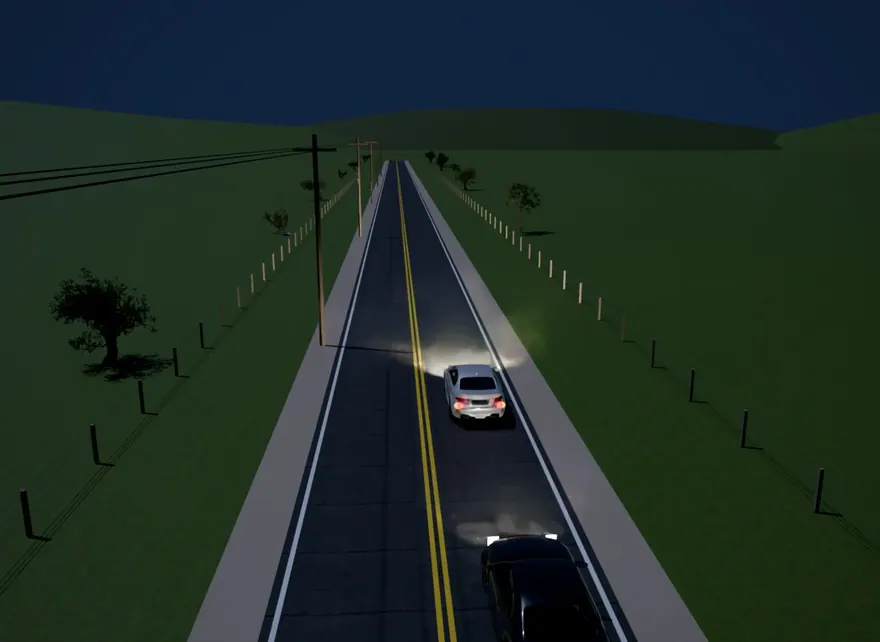
1Your car cannot be moved from the roadway after a breakdown at night. Besides the hazard lights, what should you do?
Explanation

Warning devices placed well back are what prevents the next vehicle from hitting yours; keep flares away from any fuel leak.

Ontario MTO Driver's Handbook — Dealing with emergencies
Applies in Ontario, British Columbia, Alberta, Québec, Nova Scotia, New Brunswick

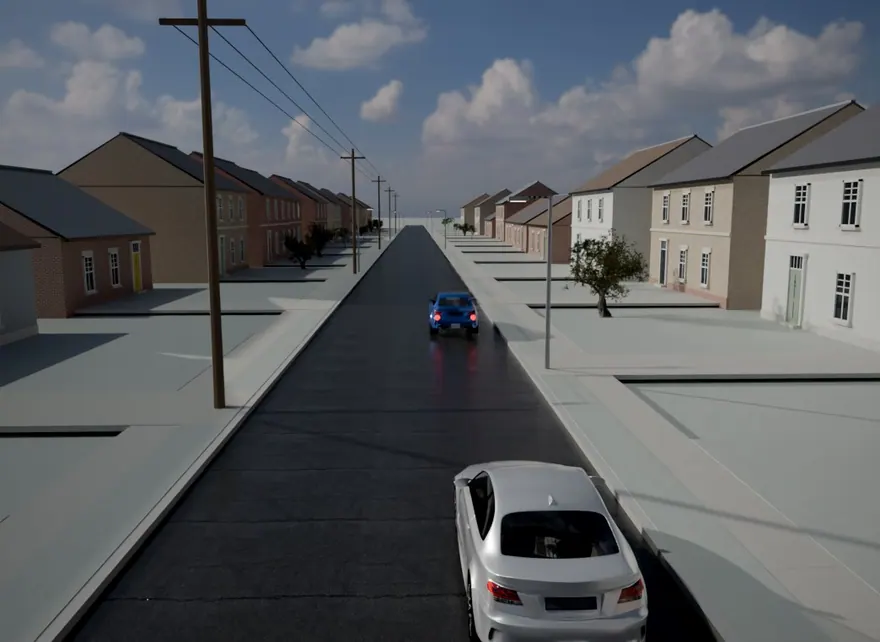
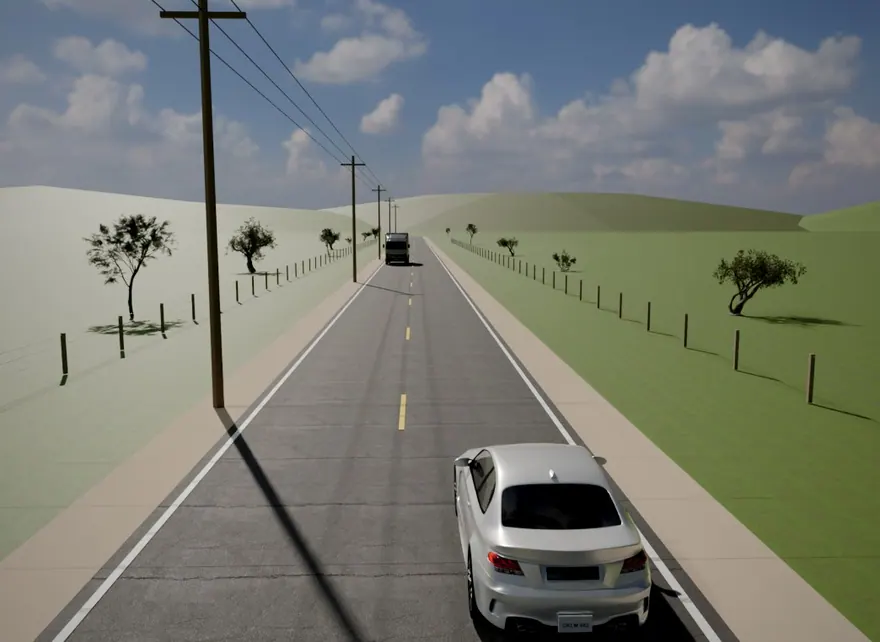
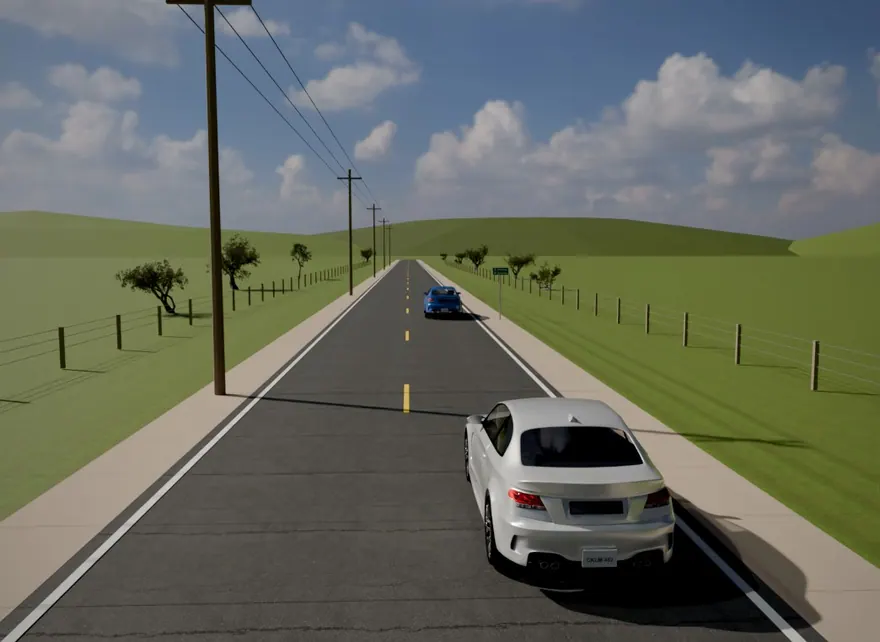
2In ideal conditions, what is the minimum following distance you should keep behind the vehicle ahead?

Explanation

Most provincial handbooks (e.g. Ontario, Alberta, BC, Nova Scotia) teach at least a two-second gap in good conditions; a gap in seconds automatically grows with speed, unlike a fixed number of car lengths. Saskatchewan teaches three seconds and Manitoba four.

Ontario MTO Driver's Handbook — Driving along (following distance, steering, mirrors)

Applies in Alberta

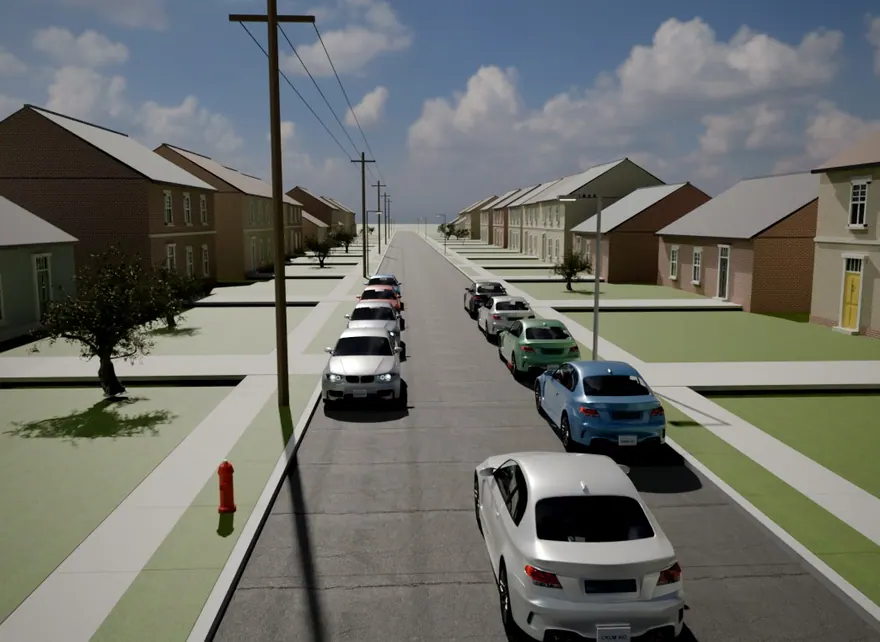
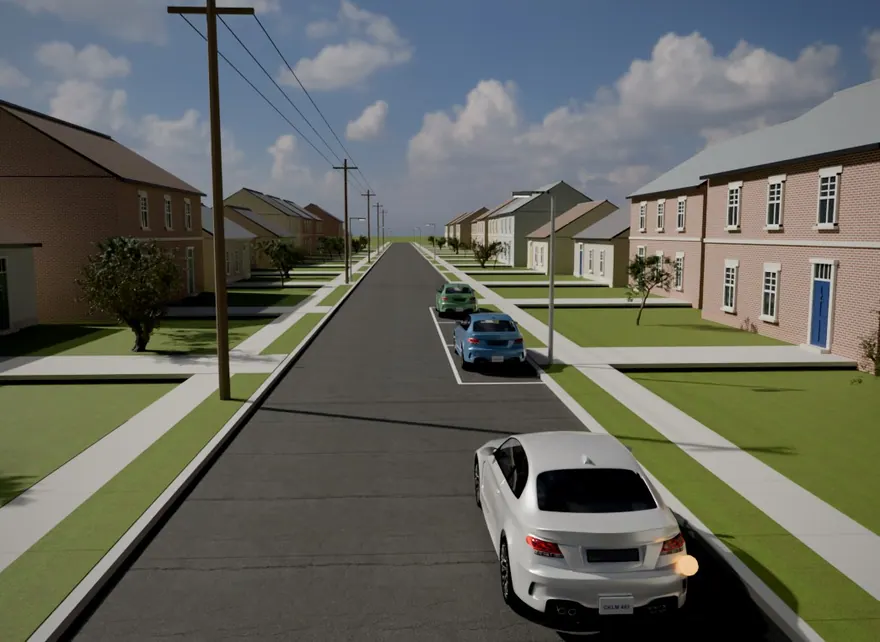
3You are driving through an Alberta residential street with cars parked on both sides. What does Alberta's guide suggest you do to spot children early?

Explanation

Alberta's guide says to glance under parked vehicles on both sides of the road for children's feet, toys and bicycle wheels; they warn you that you may need to stop.

Alberta Driver's Guide (2026), ch. 8 — Pedestrian safety

Applies in Alberta

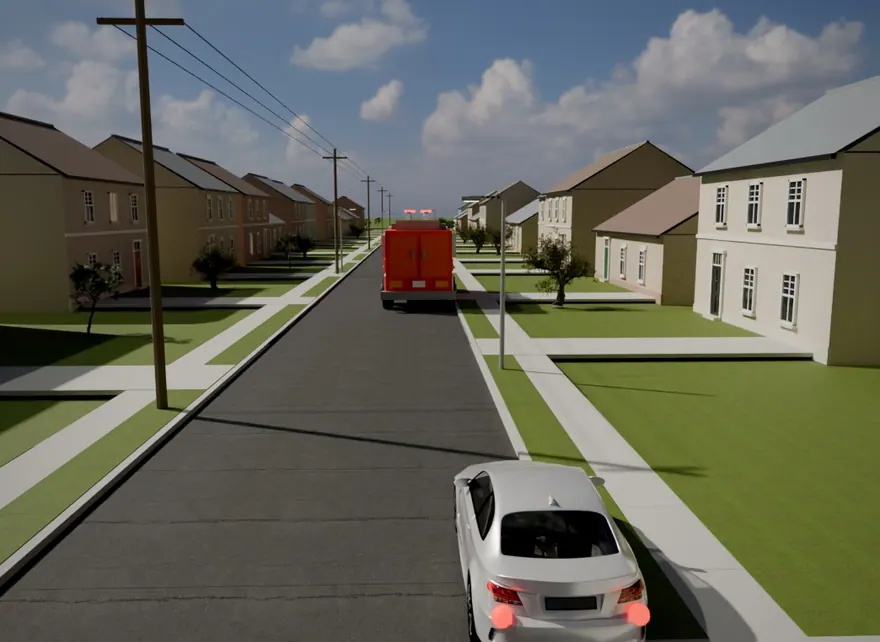
4In Alberta, you pulled to the right curb and stopped for a fire truck with its siren on. It has just gone by. What should you do before driving on?

Explanation

Alberta's guide says to stop until the emergency vehicle has passed and then check that no other emergency vehicles are approaching; several units often respond to the same call.

AB Driver's Guide (2026) ch. 6 'Emergency vehicles' p. 85

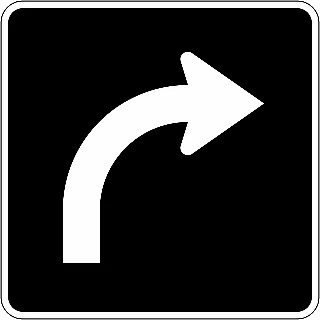
5What does this sign mean?

Explanation

A white arrow on a black lane-use sign shows the only movement allowed from that lane. Here it is a right turn, so through traffic must use another lane.

Ontario MTO Driver's Handbook, Signs

Applies in Ontario, British Columbia, Alberta, Québec, Manitoba, Saskatchewan, Nova Scotia, Newfoundland and Labrador

6Your vehicle does NOT have ABS. What is the correct way to brake hard on a slippery road?

Explanation

Without ABS, use threshold braking: firm pressure to the point just before lock-up, releasing slightly if the wheels lock. The handbook says: don't pump the brakes.

Ontario MTO Driver's Handbook — Driving at night and in bad weather (winter driving)

Applies in Alberta

7Thick wildfire smoke makes it unsafe to keep driving on an Alberta highway, but there is no safe place to pull completely off the road. What does Alberta's guide advise once you have stopped as far off as you can?

Explanation

Alberta's guide: when smoke or fog makes driving unsafe, slow down, move well off the road and turn on the hazard lights. If a safe place to park is not available, you and your passengers should move to a safe location away from the vehicle in case it is struck.

Alberta Driver's Guide (2026), ch. 6 Emergency situations and challenging conditions (contains information licensed under the Open Government Licence – Alberta) (Smoke and fog)

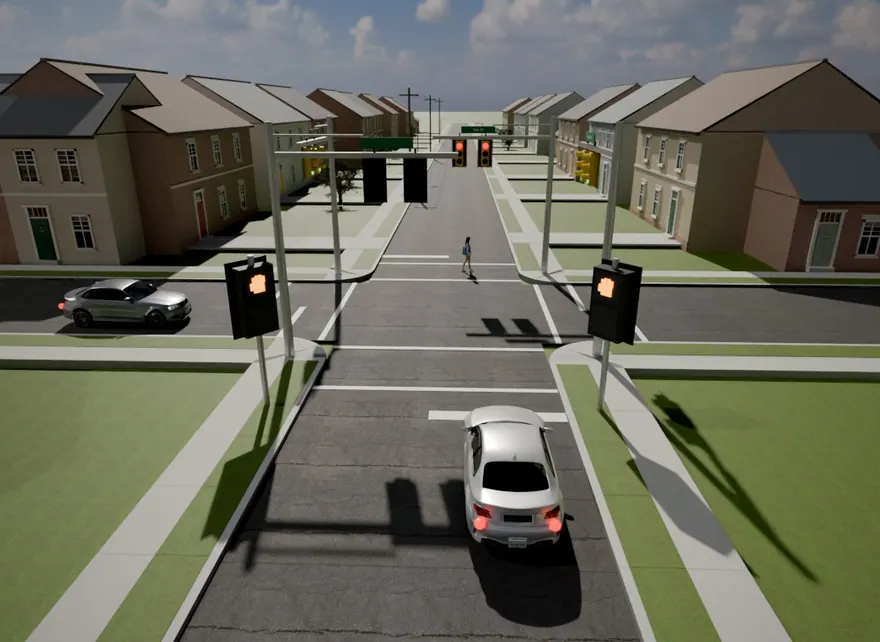
8A pedestrian sees a flashing orange hand at a crosswalk. What does it mean?

Explanation

The white walking symbol means pedestrians may cross. A flashing or steady orange hand means do not begin to cross; drivers should expect pedestrians still finishing their crossing.

Ontario MTO Driver's Handbook — Pedestrian signals

9The highway is posted 100 km/h and is covered with packed snow. What speed is appropriate?

Explanation

Posted limits are for ideal conditions; on snow or ice, stopping distances multiply, so you must slow down enough to stop within the distance you can see.

Ontario MTO Driver's Handbook — Driving at night and in bad weather (winter)

10A study cited in Ontario's handbook found that drivers texting or changing music on their phones travelled how much farther before reacting to a hazard than attentive drivers?

Explanation

Texting or browsing takes your eyes off the road and raises crash risk about 10 times. The extra 28 metres travelled before reacting can be the difference for a child running into the street.

Ontario MTO Driver's Handbook — Dealing with particular situations (How dangerous is distracted driving?)

Applies in Alberta

11In Alberta, a GDL driver's licence is suspended when they accumulate how many demerit points in two years?

Explanation

GDL drivers are suspended at 8 points (fully licensed drivers at 15) for one month; a $390 distracted-driving ticket alone is 3 of those 8.

Alberta — Demerit points and driving suspensions (alberta.ca)

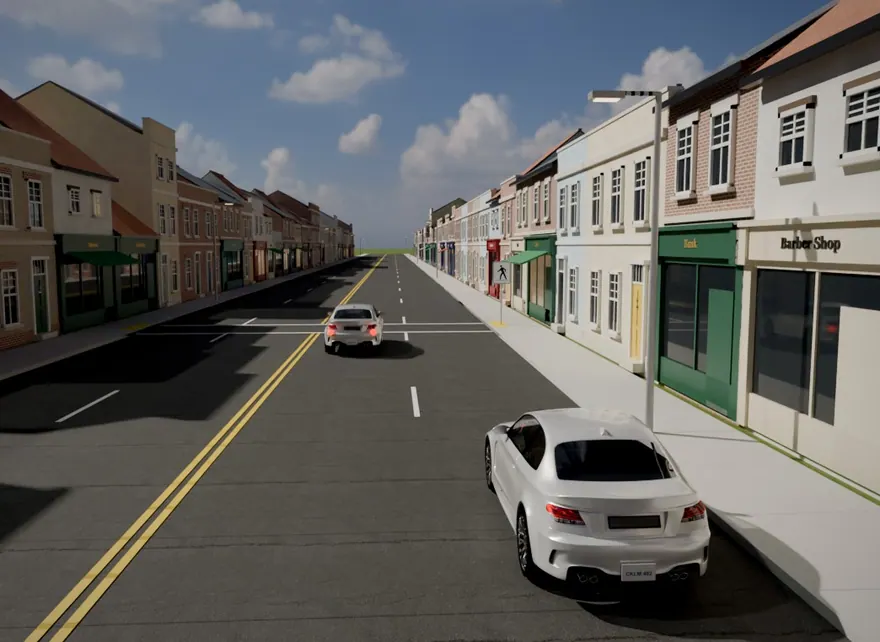
12A vehicle in the lane beside you has stopped just before a crosswalk for no obvious reason. You should:

Explanation

Never pass a vehicle stopped at a crosswalk: it is probably hiding a pedestrian who will step into your path.

Ontario MTO Driver's Handbook — Sharing the road with other road users

Applies in Alberta

13An Alberta driver believes the Immediate Roadside Sanction they received after a roadside breath test was wrong. How can they challenge the provincial penalty?

Explanation

SafeRoads Alberta is the adjudication branch that reviews challenges to IRS penalties and vehicle seizures; matters are dealt with in 30 days. Review fees are non-refundable and a review does not guarantee a change (Alberta Driver's Guide, ch. 9).

Alberta Driver's Guide (2026) ch. 9, p. 117 — SafeRoads Alberta

Applies in Alberta

14In Alberta, what kind of message is given by a square sign with a white message on a black background?

Explanation

Alberta's guide: a square sign with a white message on a black background indicates lane control. School zones use a fluorescent yellow-green pentagon, construction signs are orange and services signs are blue.

Alberta Driver's Guide (2026), ch. 2 — Traffic control (contains information licensed under the Open Government Licence – Alberta) (sign shapes and colours)

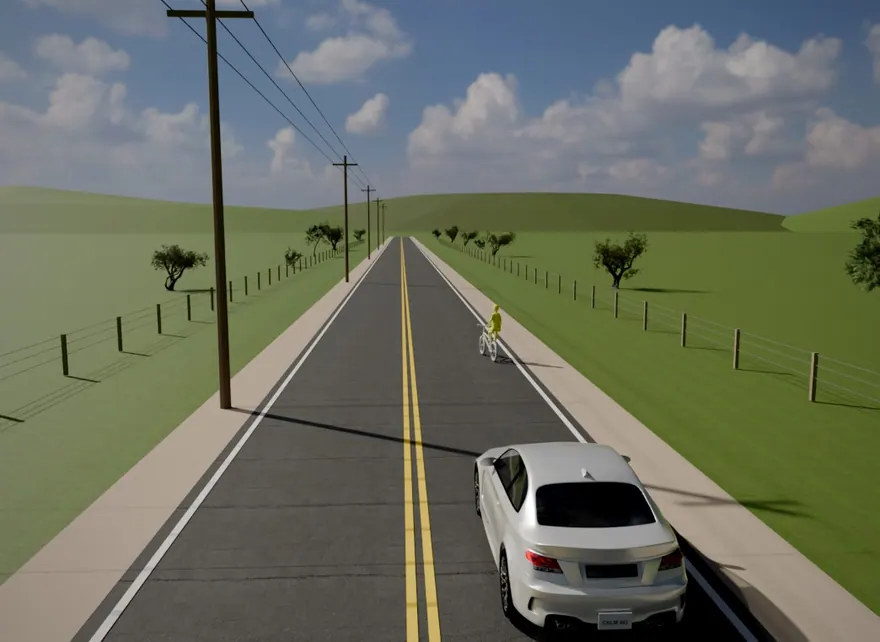
15A two-lane road has two solid yellow lines down the centre. What does this mean?

Explanation

A solid line on the left of your lane means no passing. When both lines are solid, drivers in both directions have a solid line on their side, so neither may pass.

Ontario MTO Driver's Handbook — Pavement markings

16A driver is found guilty of a first impaired-driving offence under the Criminal Code. For how long must the court prohibit them from driving?

Explanation

Section 320.24 makes a driving prohibition mandatory: for a first offence it is not less than one year and not more than three years, plus the entire period of any prison sentence. Provinces add their own licence suspensions.

Criminal Code of Canada, s. 320.24(2)(a) Mandatory prohibition order

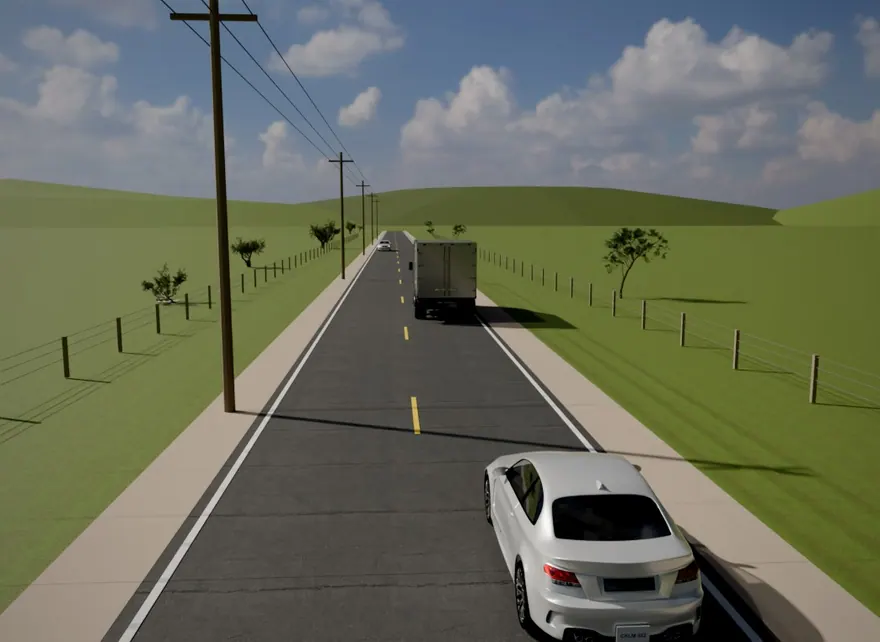
17On a two-lane highway the line is broken on your side, but you can see an oncoming vehicle in the distance. Should you start a pass?

Explanation

A broken line only means passing may be permitted; it is safe only when the oncoming lane is clear for the whole distance you need to pass and return.

Ontario MTO Driver's Handbook — Changing positions (passing)

Applies in Alberta

18In Alberta, how long is the probationary Class 5-GDL stage before you can obtain a full Class 5?

Explanation

Class 5-GDL lasts 24 months; the advanced road test was abolished in April 2023, so you exit after the time (and a clean record) and at age 18 or older.

Alberta — Class 7 learner's licence / Get a driver's licence (alberta.ca)

Applies in Alberta

19You are entering an Alberta highway. A solid white line separates the first part of the acceleration lane from the highway lane, then the line ends. When may you move into the highway lane?

Explanation

Alberta's guide says to move into the gap when it is safe and legal, after you are past the solid white line of the acceleration lane, keeping your speed at or near that of other vehicles. Crossing a solid line to change lanes is not permitted.

AB Driver's Guide (2026) ch.5 'Entering and exiting a major roadway – Merging' p.73

20Which statement about driving inside a multi-lane roundabout is correct?

Explanation

In a multi-lane roundabout, the left lane is for left turns or straight through and the right lane for right turns or straight through. Pick your lane before entering and do not change lanes inside.

Ontario MTO Driver's Handbook — Changing directions (roundabouts)

Applies in Alberta

21In Alberta, you approach a school sign that has NO maximum-speed tab attached to it. What does it tell you?

Explanation

Alberta distinguishes a school ZONE (school sign with a maximum-speed tab, 30 km/h unless posted, during set hours) from a school AREA (school sign without a speed tab), where you must simply use caution.

Alberta Driver's Guide (2026), Ch. 2 Traffic control — School area (contains information licensed under the Open Government Licence – Alberta)

Applies in Ontario, Alberta, Manitoba, Saskatchewan, Nova Scotia

22When may you turn left at a red light?

Explanation

In these provinces a left turn on red is allowed only from a one-way street onto another one-way street, after stopping and yielding, unless signed otherwise. Prince Edward Island prohibits it unless a sign allows it, Québec's Highway Safety Code has no left-on-red exception, and British Columbia allows it onto a one-way street from any street.

Ontario MTO Driver's Handbook — Traffic lights

Applies in Alberta

23An Alberta driver is convicted of driving 62 km/h in a 50 km/h zone. How many demerit points go on the record?

Explanation

The driver was 12 km/h over. In Alberta, speeding by up to 15 km/h carries 2 demerit points; 16 to 30 km/h over carries 3, and 31 to 50 km/h over carries 4.

Alberta Driver's Guide 2026, ch. 9 — Demerit point penalties (p. 109)

Applies in Alberta

24What is the default speed limit on a rural provincial highway in Alberta where no limit is posted?

Explanation

Provincial highways outside urban areas in Alberta default to 100 km/h; other rural roads default to 80 km/h.

Alberta Driver's Guide — speed limits

25This warning light comes on while you are driving. What should you do?

Explanation

A brake system fault or low brake fluid — or the parking brake is still applied. Check the parking brake is fully released; if the light stays on, stop safely and have the brakes checked before driving on.

Vehicle owner's manual (ISO 2575 symbols); provincial driver's handbook — vehicle maintenance

Applies in Alberta

26How does Alberta's guide say to set an adjustable, tilting head restraint?

Explanation

Alberta's guide: position an adjustable head restraint so its centre is level with the top of your ears; if it tilts, move it forward to reduce the space between your head and the restraint — less than 10 centimetres is ideal. Check each passenger's restraint too.

Alberta Driver's Guide (2026) (contains information licensed under the Open Government Licence – Alberta), ch. 3 Adjust your head restraint

Applies in Nova Scotia, Alberta

27When you drive along a row of angle-parked cars before turning into an empty stall on your right, how far out from the parked cars should you stay?

Explanation

Nova Scotia and Alberta both say to stay about 1.5 m out from the parked vehicles, so the rear of a car backing out has room and you can see into the stall.

Nova Scotia Driver's Handbook (2026) §2.2.20 Angle parking; Alberta Driver's Guide (2026) (contains information licensed under the Open Government Licence – Alberta), Ch. 3 Angle parking

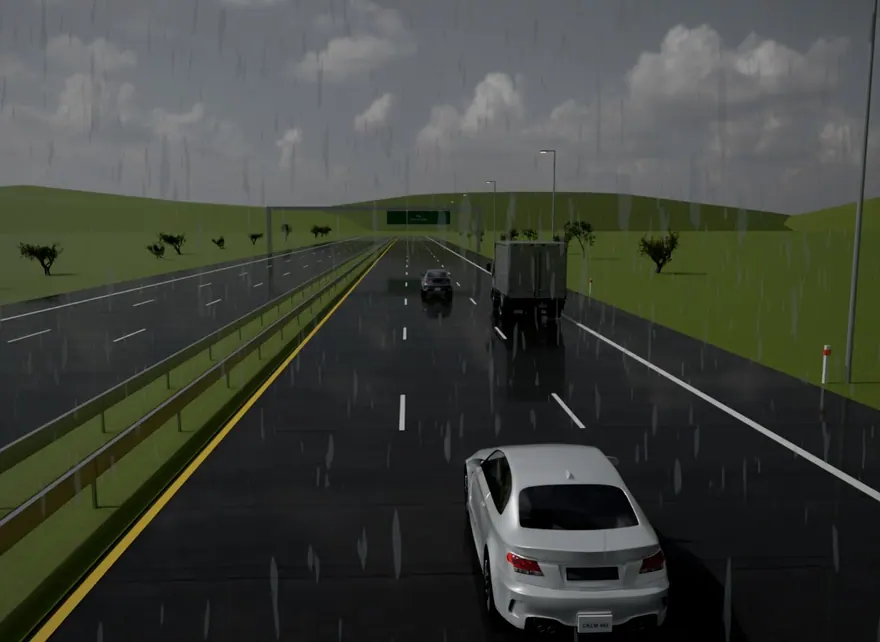
28At speed on a wet highway, your steering suddenly feels light and the car seems to float. What is happening and what should you do?

Explanation

Hydroplaning happens when the tires ride on a film of water because of speed or too much water; slowing gently lets the tread cut through again. Deep tread and lower speed prevent it.

Ontario MTO Driver's Handbook — Driving at night and in bad weather

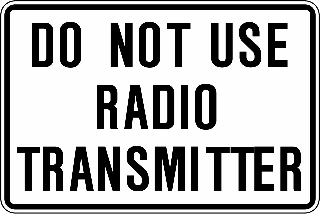
29What does this sign mean?

Explanation

This sign is posted near blasting operations. Radio transmissions can trigger detonators, so do not use two-way radios until a sign shows you may resume.

Ontario MTO Driver's Handbook, temporary condition signs; TAC MUTCDC

Applies in Ontario, Nova Scotia, Manitoba, Alberta

30You are starting to parallel park behind the space. How far to the side of the vehicle ahead of the space should you stop?

Explanation

Drive alongside the vehicle ahead of the empty space, leaving about one metre between the vehicles, and stop when the rear bumpers line up before reversing into the space. (Ontario's road-test checklist sets at least 60 cm as the minimum gap.)

Ontario MTO Driver's Handbook — Parallel parking; Nova Scotia Driver's Handbook (2026) §2.2.19; Manitoba Driver's Handbook (MPI) — Parallel parking; Alberta Driver's Guide 2026 ch. 3 — Parallel parking (p. 52)