CATheory Hub
English

Stop & yield

6 signs

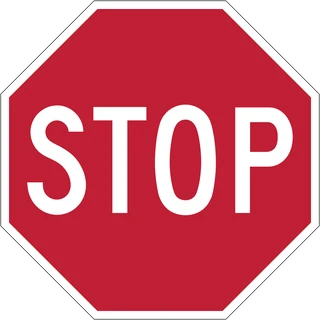
Stop

Stop

Come to a complete stop at the stop line, or before the crosswalk or intersection if there is no line. Proceed only when the way is clear and after yielding to traffic and pedestrians. The only eight-sided sign on the road.

Remember: Eight sides, red and white: the only octagon, so you can recognise it from behind.
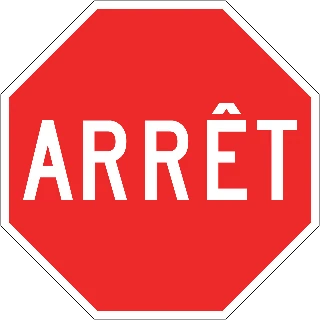
Stop (ARRÊT)

Only in Québec, New Brunswick

Stop (ARRÊT)

Québec's stop sign reads ARRÊT instead of STOP. The rule is identical: a complete stop at the line, then proceed when safe. Bilingual ARRÊT/STOP versions exist in New Brunswick and parts of Ontario.

Remember: Same octagon, French word — shape is the message, not the text.

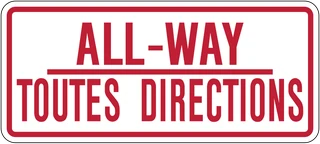
All-way stop tab

All-way stop tab

A plate under a stop sign showing that every approach must stop. The first vehicle to stop completely goes first; if two stop at the same time, the one on the right goes first.

Remember: First to stop, first to go; tie goes to the right.

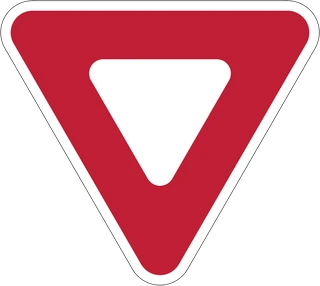
Yield

Yield

Slow down and give way to traffic already on the road you are entering or crossing, and to pedestrians. Stop if necessary. A point-down triangle with a red border.

Remember: Point-down triangle = you are 'lower' in priority.

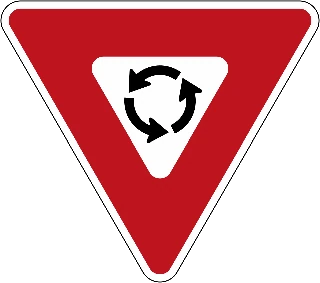
Yield at roundabout

Yield at roundabout

A yield sign with the roundabout symbol at a roundabout entry. Slow down and yield to traffic already circulating in the roundabout (it comes from your left) and to pedestrians at the crosswalk; enter only when there is a safe gap.

Remember: Triangle + circling arrows: those already inside go first.

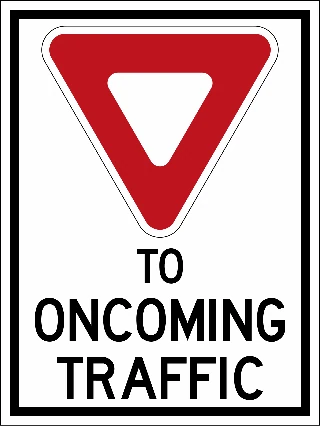
Yield to oncoming traffic

Yield to oncoming traffic

Used where the road narrows to one lane, such as a one-lane bridge. Traffic from your direction must yield: wait until oncoming vehicles have cleared the narrow section before you enter it.

Remember: Yield triangle + TO ONCOMING TRAFFIC: the other side has the right of way.