CATheory Hub
English

Free SAAQ theory exam practice test (Québec)

The SAAQ theory exam for a Class 5 learner's licence is taken in French or English, by appointment. In Québec, the driving school's own theory test (end of Module 5) comes first. The SAAQ does not publish the number of questions; the pass mark is reported as 75%. This practice test has 30 questions and you need 23 to pass. Check the SAAQ website for the current format before your exam.

30questions
23to pass
∞no time limit

Québec SAAQ theory exam

Answer every question, then press Finish. You will see your score, each part's result and an explanation for every question.

1A 340 mL (12 oz) bottle of regular beer contains about the same amount of alcohol as which of these?

Explanation

A standard drink is a 340 mL bottle of beer, 43 mL of spirits or a 142 mL glass of unfortified wine; they all contain the same amount of alcohol. Beer is not a 'safer' drink.

Nova Scotia Driver's Handbook (2026) §6.1.1 Drinking and driving (standard drink)
Applies in Québec

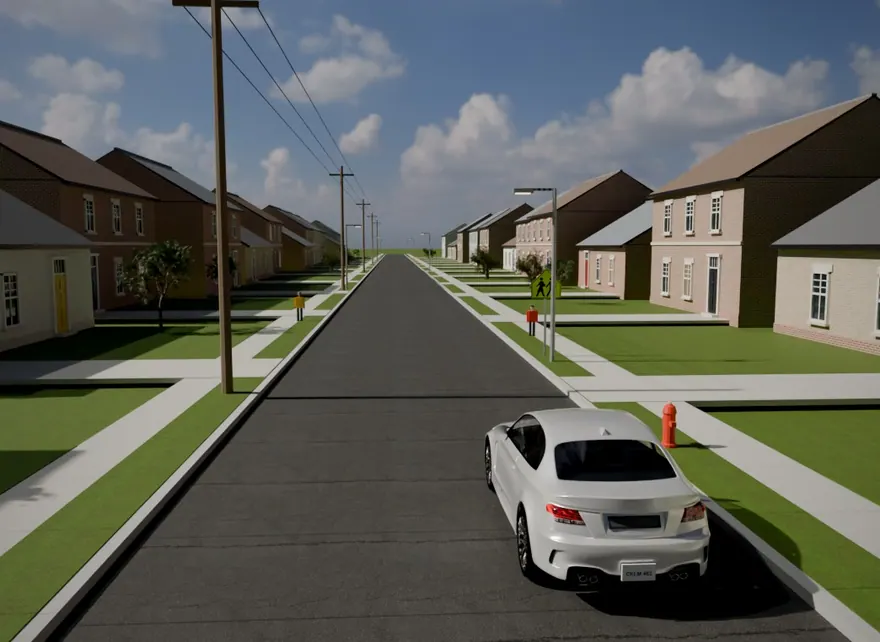
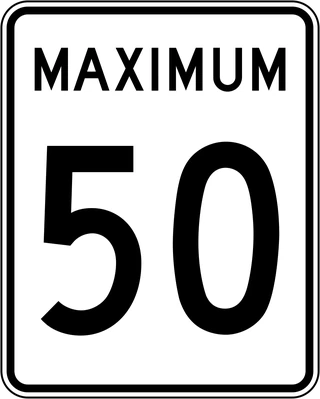
2Entering a Québec village you pass this sign. What is the maximum speed from this point?

Explanation

Québec's MAXIMUM 50 sign sets the legal ceiling at 50 km/h, the standard limit in built-up areas; 90 km/h applies to paved rural roads and 70 km/h to gravel roads.

SAAQ Driver's Handbook — Speed-limit signs (MAXIMUM)

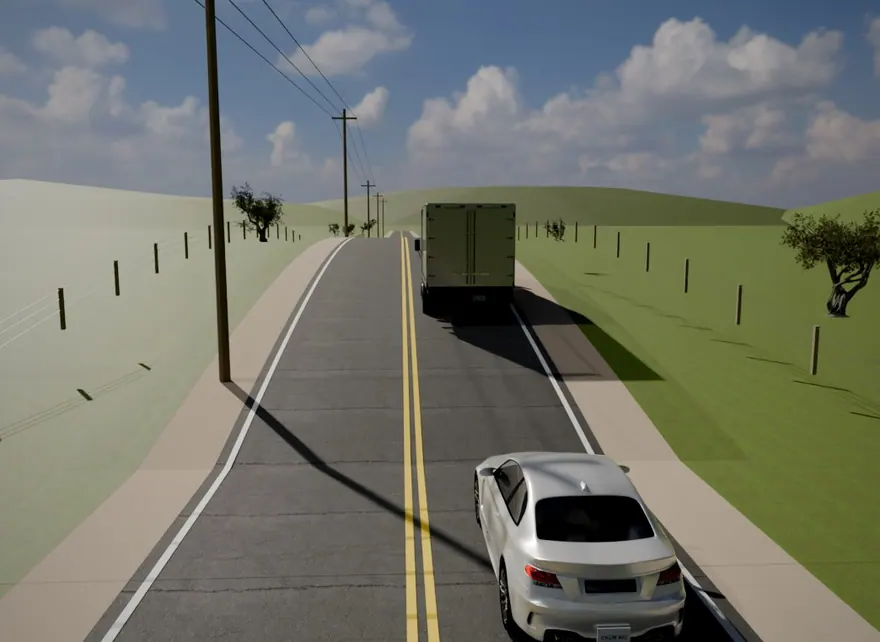
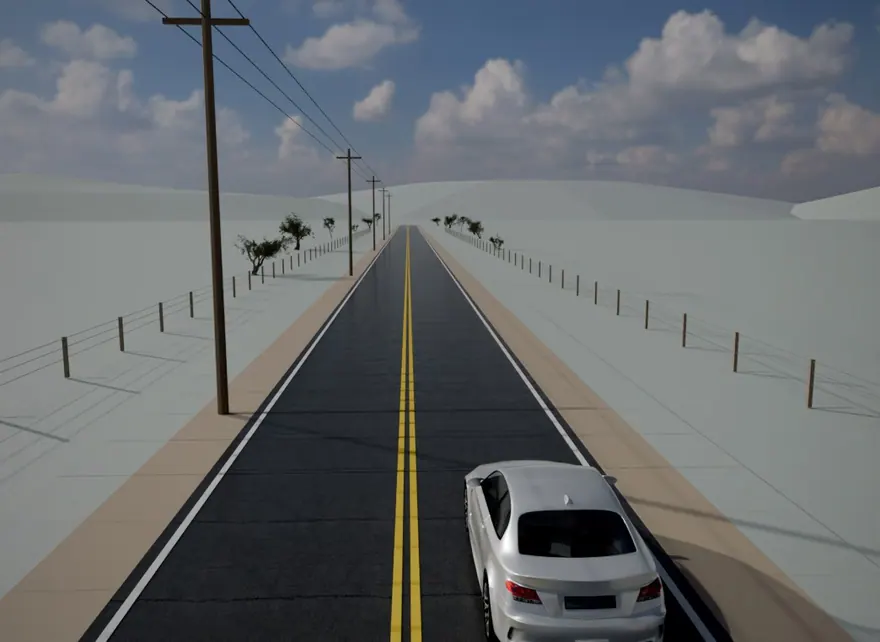
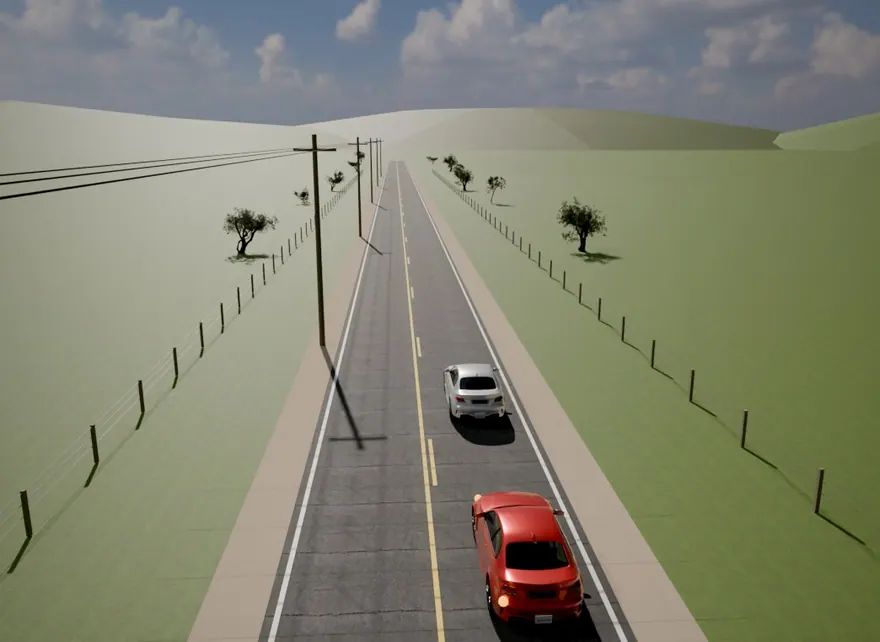
3Why should you never pass on a hill crest or a curve on a two-lane road?

Explanation

Passing requires a clear view of the road ahead. On hill crests and curves an oncoming vehicle can appear without warning, so these areas are usually marked with solid lines.

Ontario MTO Driver's Handbook — Changing positions

Applies in Québec

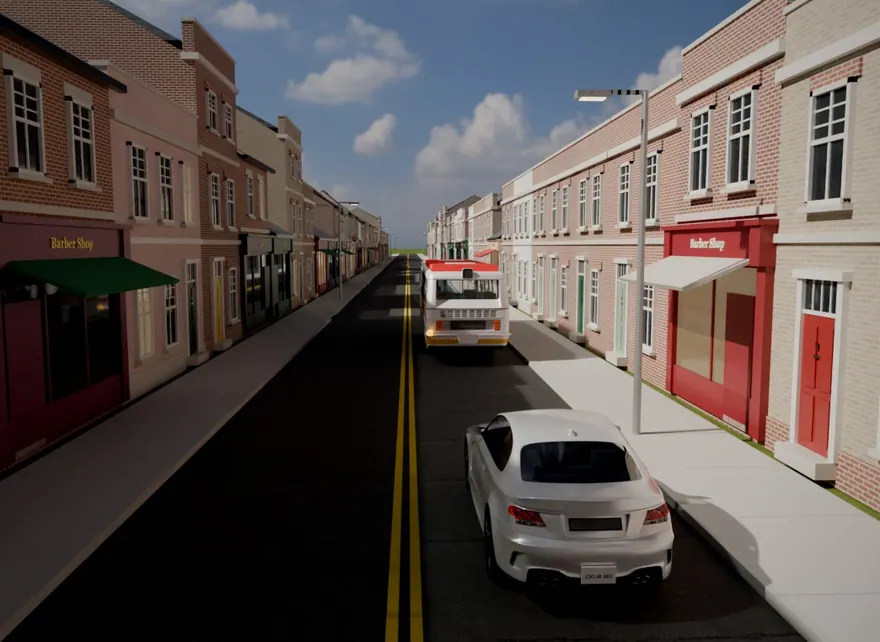
4In Québec, a city bus stopped at the curb signals that it wants to pull back into your lane. On roads with a maximum speed limit below which value must you yield to it?

Explanation

SAAQ handbook: on public roads with a maximum speed limit under 70 km/h, yield to a bus whose driver wants to re-enter the lane it occupied before stopping. The bus driver must still check that it is safe and use the turn signals.

SAAQ Driver's Handbook, ch. 4 — Traffic rules (Buses)

5You are leaving a parking lot onto a street. Who has the right-of-way?

Explanation

A driver entering a road from a driveway, lane or private road must yield to pedestrians on the sidewalk and to all traffic on the road.

Ontario MTO Driver's Handbook — Driving through intersections

Applies in Québec

6In Québec, cycling is generally prohibited on public roads with a speed limit over 50 km/h. Which of these is one of the exceptions?

Explanation

SAAQ: cycling is prohibited where the limit is over 50 km/h unless the road has a clearly indicated, physically separated bikeway, the cyclist is at least 12 years old, or the cyclist is on an adult-supervised excursion. Expect cyclists on such roads and give them room.

SAAQ Driver's Handbook (2nd ed.), ch. 4 — Cyclists (cycling rules)

Applies in Québec

7In Québec, a driver with no alcohol fails the tests carried out by an evaluating officer at the police station because of medication. What Highway Safety Code measure applies immediately?

Explanation

The SAAQ lists an immediate 90-day licence suspension for impaired driving due to drugs, medication or a combination with alcohol, after failing the evaluating officer's tests; the vehicle is also impounded 90 days for a repeat offence.

SAAQ Driver's Handbook (2018), ch. 1 — The Highway Safety Code (administrative measures for impaired driving)

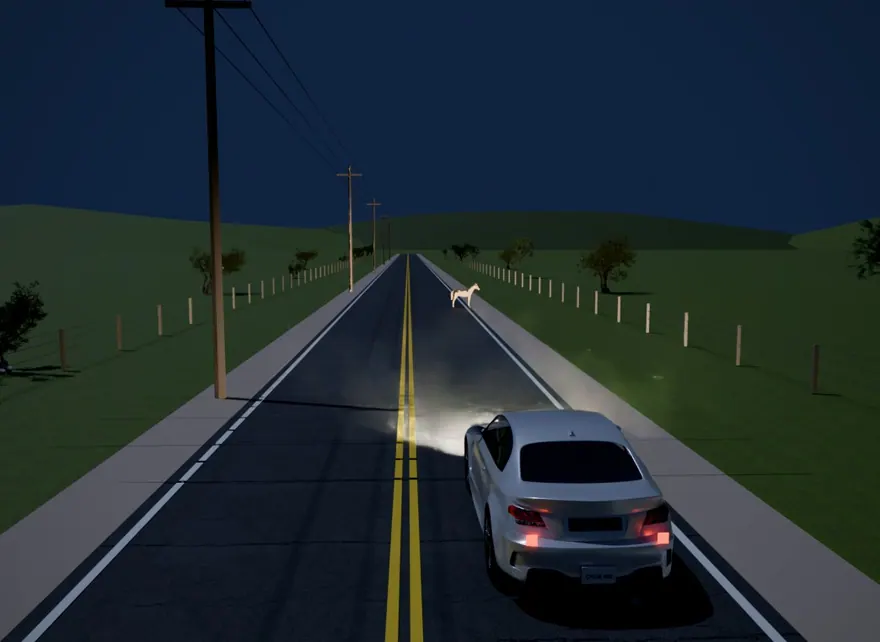
8At night you see two shining eyes at the edge of the road ahead. You should:

Explanation

Eyes reflecting your headlights are your earliest warning; animals often travel in groups, so expect more than one.

Ontario MTO Driver's Handbook — Dealing with particular situations (animals on the road)

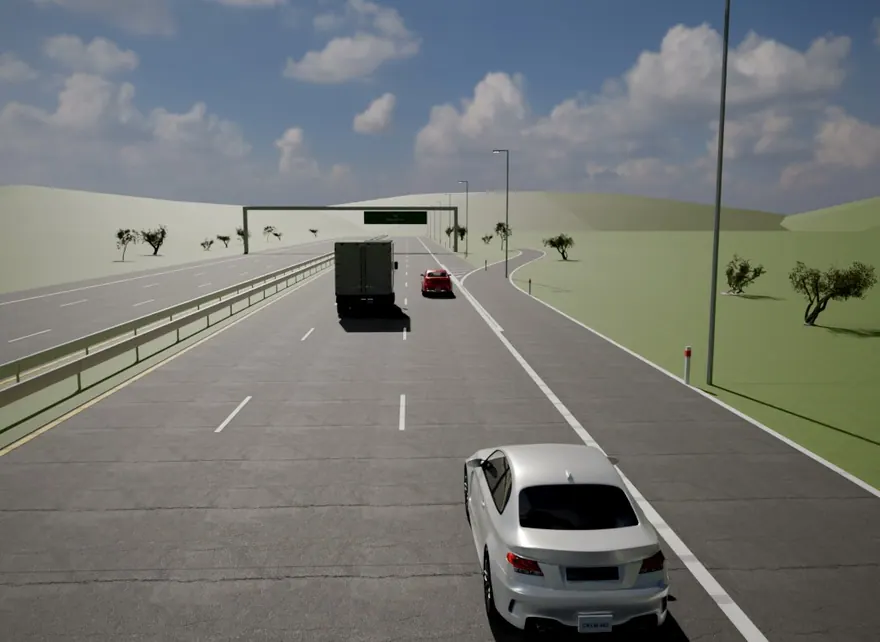
9At a freeway exit, a wide striped triangle (gore) is painted between the exit ramp and the through lanes. What should you do?

Explanation

The painted gore separates exiting and through traffic. Crossing it is dangerous and illegal; if you miss your exit, continue to the next one.

Ontario MTO Driver's Handbook — Pavement markings

Applies in Québec

10In a Québec school zone during school periods, which statement is correct?

Explanation

Québec school-zone limits are usually 30 km/h and can never exceed 50 km/h during school periods. Speeding fines are doubled in school zones.

SAAQ Driver's Handbook — school zones

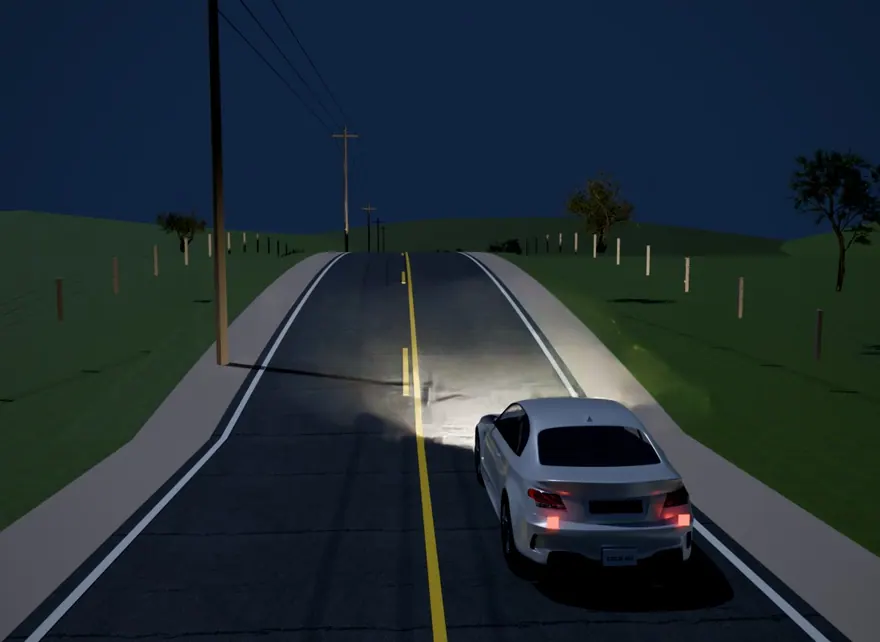
11You are using high beams on an empty country road at night and approach a curve or hilltop. What should you do?

Explanation

High beams can dazzle a driver hidden by the curve or crest before you see them; dipping lets you spot their lights early and avoid blinding them.

Ontario MTO Driver's Handbook — Driving at night and in bad weather

12You suddenly realise you are driving on black ice. What should you do?

Explanation

Any sudden input on ice starts a skid; let the vehicle roll across the patch with no sudden changes, then slow down gently once you have grip.

Ontario MTO Driver's Handbook — Driving at night and in bad weather (winter) (black ice)

Applies in Québec

13On a Montréal street, the curb lane is a reserved bus lane during the posted hours, and it is within those hours. Your friend asks you to stop there for a moment to let her out. What does the Highway Safety Code say?

Explanation

Québec prohibits stopping or parking in a lane reserved exclusively for certain vehicles and in bus zones. The only exception is to pick up or drop off a person with a disability where it can be done safely.

SAAQ Driver's Handbook ch. 4 — Stopping and parking, Restrictions

Applies in Québec

14On a two-lane road in Québec, the car behind you pulls out to pass. You feel like speeding up so it cannot get by. What does the Highway Safety Code say?

Explanation

The SAAQ handbook says not to accelerate when you are being passed, and you may even slow down out of courtesy. Increasing your speed when being passed carries a $200 to $300 fine and 2 demerit points.

SAAQ Driver's Handbook ch. 4 'Being passed' p. 225; fines table p. 302; demerit table p. 308 (Highway Safety Code)

Applies in Québec

15You are driving in Québec with an 8-year-old passenger who is 130 cm tall. What does the Highway Safety Code require?

Explanation

In Québec, a child who has not reached 145 cm or 9 years of age must be secured in a car seat suited to their weight and height and installed according to the manufacturer's instructions. This child is under both thresholds.

SAAQ Driver's Handbook, ch. 4 — Protection: Seat belts, pp. 215-216

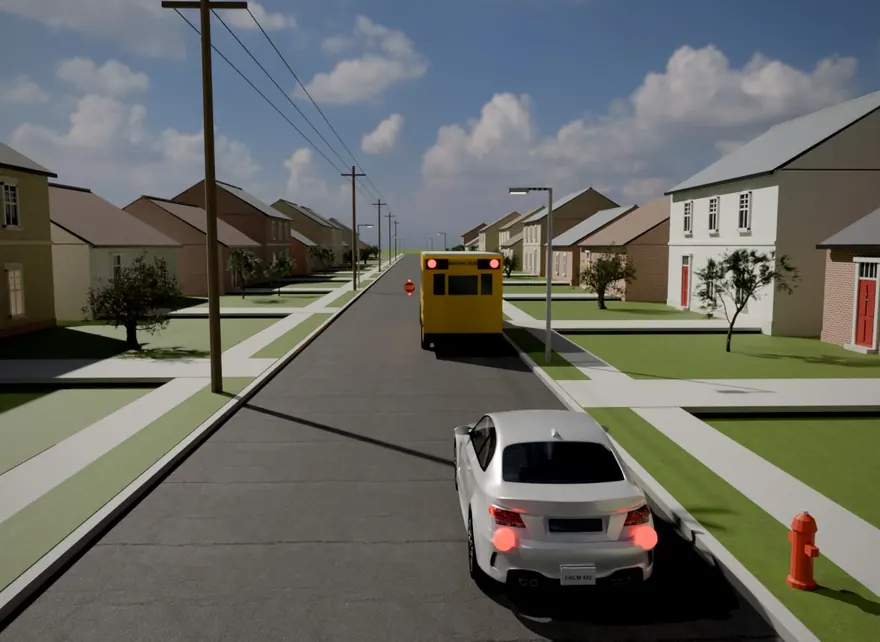
16You have stopped for a school bus with flashing red lights. When may you proceed?

Explanation

Children may still be crossing out of your sight; wait until the lights and arm are off, not just until you think the road is clear.

Ontario MTO Driver's Handbook — Sharing the road (school buses); Stopping

Applies in Québec

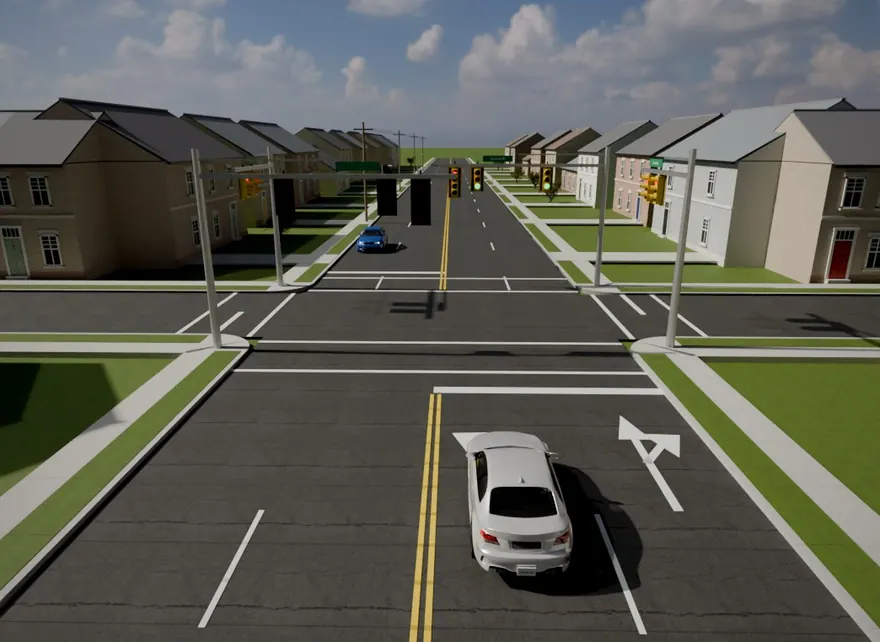
17You are in the left lane at a Québec intersection. The signal for your direction shows a red arrow pointing left. What does it tell you?

Explanation

In Québec, a red arrow prohibits drivers from going in the direction it points. Wait for a signal that allows the turn.

SAAQ Driver's Handbook ch.3 'Traffic lights – Red arrow' p.104

Applies in Québec

18Québec's minimum tire groove depth is 1.6 mm. What depth does Québec recommend for tires during the winter?

Explanation

Grooves should never be less than 1.6 mm deep, and in winter at least 4.8 mm is recommended. Deeper grooves clear snow and slush faster and shorten braking distances.

Québec.ca — Requirements for winter tires (updated 5 Oct 2026) (checking tire condition)

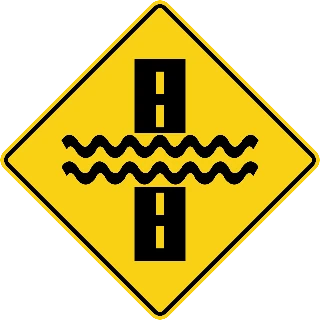
19Past this sign, water is flowing across the road and you cannot see how deep it is. What is safest?

Explanation

Moving water can sweep a car away and can hide a washed-out road. If water covers the road, turn around and use another route.

Ontario MTO Driver's Handbook, Signs (warning signs)

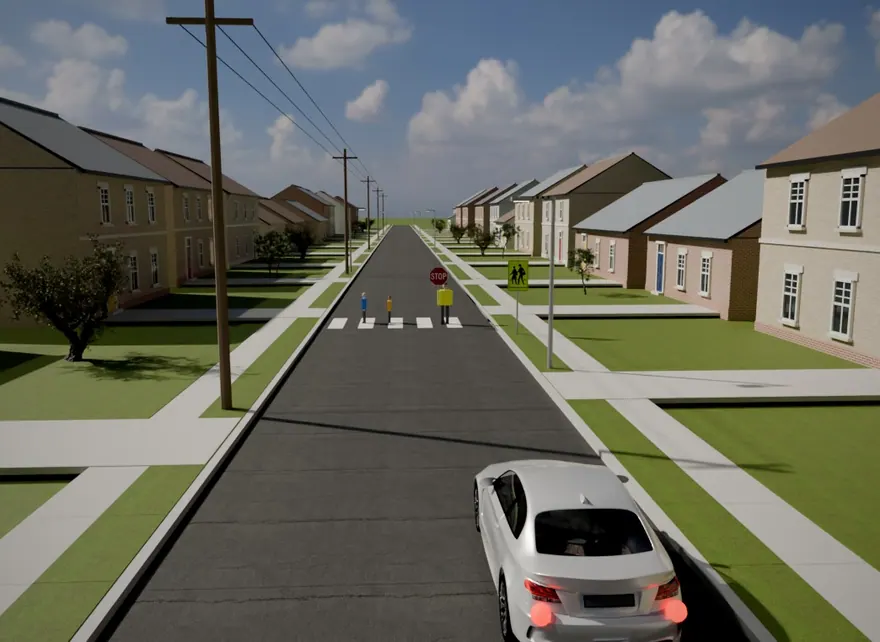
20A school crossing guard is holding up a stop sign while children cross. What must you do?

Explanation

You must obey a crossing guard's stop sign like a police officer's signal: stop and wait until the children and the guard have completely cleared the road.

Ontario MTO Driver's Handbook — Stopping

Applies in Ontario, British Columbia, Nova Scotia, Newfoundland and Labrador, Prince Edward Island, Québec

21When you park parallel to a curb, how close to it should your wheels be?

Explanation

Park within about 30 cm of the curb (Québec: of the edge of the roadway) so your vehicle does not stick out into the traffic lane; Newfoundland and Labrador and PEI write the 30 cm (300 mm) limit into their Highway Traffic Acts.

Ontario MTO handbook / ICBC Learn to Drive Smart / Nova Scotia Traffic Safety Act; NL HTA s.145; PEI HTA s.206; SAAQ Driver's Handbook — Stopping and parking

Applies in Québec

22In Québec, how long must you hold the learner's licence before you can take the SAAQ knowledge test?

Explanation

The knowledge test comes after 10 months as a learner; the road test requires 12 months and completion of the course, after which you get a 24-month probationary licence.

SAAQ — Obtaining a Class 5 licence (learner's licence 10 months before knowledge test)

Applies in Québec

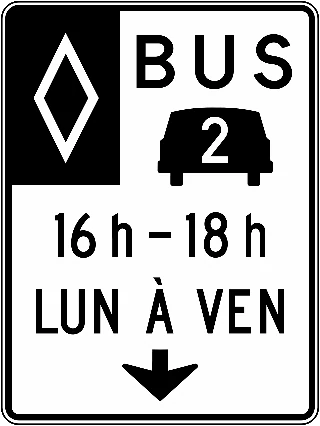
23What does this Québec sign mean?

Explanation

This is Québec's reserved-lane sign for buses and carpools with the number of occupants shown. Other vehicles may not use the lane during the posted hours.

SAAQ Driver's Handbook — Road signs (sign: hov_diamond_qc)

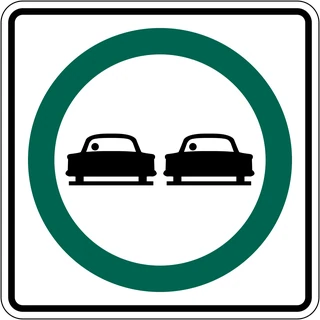
24What does this green-circle sign tell you?

Explanation

The green circle around overtaking cars means the no-passing zone has ended. You may pass when it is safe and the centre line allows it.

Ontario MTO Driver's Handbook — Signs (sign: passing_permitted)

Applies in Québec

25In Québec, failing to respect the 'corridor de sécurité' (slow down and move over) when passing a stopped emergency or tow vehicle with flashing lights carries:

Explanation

Québec sets no fixed speed but requires you to slow and, if possible, move over; the penalty is $200–$300 plus 4 demerit points, which alone suspends a learner or probationary driver.

SAAQ — Move-over law (corridor de sécurité)

26A police officer at an intersection waves you through while the traffic light is red. You should:

Explanation

Directions from a police officer or other authorised person take precedence over traffic signals, signs and markings.

Ontario MTO Driver's Handbook — Driving along (police)

Applies in Québec

27On a Québec autoroute, a driver weaves from lane to lane to pass one vehicle after another in a zigzag pattern. What penalty does this carry?

Explanation

The SAAQ lists successively passing vehicles in a zigzag pattern with a $200 to $300 fine and 4 demerit points. On roads with two or more lanes each way, avoid weaving in and out of traffic.

SAAQ Driver's Handbook ch.6 'Offences and consequences' pp.302 and 309

Applies in Québec

28A Québec learner must be accompanied by a driver who has held a Class 5 licence for at least:

Explanation

The accompanying driver needs a valid Québec Class 5 held for two years or more; learners may not drive between midnight and 5 a.m.

SAAQ — Learner's licence conditions (accompanying driver)

29This light comes on in the instrument panel. What does it mean?

Explanation

The diesel glow plugs are preheating. Wait for the light to go out, then start the engine.

Vehicle owner's manual (ISO 2575 symbols); provincial driver's handbook — vehicle maintenance

Applies in Québec

30What is the maximum speed on a Québec autoroute unless otherwise posted?

Explanation

Québec autoroutes have a 100 km/h maximum and a 60 km/h minimum. Paved rural roads default to 90 km/h, gravel roads to 70 km/h and built-up areas to 50 km/h.

Québec Highway Safety Code s. 328