CATheory Hub
English

Emergencies & collisions: practice questions

Free questions with answers and explanations. Tap an answer to check it.

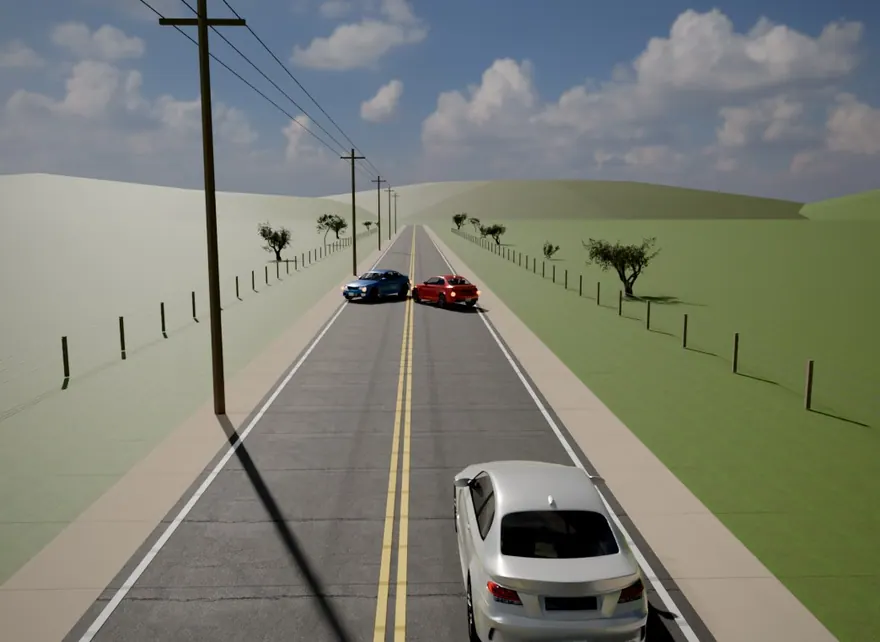
1Your service brakes have failed while you are moving. How should you use the parking brake to slow the vehicle?

Explanation

The parking brake usually acts on the rear wheels only; applying it suddenly can lock them and cause a spin. Once stopped, do not drive on; call for help.

Ontario MTO Driver's Handbook — Dealing with emergencies
2You have no first-aid training and an injured person at a crash is pale and shivering. What can you safely do?

Explanation

Use common sense: keep the person warm and calm until help arrives; if you are trained, treat injuries in order of urgency within your training.

Ontario MTO Driver's Handbook — Dealing with emergencies
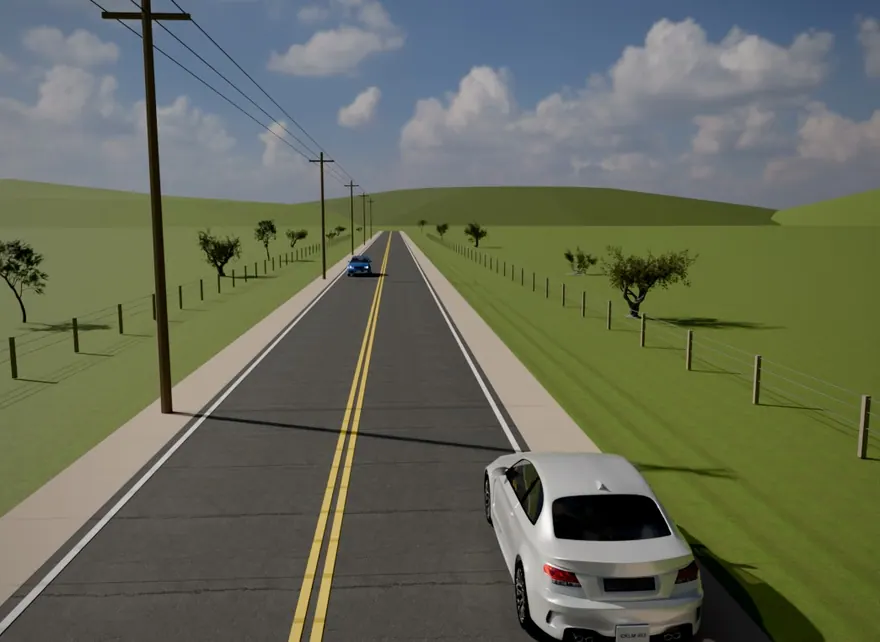
3When is the risk of hitting wildlife on the road highest?

Explanation

Deer and moose are most active in low light; reduce speed in darkness, rain and fog and scan the roadside for shining eyes.

Ontario MTO Driver's Handbook — Dealing with particular situations (animals on the road)

4You arrive first at a crash with injured people and a smell of fuel. What should you do first?

Explanation

Get help coming, prevent fire and warn other traffic; set flares or warning signals well back, never near a possible fuel leak, and let no one smoke.

Ontario MTO Driver's Handbook — Dealing with emergencies
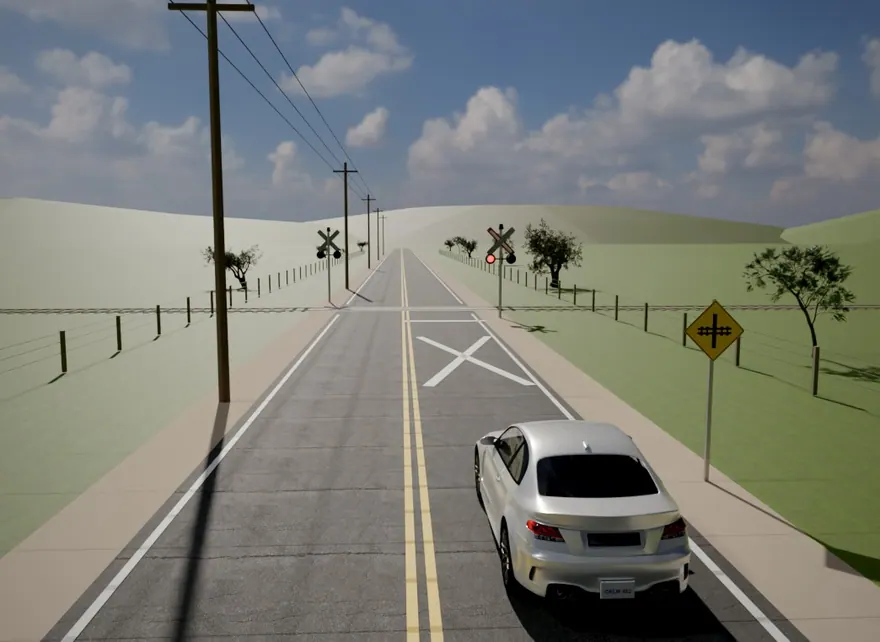
5Your right wheels drop off the edge of the pavement onto a soft shoulder. What should you do?

Explanation

Heavy braking or a sudden jerk of the wheel on a soft shoulder can throw the car across the road or into a rollover; slow down first, then return gently.

Ontario MTO Driver's Handbook — Dealing with emergencies

6Why must you never try to beat a train at a crossing, even if it seems far away?

Explanation

A loaded train needs up to two kilometres to stop; stop at least 5 m from the nearest rail when a train is approaching and never drive around a lowered gate.

Ontario MTO Driver's Handbook — Stopping (railway crossings)

7You are the first driver to arrive at a collision. Which actions are correct? Select all that apply.

Select all that apply

Explanation

If you are first at a collision, stop in a safe spot away from it, offer help if possible, and protect the scene with hazard lights and reflective triangles so other vehicles don't become involved. Give police and paramedics accurate information.

Alberta Driver's Guide (2026), Ch. 6 Collisions (contains information licensed under the Open Government Licence – Alberta)

8Right after a minor collision, the other driver asks you to admit it was your fault and offers to settle in cash. What is the best advice?

Explanation

Exchange names, addresses, licence and plate numbers and insurance details, record witnesses and details, but don't discuss or admit fault and don't offer or accept payment unless you are ready to handle the matter without your insurer.

SGI Saskatchewan Driver's Handbook 2026-27 §6.12 Exchange information with other drivers; Alberta Driver's Guide (2026) Ch. 6 Collisions

The app has 143 more questions on this topic, including the ones that apply only in your province.

Next topic: Vehicle & equipment →Start a free practice test