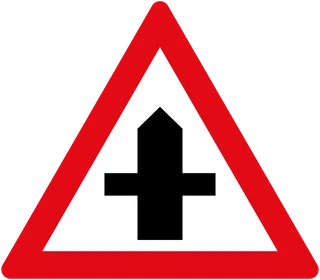
Crossroads ahead
A junction where a road crosses yours. Slow down, look left and right and be ready to give way — the thicker line is the road with priority.
Memory hint: A plus sign in a triangle.
60 signs
A junction where a road crosses yours. Slow down, look left and right and be ready to give way — the thicker line is the road with priority.
Memory hint: A plus sign in a triangle.
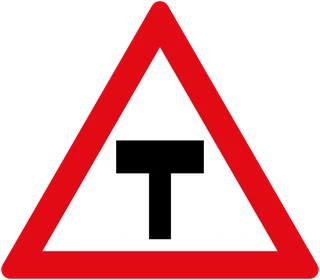
Your road ends at a road crossing in front of you. You must turn left or right and give way to traffic on the through road.
Memory hint: The T: your road is the stem and it stops.
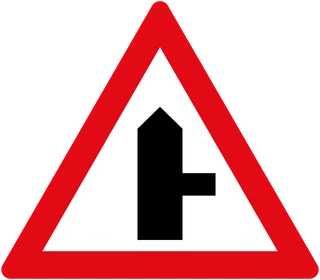
A minor road joins from the right. Watch for vehicles pulling out; they should give way to you but may not.
Memory hint: Thin branch to the right off your thick road.
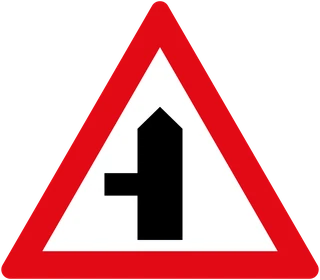
A minor road joins from the left. Vehicles turning into or out of it may cross your path.
Memory hint: Thin branch to the left off your thick road.
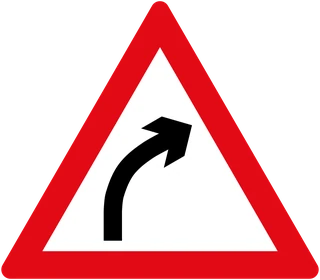
A sharp right-hand bend ahead. Reduce speed before the bend, not in it, and keep to your lane.
Memory hint: The arrow bends the way the road does.
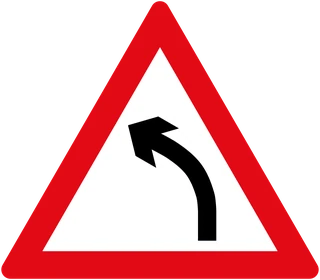
A sharp left-hand bend ahead. Brake before the curve and avoid overtaking.
Memory hint: Bend left, brake first.
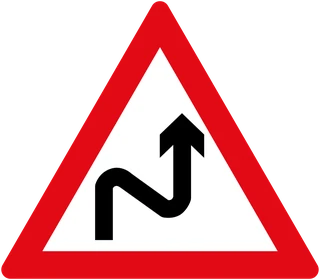
A series of bends begins with a right-hand curve. Common on mountain roads to Hatta, Jebel Jais and Jebel Hafeet.
Memory hint: An S-shaped arrow: more than one bend.
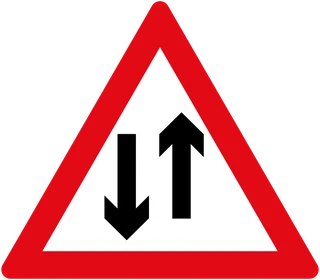
The road ahead carries traffic in both directions, often after a one-way or dual-carriageway section. Keep right and do not drift over the centre line.
Memory hint: Two arrows head to head: oncoming cars are coming.
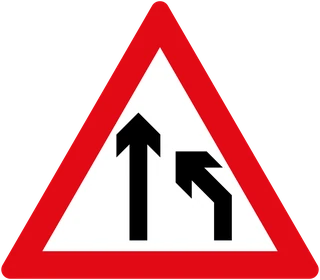
The right-hand lane ends ahead; traffic in it must merge left. If you are in the left lane, leave room for merging vehicles.
Memory hint: The right arrow bends into the left one: merge left.
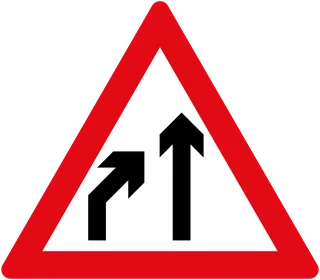
The left-hand lane ends ahead; merge right in good time and use your indicator.
Memory hint: The left arrow bends into the right one: merge right.
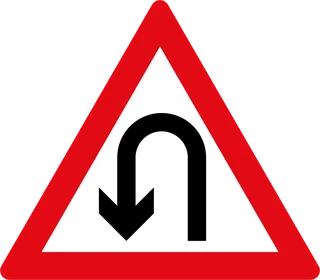
A designated U-turn point is ahead. Expect vehicles slowing and turning across the road; use it only from the correct lane.
Memory hint: A hooked arrow without a red bar: U-turn allowed here.
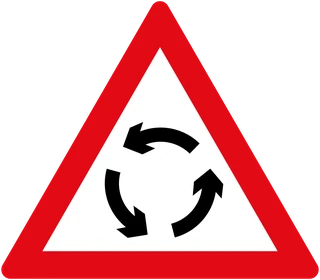
You are approaching a roundabout. Slow down, pick your lane for your exit and prepare to give way to traffic coming from the left.
Memory hint: Three arrows in a circle inside a triangle: warning, not order.
Augustasci: File:AE road sign 420.svg, CC BY 4.0
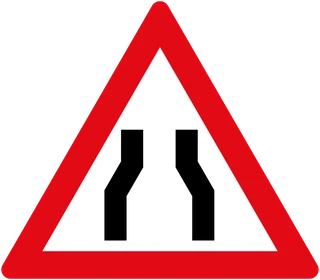
The carriageway becomes narrower ahead. Slow down and do not overtake; large vehicles may need part of your lane.
Memory hint: Both edges squeeze in.
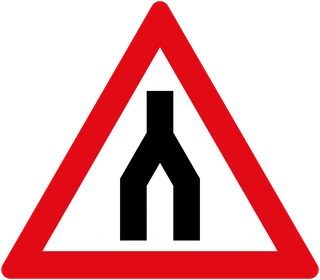
The central reservation ends and the road becomes single carriageway with oncoming traffic. Keep right and stop treating the left lane as yours.
Memory hint: Two lanes merging into a two-way road.
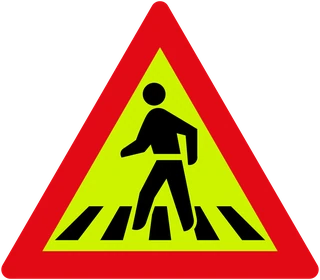
A marked crossing is ahead. Be ready to stop; failing to give way to pedestrians there costs AED 500 and 6 black points.
Memory hint: A person on stripes inside a triangle: pedestrian crossing ahead.
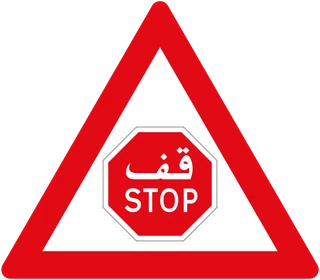
A STOP sign follows, often hidden by a bend or crest. Start slowing now so you can stop completely at the line.
Memory hint: Small octagon in a triangle: the real one is coming.
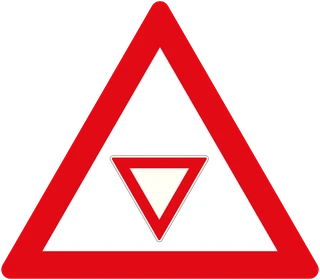
A GIVE WAY sign follows. Reduce speed and prepare to yield at the junction.
Memory hint: Small inverted triangle inside a big one.
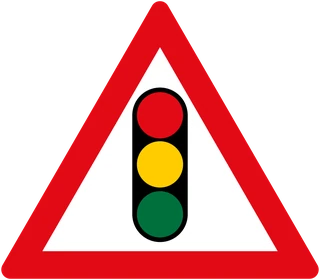
Traffic lights are ahead, possibly out of sight. Be ready to stop for amber; jumping a red costs AED 1,000, 12 points and 30 days' impound.
Memory hint: A three-light signal in a triangle.
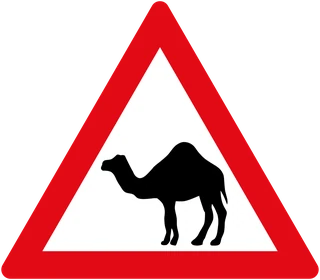
Camels and other animals may wander onto the road, especially on desert roads at dusk and night. Slow down, never sound the horn near animals, and never swerve violently.
Memory hint: The UAE's most famous sign: a camel in a triangle.
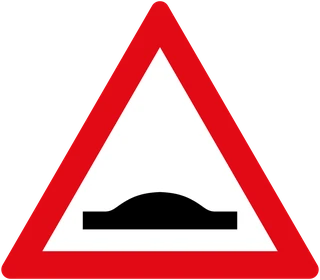
A road hump is ahead. Slow right down; hitting a bump at speed can damage the car and unsettle passengers.
Memory hint: A bump drawn on the road line.
Augustasci: File:AE road sign 435.svg, CC BY 4.0
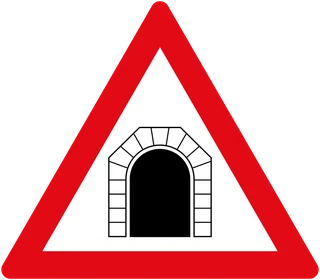
A tunnel is coming. Switch on dipped headlights, remove sunglasses, keep your lane and do not stop or U-turn inside.
Memory hint: An arch in a triangle: lights on before you enter.
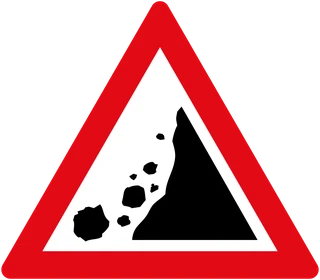
Rocks may fall or lie on the road, typical on Hajar mountain roads after rain. Watch the surface and do not stop under the slope.
Memory hint: Stones tumbling down a slope.
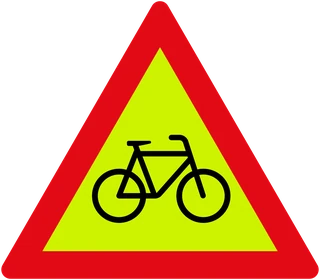
Cyclists may be crossing or riding ahead, for example at a cycle-track junction. Slow down and leave at least 1 metre when passing.
Memory hint: Bike in a triangle = warning; bike in a blue circle = their lane.
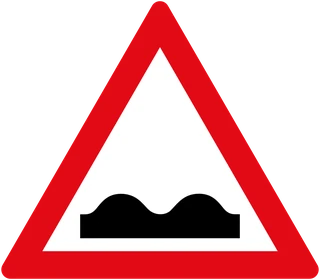
The surface ahead is bumpy or damaged. Slow down and hold the wheel firmly.
Memory hint: Two bumps on the road line.
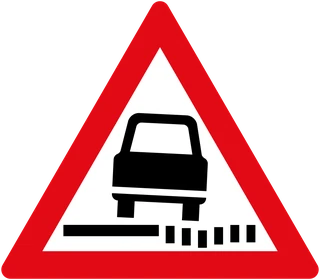
The ground beside the carriageway is soft sand. Do not pull onto it at speed — wheels can sink and the car can roll.
Memory hint: A car tilting off the road edge: stay on the tarmac.
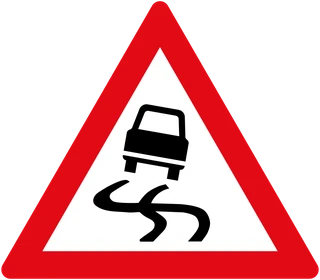
The road may be slippery because of rain, oil or sand. Slow down, avoid sudden braking and steering, and increase your following distance.
Memory hint: A car with wavy skid lines.
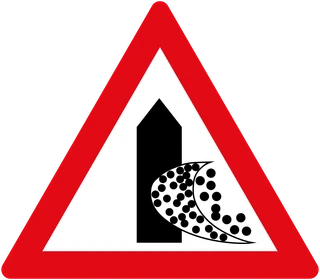
Wind-blown sand may cover the road and reduce grip and visibility. Slow down, keep lights on and avoid sharp steering on sand patches.
Memory hint: Sand blowing across the road: the desert is crossing.
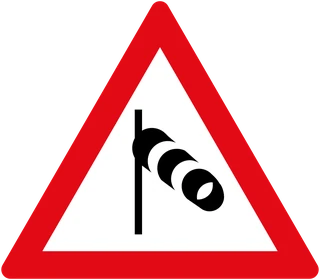
Strong side winds may push the vehicle sideways, especially on bridges, open desert stretches and for high-sided vehicles. Hold the wheel firmly and slow down.
Memory hint: A windsock: wind from the side.
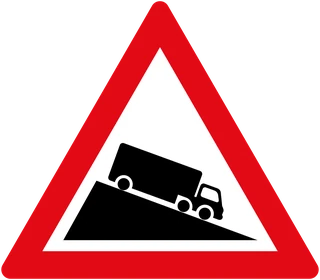
A steep downhill stretch ahead. Use engine braking in a low gear rather than riding the brakes, which can overheat.
Memory hint: A truck heading down a slope.
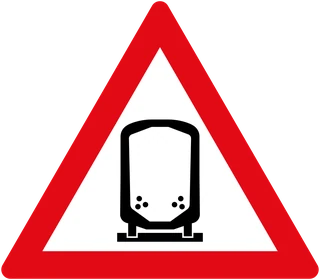
Tram tracks cross the road ahead (Dubai Tram). Trams cannot swerve or stop quickly — obey the tram signals and never queue on the tracks.
Memory hint: A tram in a triangle: rails ahead, no stopping on them.
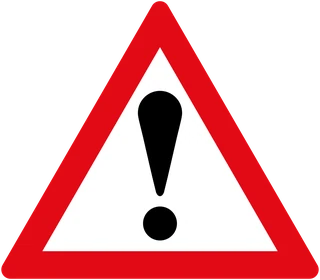
A hazard not covered by another sign; a plate below usually explains it. Slow down and be alert.
Memory hint: An exclamation mark: read the plate underneath.
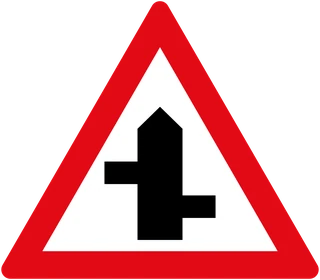
Two side roads join close together, the first from the right and then one from the left. Watch for vehicles crossing between them.
Memory hint: Read it bottom-up: the lower arm is the junction you meet first.
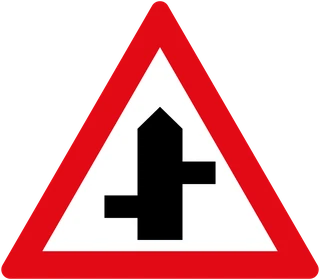
Two side roads join close together, the first from the left and then one from the right. Watch for vehicles crossing between them.
Memory hint: Two arms that do not line up: two junctions, one after the other.
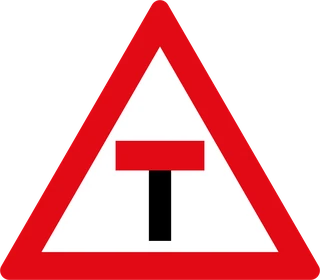
The road ahead is a dead end with no way out. Do not enter unless your destination is on it.
Memory hint: The red bar caps the road: it stops there.
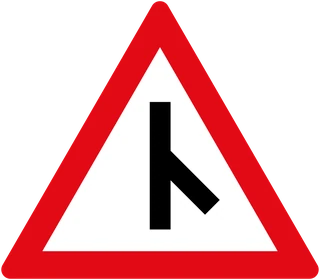
Another stream of traffic joins yours from the right ahead and the two merge. Check your mirrors, adjust your speed and leave room.
Memory hint: A slanted arm sliding into the main line = merging traffic.
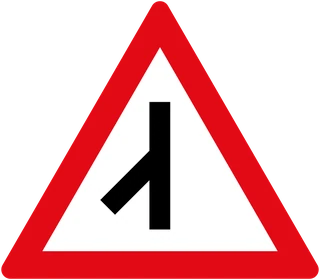
Another stream of traffic joins yours from the left ahead and the two merge. Check your mirrors, adjust your speed and leave room.
Memory hint: The slanted arm shows the side the others come from.
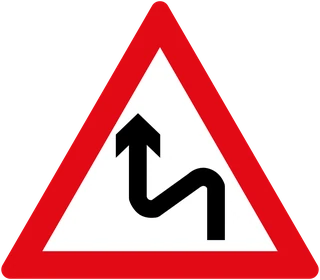
A series of bends starts with a curve to the left. Slow down before the first bend and stay in your lane.
Memory hint: Follow the arrow from its tail: the first kink is the first bend.
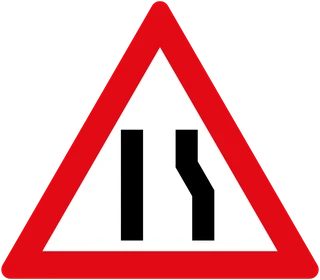
The road loses width on the right-hand side ahead. Traffic on the right must move over, so leave room.
Memory hint: The bent line is the side that closes in.
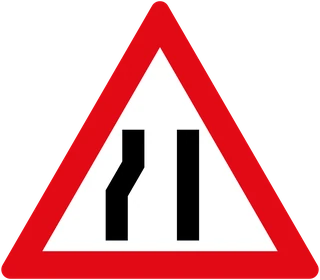
The road loses width on the left-hand side ahead. Traffic on the left must move over, so leave room.
Memory hint: Left line bends in: the left side is squeezed.
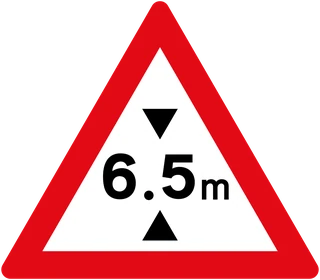
A low bridge or structure is ahead. Vehicles higher than the figure shown cannot pass under it and must take another route.
Memory hint: Triangle = warning in advance; the ring version is at the bridge itself.
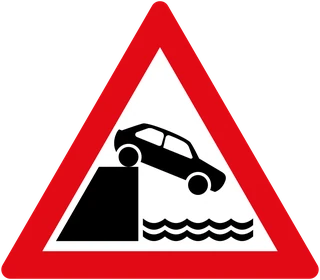
The road ends at or runs beside open water with no barrier. Slow down and keep away from the edge.
Memory hint: A car tipping into the water says it all.
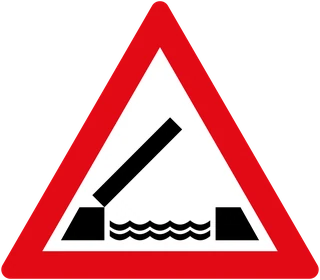
A bridge that opens for boats is ahead. Be ready to stop when its lights or barriers operate.
Memory hint: One half of the bridge is lifted in the picture.
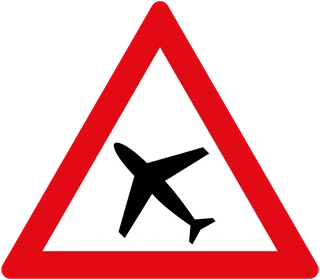
Aircraft fly low over the road near an airport. Do not be distracted by the sudden noise; keep your eyes on the road.
Memory hint: Plane in a triangle is a warning, not a direction to the airport.
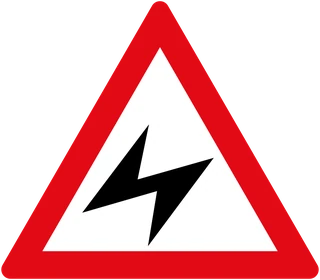
High-voltage electric cables cross above the road ahead. Drivers of tall vehicles and high loads must check their height.
Memory hint: The lightning flash is the symbol for electricity.
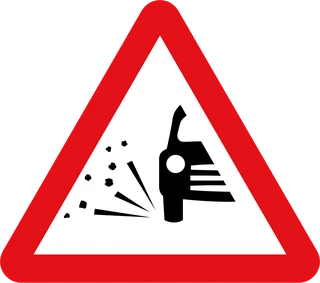
Loose stones on the road can be thrown up by tyres and reduce grip. Slow down and keep well back from the vehicle in front.
Memory hint: Stones flying from the wheels: protect your windscreen with distance.
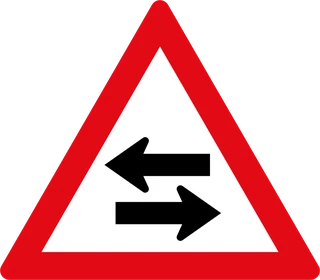
Your one-way road meets a road carrying traffic in both directions. Look left and right before you cross or join it.
Memory hint: Sideways arrows = the two-way traffic is on the road across yours.
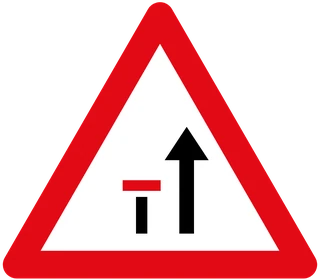
The left-hand lane is closed ahead. Move into the open lane on the right in good time.
Memory hint: The lane with the red bar on top is the blocked one.
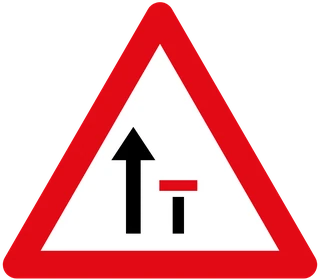
The right-hand lane is closed ahead. Move into the open lane on the left in good time.
Memory hint: Arrow = lane that continues; red bar = lane that stops.
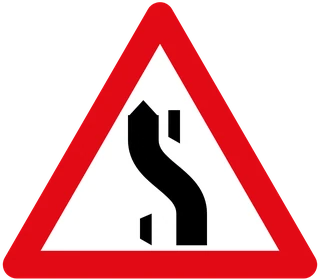
Traffic is diverted across the central reservation onto the other carriageway ahead. Slow down and follow the lane markings.
Memory hint: The road band swings across the gap in the median.
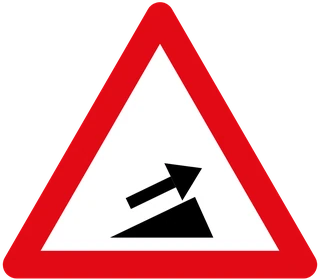
A steep uphill stretch is ahead. Select a lower gear in good time and expect slow heavy vehicles.
Memory hint: Arrow climbing the slope = uphill.
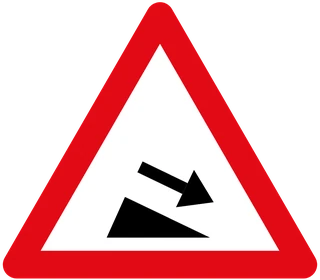
A steep downhill stretch is ahead. Slow down and use a lower gear so the engine helps the brakes.
Memory hint: Arrow running down the slope = downhill.
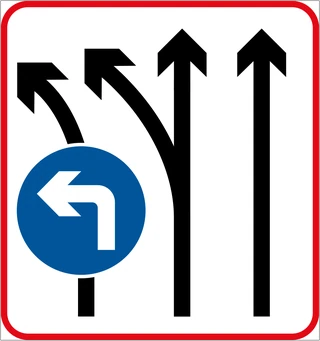
Shows which way each lane must go ahead: here the left lane must turn left. Get into the lane for your direction early.
Memory hint: One arrow per lane; the blue disc is an order for that lane.
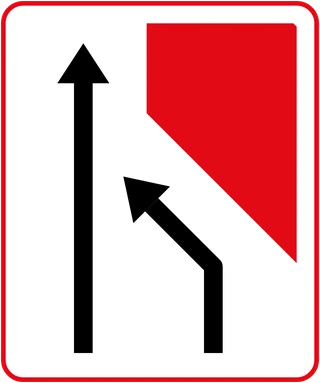
The right-hand lane is closed ahead and its traffic must move left. Merge in turn and do not leave it to the last moment.
Memory hint: The red block sits on the lane that disappears.
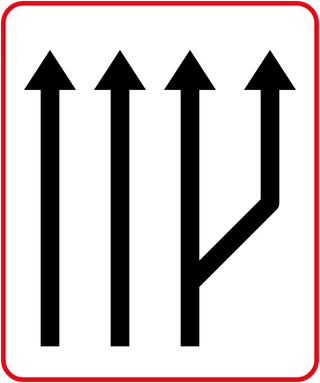
An extra lane opens on the right ahead, so the road becomes wider. Choose the lane that suits your speed and direction.
Memory hint: One arrow splits into two: a new lane is born.
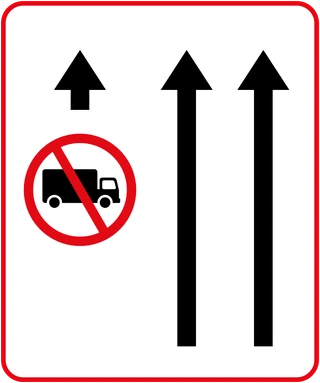
Trucks must not use the left lane ahead; the other lanes are open to all vehicles.
Memory hint: The no-trucks roundel sits on the lane it applies to.
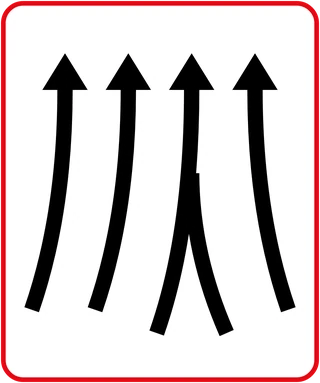
Two lanes join into one ahead, so five lanes become four. Drivers in the merging lanes take turns and keep a safe gap.
Memory hint: Count the tails, then the heads: one lane fewer.
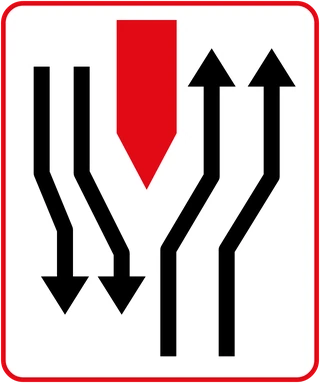
A central island (median) begins ahead and separates the two directions of traffic. Keep to the right of it.
Memory hint: Red wedge ahead of your arrows: the island starts there.
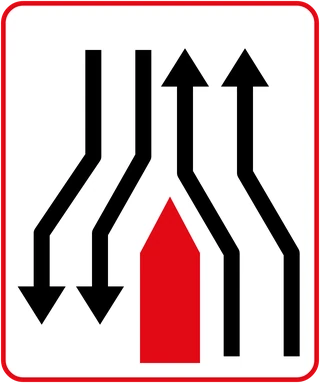
The central island (median) ends ahead; after it only road markings separate you from oncoming traffic.
Memory hint: Red wedge behind your arrows: the island is over.
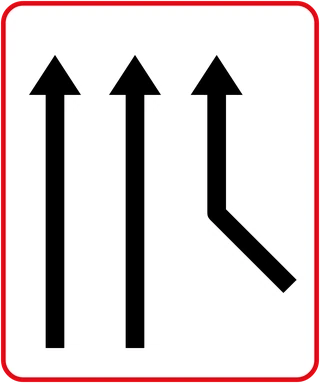
A lane joins the road from the right ahead. Expect vehicles merging into your lane and help them in.
Memory hint: The slanted line feeds into the right-hand arrow.
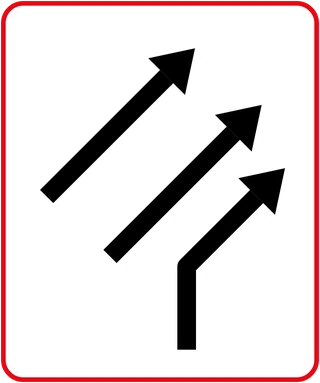
A lane joins a main road at an angle ahead and runs alongside it before merging. Match the speed of the traffic and merge into a safe gap.
Memory hint: The bent arrow is the lane coming in beside the two straight ones.

