UKTheory Hub
English

Hazard awareness: UK theory test questions and answers

Free questions with answers. No sign-up needed.

1After 40 minutes on a motorway you take the exit slip road at 50 mph, which feels quite slow. The road ahead bends sharply. What is the best action?

Explanation

After a long motorway stretch your sense of speed is distorted: rule 274 says 50 mph may feel like 30 mph and some slip roads have sharp bends. Judging by feel or by the limit is the trap, so check the speedometer and slow down.

Highway Code rule 274
2After weeks of hot, dry weather it starts to rain lightly while you drive at 40 mph on a single carriageway. What is the most likely hazard, and the best response?

Explanation

Rule 237 warns that if it rains after a dry spell the road may become slippery, affecting steering and braking, and rule 227 says wet-weather stopping distances are at least double. Light rain on a long-dry road is the trap, not a reason to relax.

Highway Code rules 227 and 237

3On a narrow lane you come up behind two riders on horses, side by side. One is leading a young, nervous horse. You are doing 40 mph. What is the best action?

Explanation

Rule 215 says to slow to a maximum of 10 mph, not to sound the horn or rev, and to pass wide and slow with at least 2 metres; riders may ride in double file with a young horse. 1.5 m is the cyclist guide in rule 163, and passing quickly startles flight animals.

Highway Code rule 215

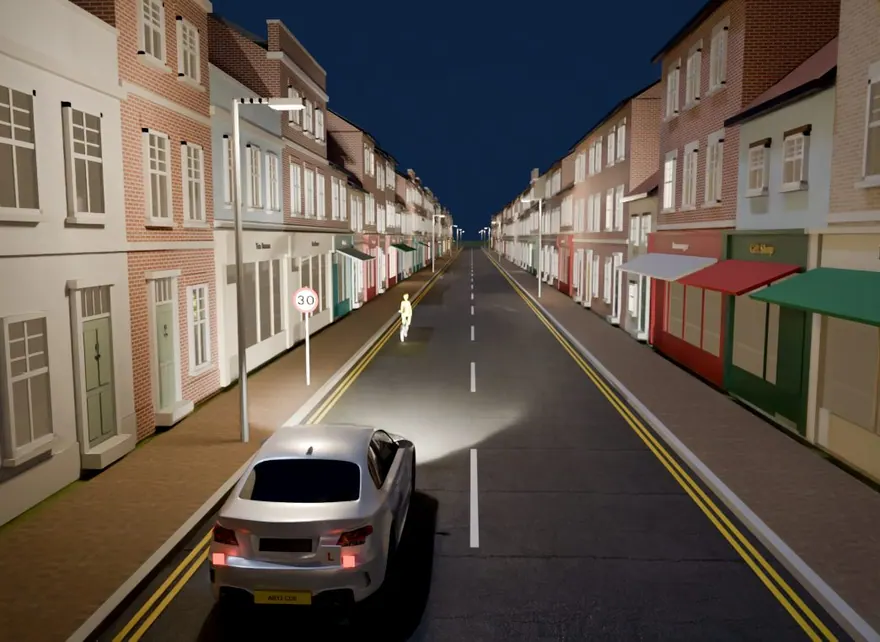
4At night on a 30 mph road you catch up with a cyclist riding near the kerb. In daylight you would pass with about 1.5 metres. What should you do now?

Explanation

Rule 163 gives 1.5 m as a guide up to 30 mph and says to give more space at night and in bad weather, or wait behind if you cannot meet it. 2 m is the figure for horse riders and pedestrians in the road, not a night-time cyclist rule.

Highway Code rules 163 and 212

5You are driving a large vehicle through a road tunnel where visibility is reduced. Traffic ahead then queues and you have to stop. Which gaps does the Code give you for moving and for stopped?

Explanation

Rule 126 gives a two-second minimum in tunnels, but a large vehicle should allow four seconds, and a stop in a tunnel needs at least 5 metres. The two-second option is the car figure and does not fit a large vehicle.

Highway Code rule 126

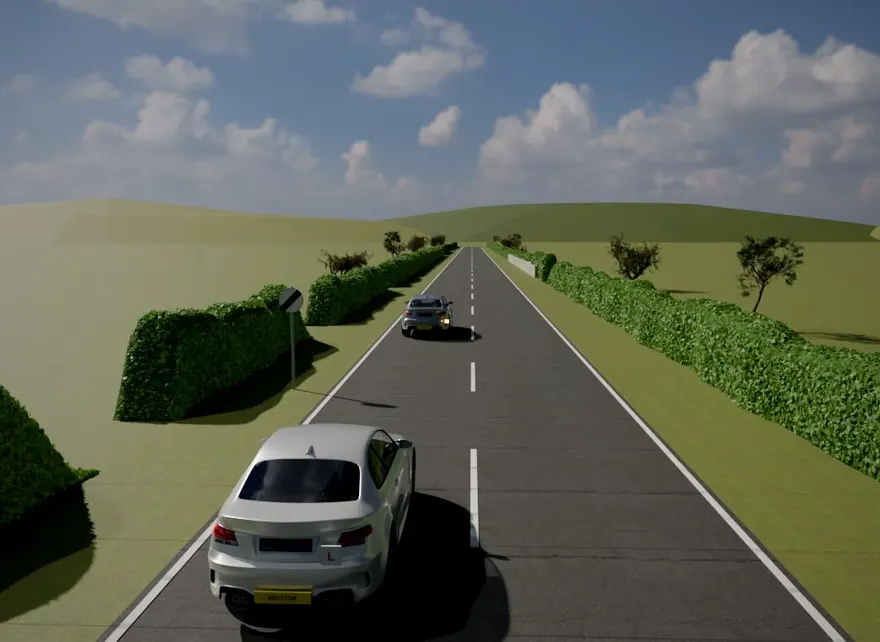
6On a fast road you normally keep the two-second gap. Which is correct for rain and for ice?

Explanation

Rule 126 says the two-second gap should be at least doubled on wet roads and up to ten times greater on icy roads. Ten times two seconds is twenty, so the 'ten seconds on ice' options confuse the multiplier with the result.

Highway Code rule 126

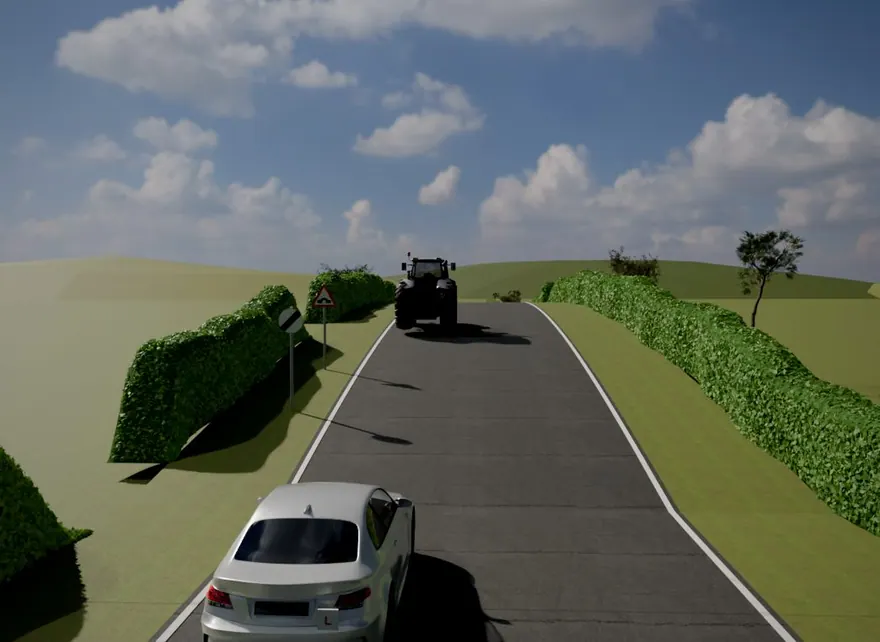
7You are stuck behind a tractor at 20 mph and approach a hump bridge. The road looks clear as far as the crest. What is the best action?

Explanation

Rule 166 says do not overtake if you cannot see far enough ahead to be sure it is safe, and names a hump bridge, a bend and the brow of a hill. Seeing a clear road up to the crest is the trap: what matters is the view beyond it.

Highway Code rules 166 and 164

8On a straight, quiet road the car ahead has had its right indicator flashing for some time, with no side road in sight. You want to pass on the right. What should you do?

Explanation

Rule 167 says not to overtake when a road user is indicating right, even if you believe the signal should have been cancelled; do not take a risk. Flashing or sounding the horn does not tell you their intention, so the only safe choice is to wait.

Highway Code rules 167 and 163

The app has 175 more questions on this topic.

Vulnerable road users →Start the free mock test