UKTheory Hub
English

Free UK theory mock test

50 questions, 57 minutes, 43 correct answers to pass: the same as the multiple-choice part of the real car theory test. The real test also has a hazard perception part, which this mock test does not include.

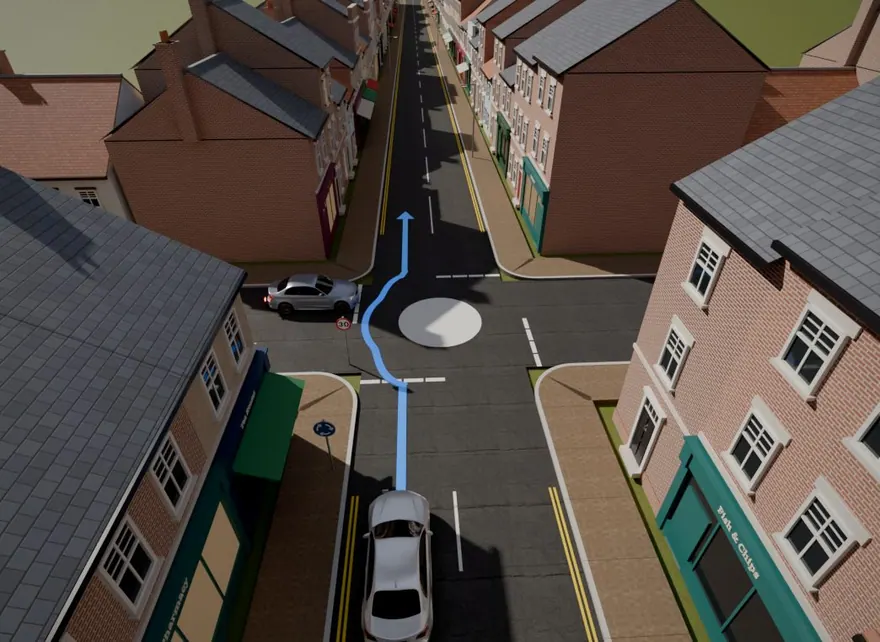
1You're going straight ahead at this mini-roundabout and a car is waiting at the give-way line on your left. Nothing is coming from your right. What should you do?
Explanation

Traffic gives priority to vehicles approaching from its right (rules 185 and 188). You're on the right of the waiting car, so it should give way to you, but keep an eye on it as you go.

Highway Code rules 185, 188
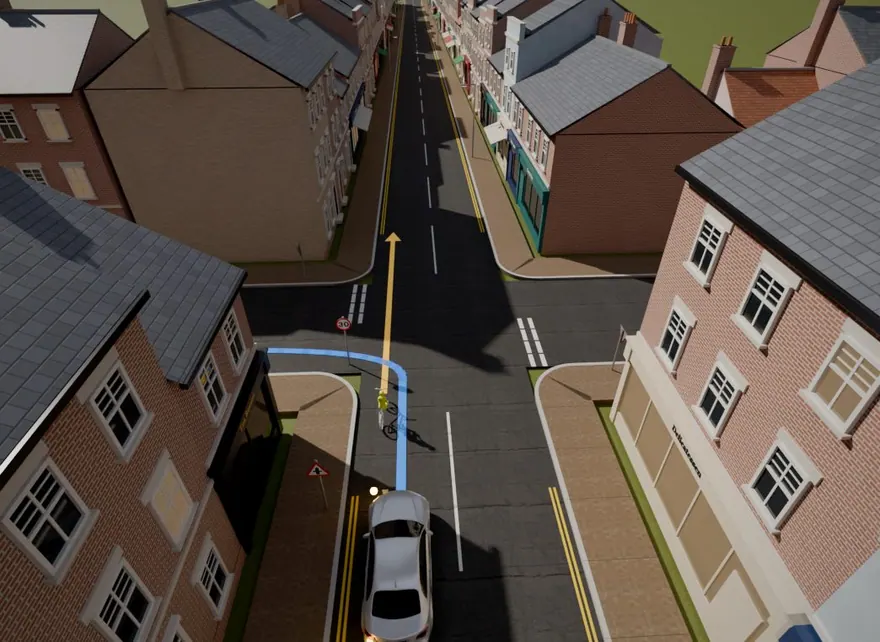
2You're turning left. The cyclist ahead of you on the left is going straight on. What should you do?

Explanation

Rule H3: you should not cut across cyclists going ahead when turning, and you should not turn if it would make them stop or swerve. Wait for a safe gap.

Highway Code rule H3

3Which of these is NOT part of the Highway Code's advice when your vehicle breaks down on a motorway?

Explanation

Rule 276 says never use warning triangles on motorways. The other three are rule 277 advice.

Highway Code rule 276

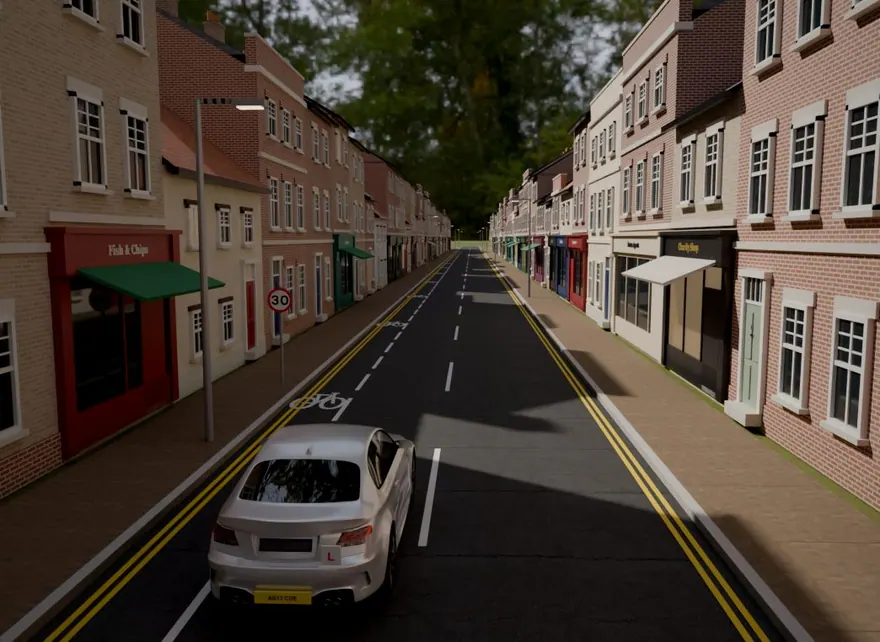
4Yellow marks on the kerb show that loading is banned at the times displayed, and you are within those times. A passenger needs to get out of your car. What may you do?

Explanation

Yellow kerb marks ban loading and unloading at the times on the plate, but the Highway Code says you may stop while passengers board or alight. That allowance covers the passenger getting out, not unloading goods, however light, and has no engine condition.

Highway Code 'Road markings': loading restrictions

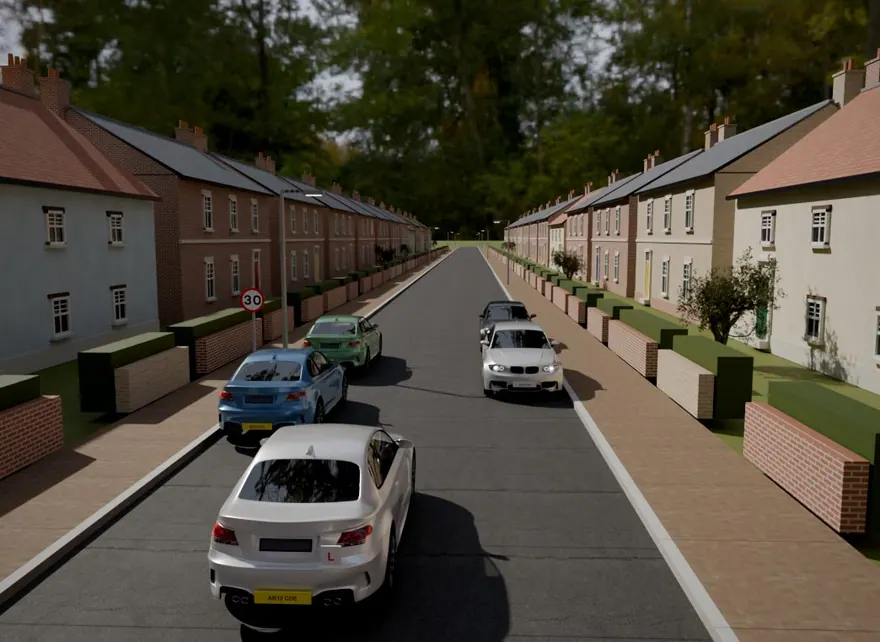
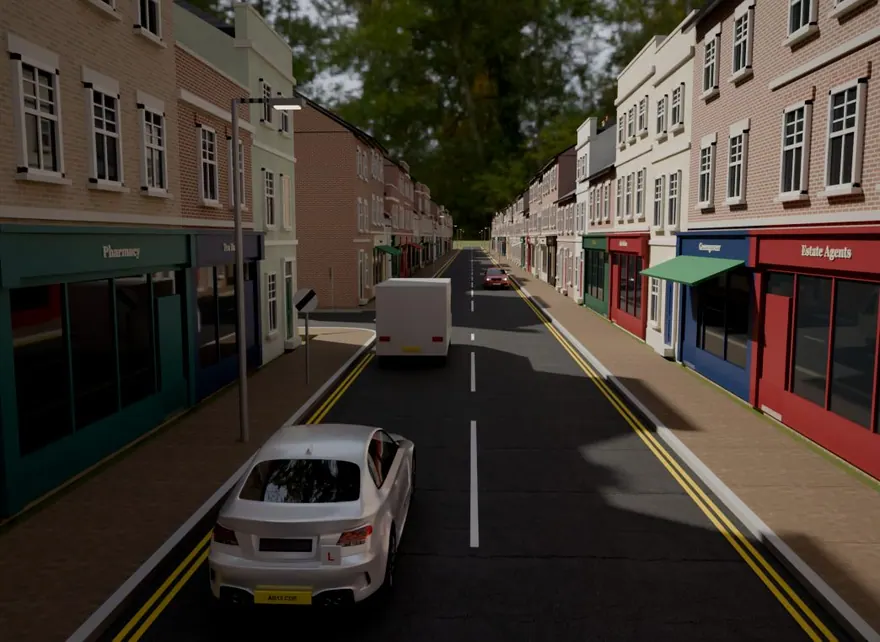
5On a fairly narrow street, the only gap you can find is directly opposite another parked car. Why should you look for somewhere else?

Explanation

Rule 243 says do not stop or park opposite a traffic island or, if this would cause an obstruction, another parked vehicle. Two cars facing each other can leave too little room for traffic to pass.

Highway Code rule 243

6You're in a slow queue and the words 'KEEP CLEAR' are painted across the road outside an ambulance station entrance. What should you do?

Explanation

The 'KEEP CLEAR' marking means do not block that part of the carriageway indicated. Wait before it, even in a queue, so vehicles can get in and out; it is not limited to moments when an ambulance is already waiting, and you should not edge onto it and hope to move on.

Highway Code 'Road markings': 'Do not block that part of the carriageway indicated'

7This warning light flashes while you are driving. What should you do?

Explanation

The electronic stability control light flashes when the system is working to keep the car stable because grip is low. Ease off the accelerator and steer smoothly. If the light stays on, the system has a fault — have it checked.

Highway Code Annex 6 (vehicle maintenance, safety and security); vehicle handbook (ISO 2575 symbols)

8There are children walking and cycling along the pavement outside your house. Which way of using your driveway does Rule 201 prefer?

Explanation

Rule 201 says that when using a driveway you should reverse in and drive out if you can, so that the manoeuvre in which you see least is done off the road. The guided option is a fallback for poor visibility in Rule 202, not the Code's preferred method.

Highway Code rule 201

9You're taking children aged 4 to 9 in a minibus that has no child seats and no seat belts in some seats. Where must the children sit?

Explanation

GOV.UK says that in a minibus all children must travel in rear seats if a child car seat or adult seat belt is not fitted. Children aged 3 or older must use a child seat if one is available, or an adult belt if not.

GOV.UK: Child car seats - when a child can travel without a car seat

10You arrive at a level crossing with user-operated gates and red and green lights. The green light is showing. Which is the correct procedure?

Explanation

Rule 296 says that at user-operated gates or barriers you MUST NOT cross when the red light is showing; only cross if the green light is on. Open the gates on both sides, check the green light is still on, cross quickly and close the gates once clear.

Highway Code rule 296

11It's very windy. A motorcyclist ahead of you is about to overtake a high-sided lorry. What should you do?

Explanation

Rule 233: in very windy weather large vehicles create turbulence that particularly affects motorcyclists, so keep well back from them while they overtake a high-sided vehicle. Moving up alongside or close behind puts you in the same turbulence, and a horn blast does nothing to help them.

Highway Code rule 233

12At some level crossings you'll see small red and green lights rather than full-size traffic signals. What does the Highway Code call these?

Explanation

The warning signs in both codes include 'miniature warning lights at level crossings'. Rule 296 says you must not cross when the red light is showing; cross only if the green light is on.

Highway Code 'Traffic signs' (GB and NI)

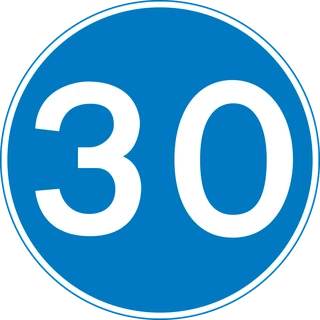
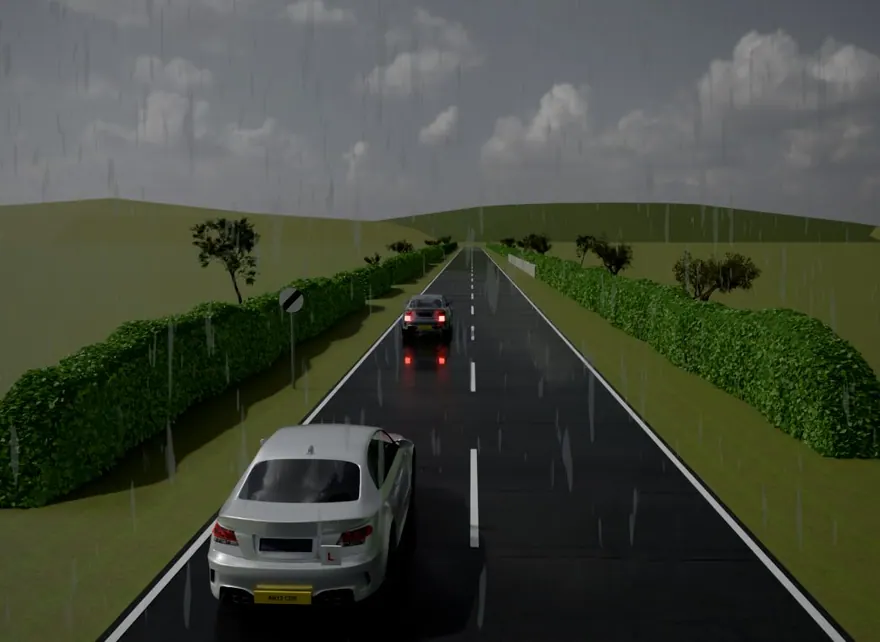
13What does this sign mean?

Explanation

This is the 'Minimum speed 30 mph' sign. A blue disc with a number is a minimum speed: you must not drive slower than 30 mph unless it is impracticable or unsafe to do so. Used in tunnels and on some fast roads to keep traffic flowing.

Know Your Traffic Signs / Highway Code traffic signs: Minimum speed 30 mph (UK traffic sign 672)

14A coach 13 metres long travels on a motorway with the national speed limit. What is its maximum speed?

Explanation

Buses, coaches and minibuses over 12 metres are limited to 60 mph on motorways; those up to 12 metres may travel at 70 mph.

GOV.UK: Speed limits

15A disqualified driver is caught driving. Which of these penalties can a court impose?

Explanation

Highway Code Annex 5 (Great Britain): driving while disqualified can lead to imprisonment (up to 6 months, or 12 months in Scotland), an unlimited fine, further disqualification and 6 penalty points. The Northern Ireland penalties annex gives up to 2 years' imprisonment, an unlimited fine, discretionary disqualification and 6 penalty points.

Highway Code Annex 5 (GB) and NI Highway Code 'Penalties' annex

16The rear of your car starts to skid to the right. How should you steer to recover?

Explanation

Highway Code rule 119: turn the steering wheel in the direction of the skid. If the rear skids to the right, steer to the right, and remove the cause by releasing the brake or easing off the accelerator.

Highway Code rule 119

17You're passing roadworks where large machines and workers are busy beside your lane. What does the Highway Code tell you to concentrate on?

Explanation

Rule 288 says to concentrate on the road ahead, not the road works, and to bear in mind that the road ahead may be obstructed by the works or by slow-moving or stationary traffic.

Highway Code rule 288

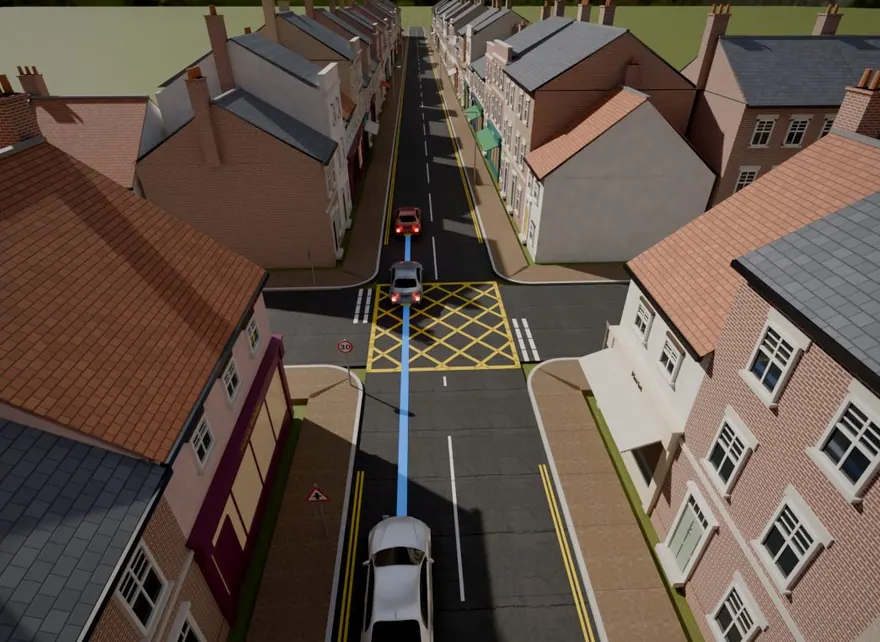
18You're going straight ahead, but traffic is queuing beyond the yellow box. What MUST you do?

Explanation

Rule 174: you MUST NOT enter the box until your exit road or lane is clear.

Highway Code rule 174

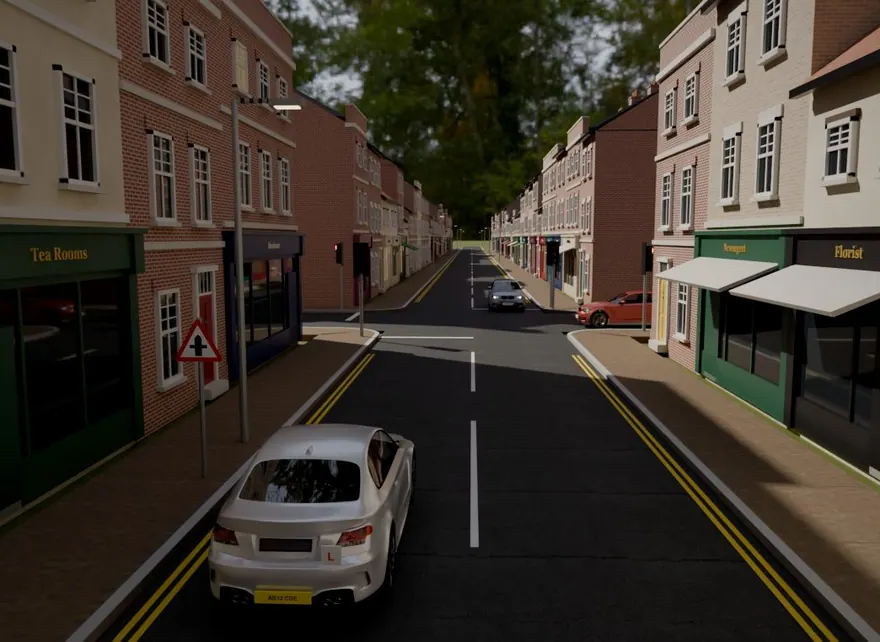
19You approach a junction with traffic lights that are not working. What should you do?

Explanation

Rule 176: if the traffic lights are not working, treat the situation as you would an unmarked junction and proceed with great care.

Highway Code rule 176

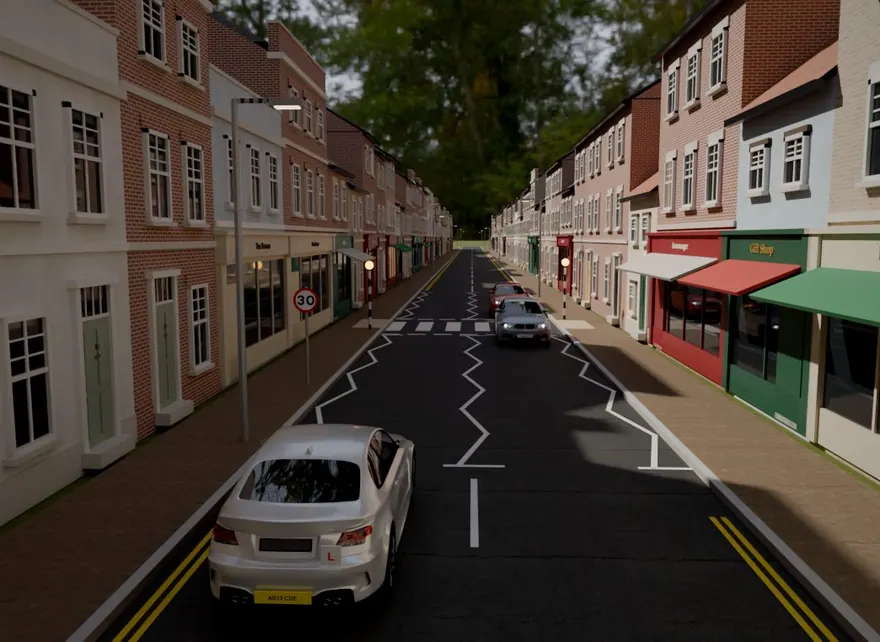
20A queue of traffic on the other side of the road blocks your view of one side of a pedestrian crossing ahead. What should you do?

Explanation

Rule 193 says to take extra care where queuing traffic blocks your view of either side of a crossing, because pedestrians may be crossing between stationary vehicles. The drivers in the queue can't be relied on to have looked for you, and the pedestrians you can't see may be stepping out.

Highway Code rule 193

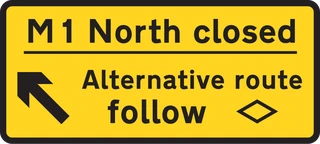
21What does this sign mean?

Explanation

This is the 'Emergency diversion route' sign. When a motorway or major road is closed, drivers are told to follow a shape (square, triangle, diamond or circle) shown as a black symbol on yellow patches added to the ordinary direction signs along the diversion.

Know Your Traffic Signs / Highway Code traffic signs: Emergency diversion route (follow symbol) (UK traffic sign 2716)

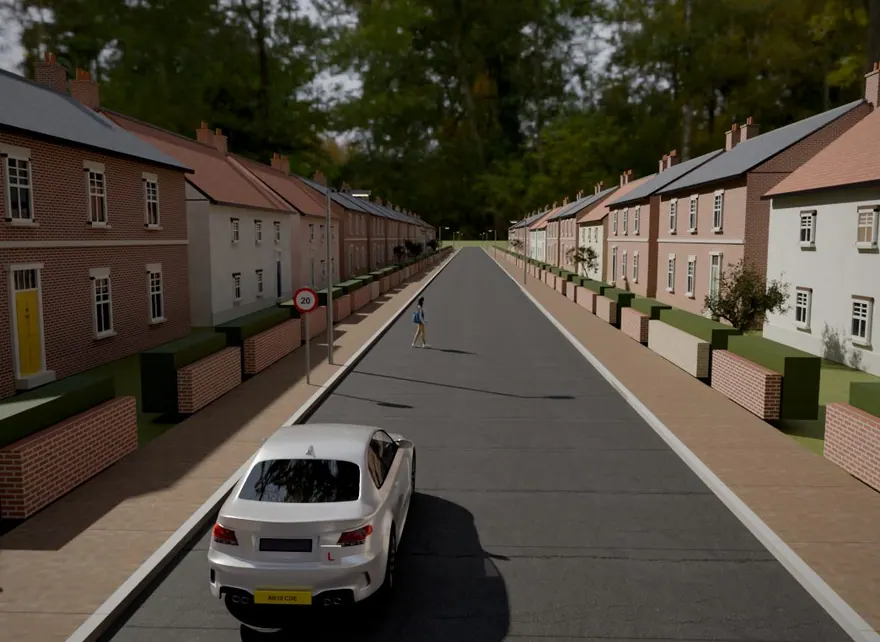
22According to the Highway Code, if you hit a pedestrian at 20 mph, what's the chance of them being killed?

Explanation

Rule 207 says that at 40 mph your vehicle will probably kill any pedestrian it hits, while at 20 mph there is only a 1 in 20 chance of the pedestrian being killed. So kill your speed.

Highway Code rule 207

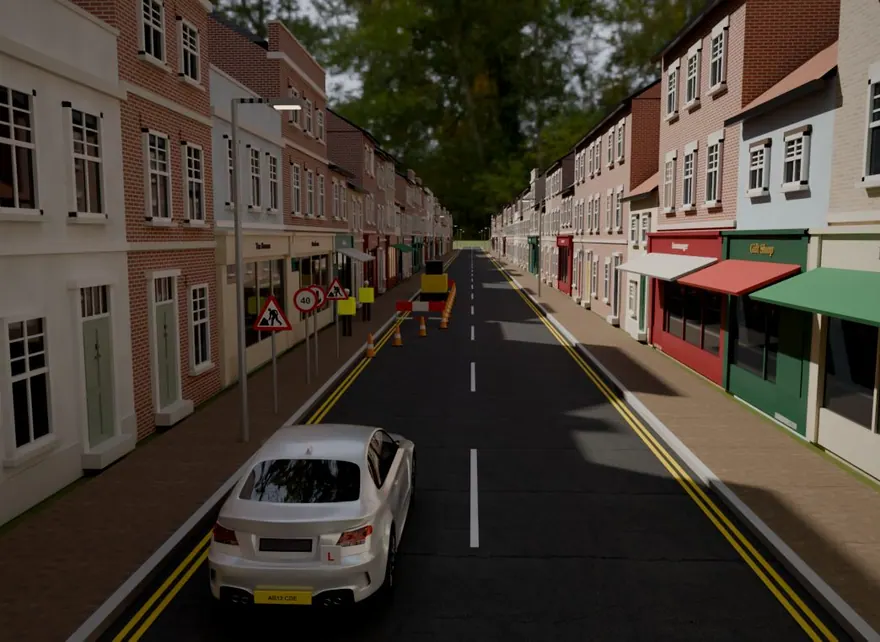
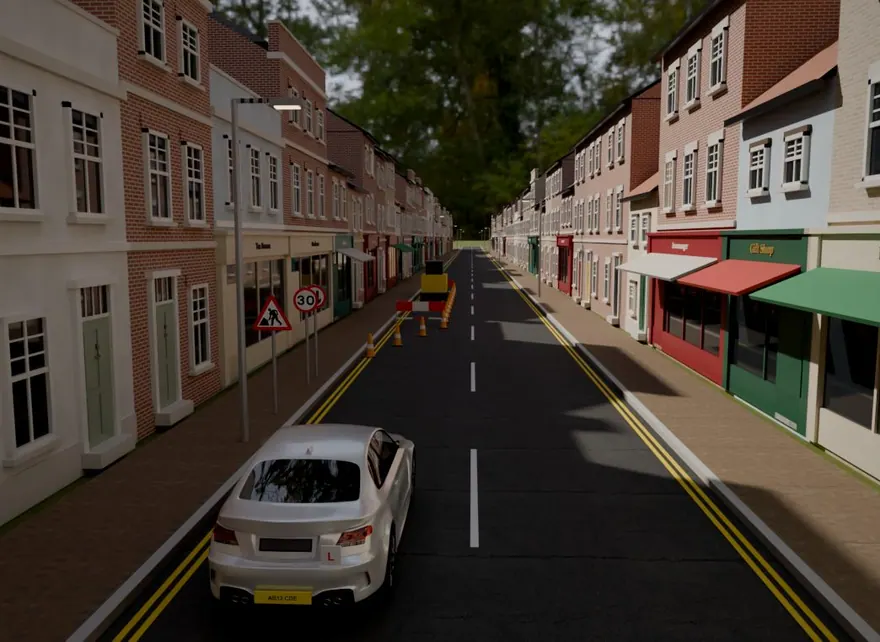
23At roadworks a line of traffic cones separates the open lane from a coned-off area that looks empty. May you drive through the coned-off area to get past a queue?

Explanation

Highway Code rule 288 says to take extra care at road works, obey all signs and not to drive through an area marked off by traffic cones. The area may hide workers, equipment or an unsafe surface.

Highway Code rule 288

24You're driving a car through a tunnel where visibility is reduced, and the road surface is wet. What is the shortest time gap that fits the Code's guidance?

Explanation

Rule 126 sets at least two seconds in tunnels where visibility is reduced, and the gap should be at least doubled on wet roads, so four seconds. Ten seconds is not the minimum for wet; the ten-times figure applies to ice.

Highway Code rules 126 and 227

25You want to park briefly and the only gap is across the entrance to a cycle track. What should you do?

Explanation

Highway Code rule 243 says not to stop or park where you would obstruct cyclists' use of cycle facilities. Forcing cyclists out into the traffic puts them at risk.

Highway Code rule 243

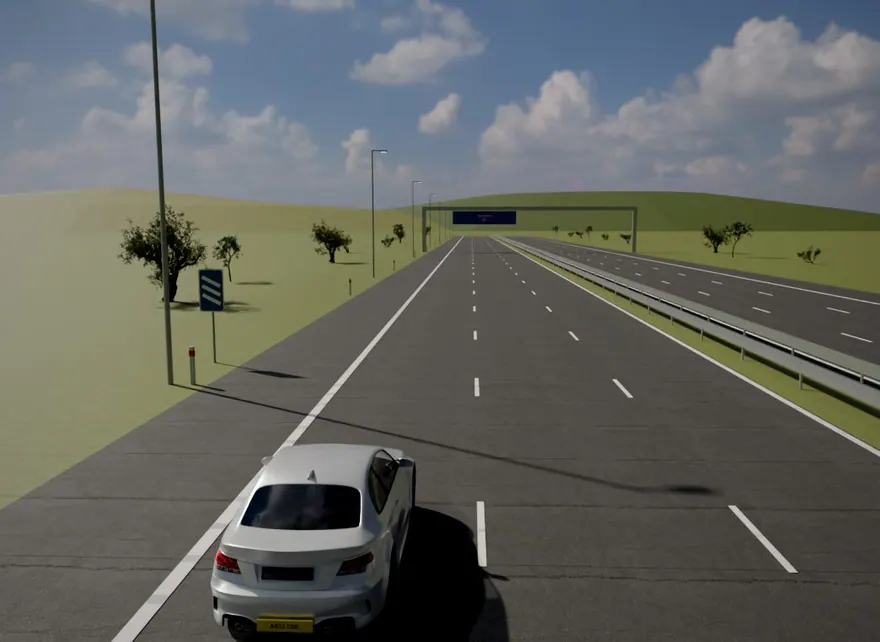
26You pass a blue motorway marker with three white diagonal bars. How far is it to the start of the deceleration lane for your exit?

Explanation

Each bar on a countdown marker stands for about 100 yards to the start of the deceleration lane (Know Your Traffic Signs), so three bars means about 300 yards. Two bars would be 200 yards and one bar 100 yards; half a mile is the distance of the advance direction sign, not a marker.

Know Your Traffic Signs (countdown markers)

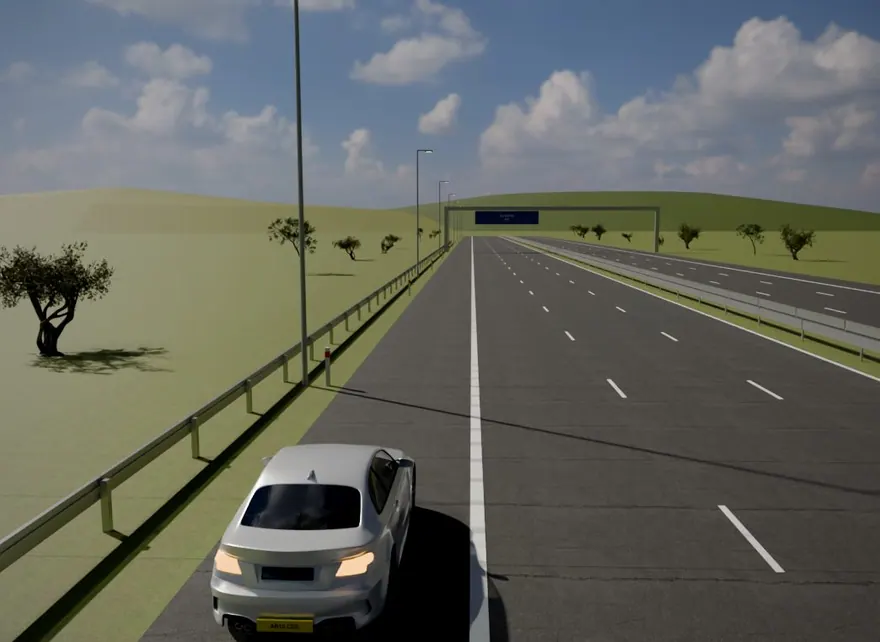
27You're on a three-lane motorway in light traffic and not overtaking anyone. Which lane should you drive in?

Explanation

Highway Code rule 264: always drive in the left-hand lane when the road ahead is clear. Use the other lanes for overtaking and return to the left as soon as you're safely past.

Highway Code rule 264

28Why does the Highway Code advise against playing loud music while you drive?

Explanation

Rule 148 lists loud music as a distraction because it may mask other sounds, for example a siren or horn. It is not presented as a separate offence, and the Code does not link it to speed or satnav instructions.

Highway Code rule 148

29You could just complete an overtake before a junction ahead, but the driver coming towards you would have to slow down to let you back in. What should you do?

Explanation

Rule 167 says do not overtake where you might come into conflict with other road users, including when you would force another road user to swerve or slow down.

Highway Code rule 167

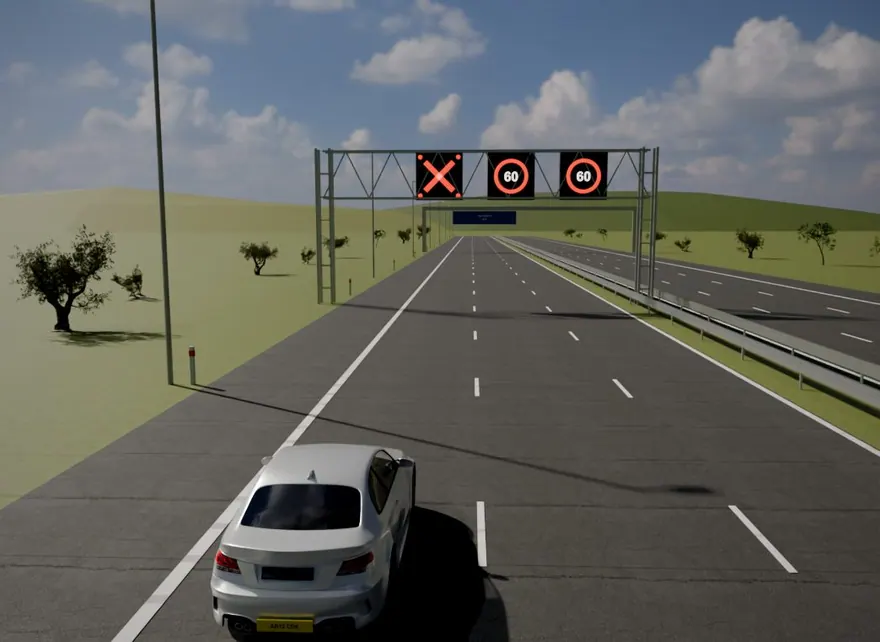
30A gantry sign above your lane shows a red X. What must you do?

Explanation

Highway Code rule 258: a red X above a lane means the lane is closed and you MUST NOT drive in it beyond the signal. Move safely into an open lane; the lane may be blocked by an incident or people working ahead.

Highway Code rule 258

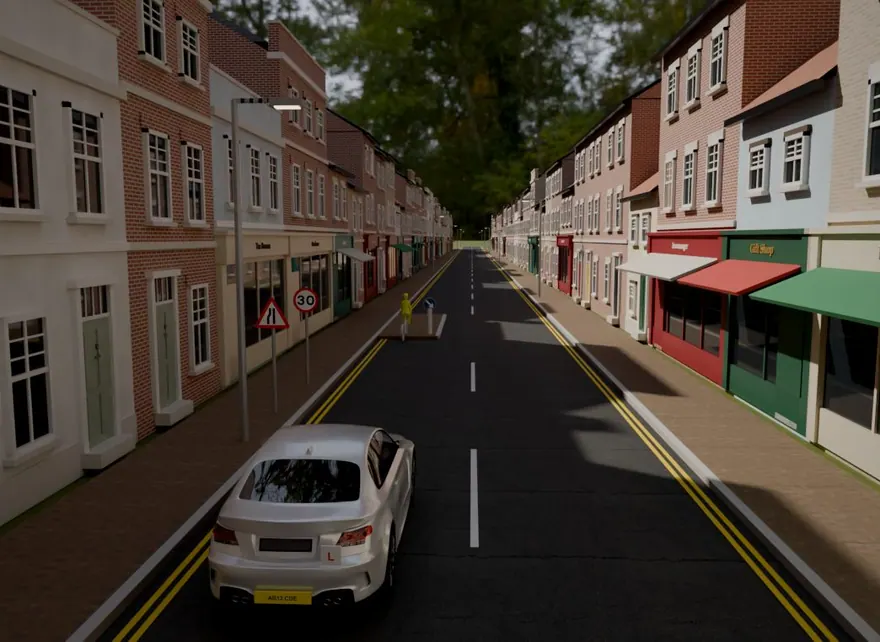
31In a traffic-calmed street a cyclist is ahead of you approaching a narrowing. What should you do?

Explanation

Rule 153 says that at traffic-calming features you should allow cyclists and motorcyclists room to pass through them, keep your speed down along the whole stretch and not overtake other moving road users in these areas.

Highway Code rule 153

32A van driver making door-to-door deliveries doesn't wear a seat belt between drops. When is this legally allowed?

Explanation

GOV.UK and Highway Code rule 99: the driver of a goods vehicle on deliveries is exempt from wearing a seat belt only when travelling no more than 50 metres between stops. Any longer and the belt must be worn.

GOV.UK: When you don't need to wear a seat belt; Highway Code rule 99

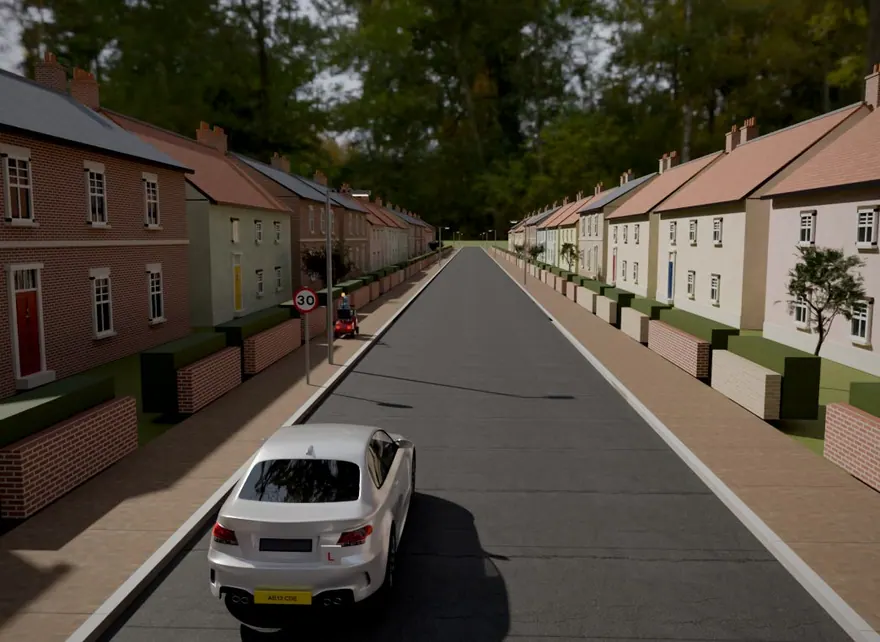
33What's the maximum speed at which a powered wheelchair or mobility scooter may be driven on a pavement?

Explanation

Highway Code rules 36 to 40 say that powered wheelchairs and mobility scooters MUST NOT travel faster than 4 mph (6 km/h) on pavements or in pedestrian areas. Class 3 vehicles may use the road at up to 8 mph (12 km/h).

Highway Code rules 36 to 40

34You passed your test last month. Friends in your car are urging you to go faster and 'see what it can do'. What does the Highway Code's safety code for new drivers advise?

Explanation

Annex 8 says you're responsible for your passengers' safety, that you shouldn't let them distract you or encourage you to take risks, and that you should tell them you need to concentrate on the road. New drivers are most at risk in their first year.

Highway Code Annex 8

35You're first at a crash and several other people have stopped. What does the Highway Code suggest you do with the bystanders?

Explanation

Annex 7 says that if it's safe you should get bystanders to help, and that you should try to get someone to call the emergency services as soon as possible, giving the exact location and the number and condition of casualties.

Highway Code Annex 7: first aid on the road

36Which THREE of these help you drive in a fuel-efficient way, according to DVSA?

Select all that apply

Explanation

DVSA's eco-driving assessment looks for planning ahead, choosing the right gears, avoiding heavy braking and not over-revving the engine. Rule 123 also covers reducing pollution.

DVSA 'Understanding your driving test result: car' (eco-driving); Highway Code rule 123

37You're parking a manual car facing downhill. As well as applying the handbrake firmly and turning the wheels towards the kerb, which gear should you select?

Explanation

Rule 252 says to select reverse gear and turn the wheel towards the kerb when facing downhill. A forward gear is for facing uphill, with the wheel turned away from the kerb, so first gear is the classic mix-up.

Highway Code rule 252

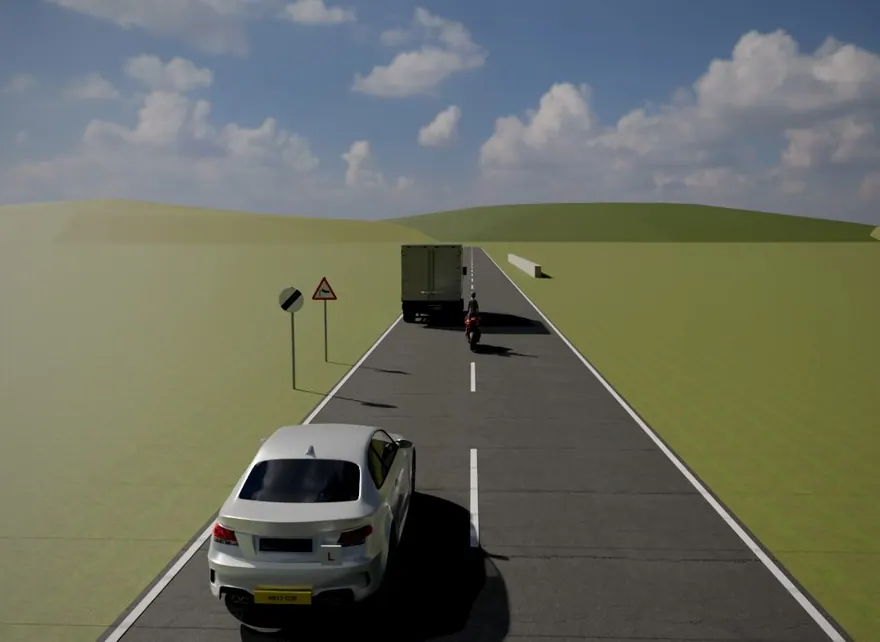
38The motorcyclist ahead suddenly moves towards the centre of the road for no obvious reason. What's a likely explanation?

Explanation

Rule 213 says motorcyclists, cyclists and horse riders may suddenly need to avoid uneven surfaces and obstacles such as drain covers or oily, wet or icy patches. Give them plenty of room and watch for any sudden change of direction; a move towards the centre is not an invitation to overtake.

Highway Code rule 213

39A cycle lane marked by a broken white line runs along the kerb, and waiting restrictions apply. What does Rule 140 say about parking in it?

Explanation

A broken white cycle lane line means do not drive or park unless unavoidable, and you MUST NOT park in any cycle lane while waiting restrictions apply.

Highway Code rule 140

40You pass a 'Road Works Ahead' sign. Apart from taking extra care, what should you look for?

Explanation

Rule 288 says that when the 'Road Works Ahead' sign is displayed you should take extra care and look for additional signs providing more specific instructions, and observe them all.

Highway Code rule 288

41It's raining and you're about two seconds behind the car ahead when its brake lights come on. What should you do?

Explanation

Rule 227 says stopping distances are at least double on wet roads, and rule 126 says the two-second gap should be at least doubled on wet roads.

Highway Code rules 126, 227

42Double white lines run along the road and the line nearest to you is broken. What may you do?

Explanation

Rule 128: where the line nearer to you is broken you may cross to overtake if safe, provided you can complete the manoeuvre before reaching a solid white line on your side.

Highway Code rule 128

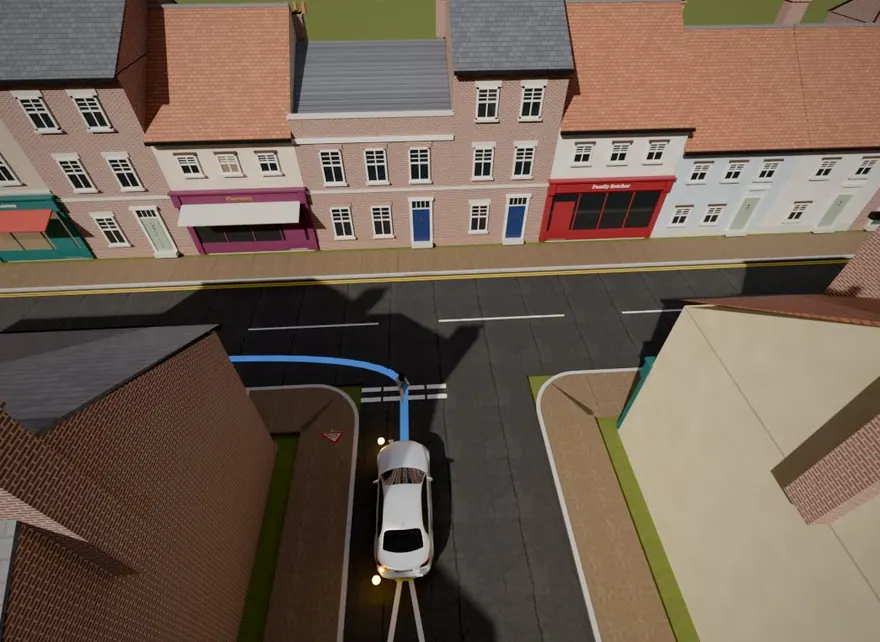
43You're about to turn left out of this side road. A pedestrian is crossing the side road just in front of you. What should you do?

Explanation

Rule H2: at a junction you should give way to pedestrians crossing or waiting to cross a road into which or from which you are turning.

Highway Code rule H2

44This light comes on in the instrument panel. What does it mean?

Explanation

The bonnet is open or not properly latched. Stop safely and close the bonnet — it could fly open at speed.

Highway Code Annex 6 (vehicle maintenance, safety and security); vehicle handbook (ISO 2575 symbols)

45You're leaving a driveway and have to cross the pavement to reach the road. What should you do?

Explanation

Rule 206 says to drive carefully and slowly when you need to cross a pavement, cycle lane or cycle track, for example to reach or leave a driveway, and to give way to pedestrians on the pavement and cyclists using a cycle lane or track.

Highway Code rule 206

46Which rules of the Highway Code should a powered mobility scooter user follow?

Explanation

Rule 37 says that on the road you should obey the guidance and rules for other vehicles, and on the pavement the guidance and rules for pedestrians. The two settings are not swapped, and neither set of rules applies in both places.

Highway Code rule 37

47You're driving at 60 mph on a wet road. Using the Highway Code's figures, roughly what overall stopping distance should you allow?

Explanation

Rule 126's chart gives 73 metres (240 feet) at 60 mph on a dry road, and rule 227 says stopping distances in wet weather are at least double, so allow at least 146 metres.

Highway Code rules 126 and 227

48The driver in front keeps slowing down at every junction, as if they're looking for a road name. How should you react?

Explanation

Rule 147 asks you to be understanding if other road users cause problems, because they may be inexperienced or not know the area well. Be patient: anyone can make a mistake.

Highway Code rule 147 (GB and NI): be considerate

49A learner is practising in a manual car. Their supervisor is 30 and has held a full licence for 8 years, but only for automatic cars. Is this allowed?

Explanation

Annex 3 says a learner MUST be supervised by someone at least 21 years old who holds a full EC/EEA licence for that type of car (automatic or manual) and has held it for at least three years.

GOV.UK: driving licence categories

50An ambulance with its siren on is close behind you as you approach a blind bend on a narrow road. Where does the Highway Code tell you NOT to pull over?

Explanation

Highway Code rule 219: when an emergency vehicle approaches, pull over to let it pass if necessary, but avoid stopping before the brow of a hill, a bend or a narrow section of road, and do not endanger yourself or others, mount the kerb, or brake harshly.

Highway Code rule 219