UKTheory Hub
English

Vulnerable road users: UK theory test questions and answers

Free questions with answers. No sign-up needed.

1The hierarchy of road users places those most at risk at the top. According to Rule H1, what does this mean for the responsibility of pedestrians, cyclists and horse riders?

Explanation

H1 puts the greatest responsibility on those who can cause the greatest harm, but says none of this detracts from the responsibility of ALL road users, and cyclists and horse riders also have a duty towards pedestrians. The 'same share' option fails because the hierarchy deliberately weights responsibility by the harm a road user can cause.

Highway Code rule H1
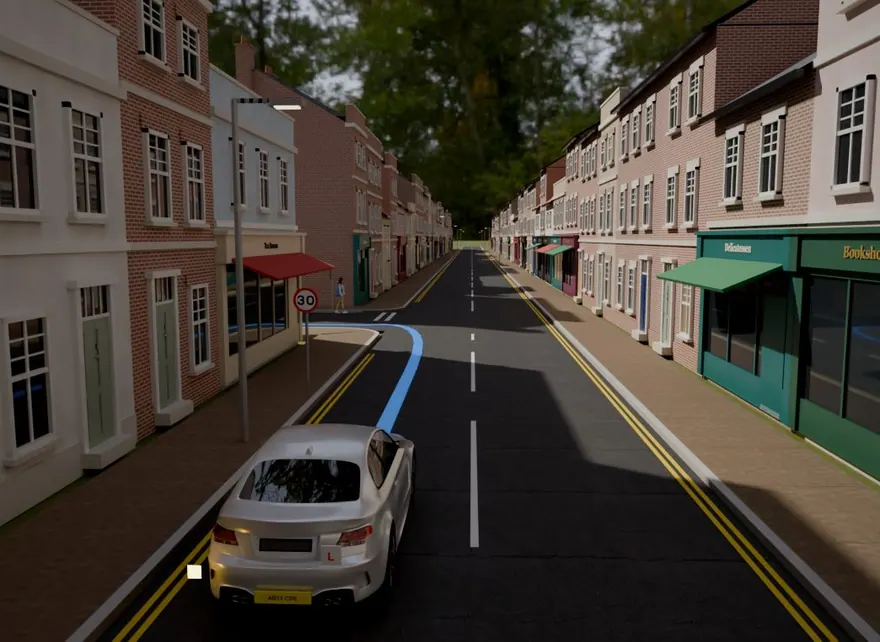
2You're turning left into a side road. A pedestrian is standing at the kerb of that side road, clearly waiting to cross, but has not yet stepped off. What do Rules H2 and 170 expect of you?

Explanation

H2 says that at a junction you should give way to pedestrians crossing or waiting to cross the road you are turning into. Rule 170 stresses that those who have started to cross have priority, but that does not release you from giving way to those waiting, which is the common misreading.

Highway Code rules H2 and 170

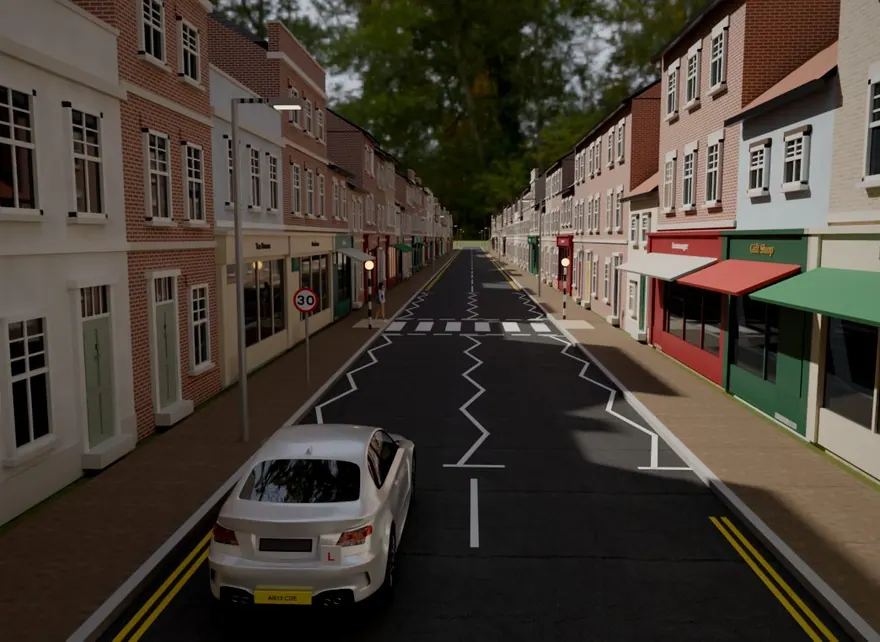
3You're approaching a zebra crossing. A pedestrian is standing at the kerb waiting to cross but has not moved onto the stripes. What does the Highway Code say?

Explanation

Rule 195 uses two strengths: you should give way to pedestrians waiting to cross, and you MUST give way once a pedestrian has moved onto the crossing. The strongest distractor swaps the two, turning the waiting-pedestrian advice into a legal duty.

Highway Code rule 195

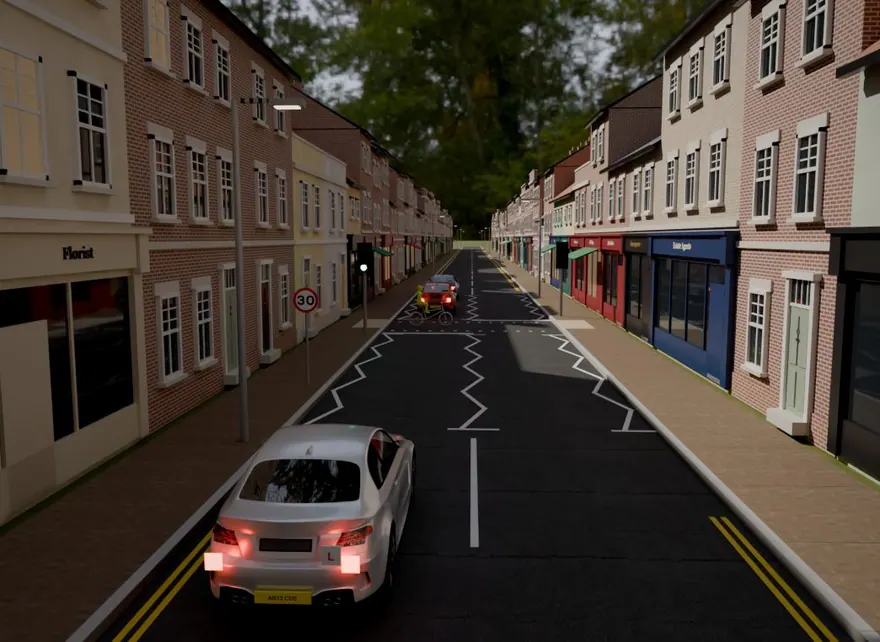
4At a toucan crossing your light turns green, but a cyclist is still riding across in front of you and the traffic beyond the crossing is queuing, so you could not clear the crossing. What should you do?

Explanation

Rule 198 says to give way to anyone still crossing after your signal has turned green, and Rule 199 says not to enter a toucan, puffin or equestrian crossing if you cannot completely clear it. The 'wait on the crossing' option fails because it blocks pedestrians and cyclists the next time the signal changes.

Highway Code rules 198 and 199

5You approach a puffin crossing where the signals are not working, and nobody is crossing. What does the Highway Code advise?

Explanation

Rule 199 says that if the signal-controlled crossing is not working, you proceed with extreme caution. Treating it as a zebra or pelican crossing imports rules that apply to those crossings but not to a failed signal-controlled one.

Highway Code rule 199

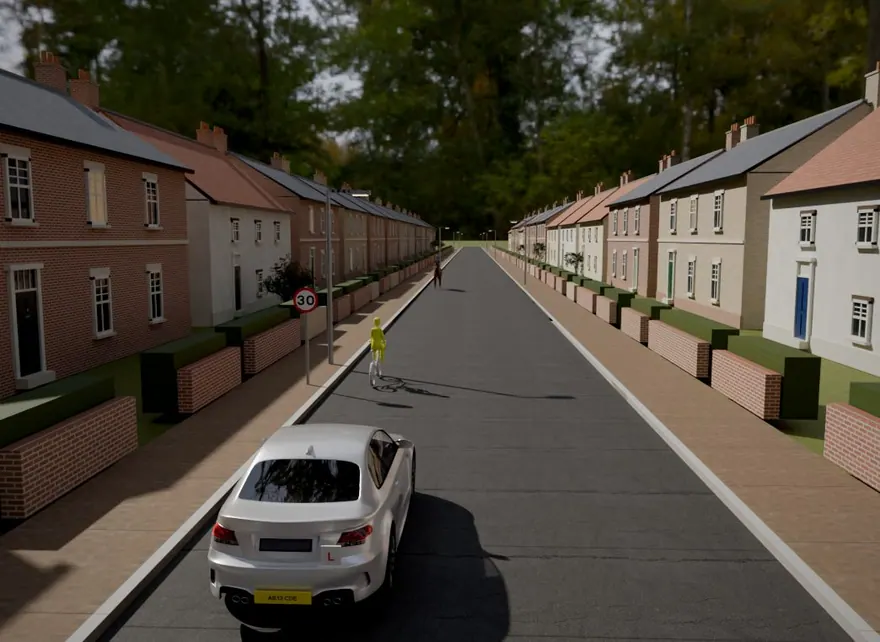
6On a 30 mph road you come up behind a cyclist and, further on, a horse rider; there is no oncoming traffic. Which pair of Rule 163 guides applies?

Explanation

Rule 163 gives at least 1.5 m for cyclists at up to 30 mph, and at least 2 m for horse riders and horse-drawn vehicles, passing at under 10 mph. The strongest distractor keeps the right distances but doubles the speed to 20 mph.

Highway Code rule 163

7A bus is waiting at a stop on the left with passengers getting off. There is a gap between the bus and the kerb and the road ahead is clear. What does the Highway Code say?

Explanation

Rule 167 lists overtaking between the kerb and a bus or tram at a stop as a situation where you might come into conflict with other road users; Rule 223 adds that people get off buses and cross the road. Going slowly or sounding a horn does not remove the conflict, which is the trap in the other options.

Highway Code rule 167

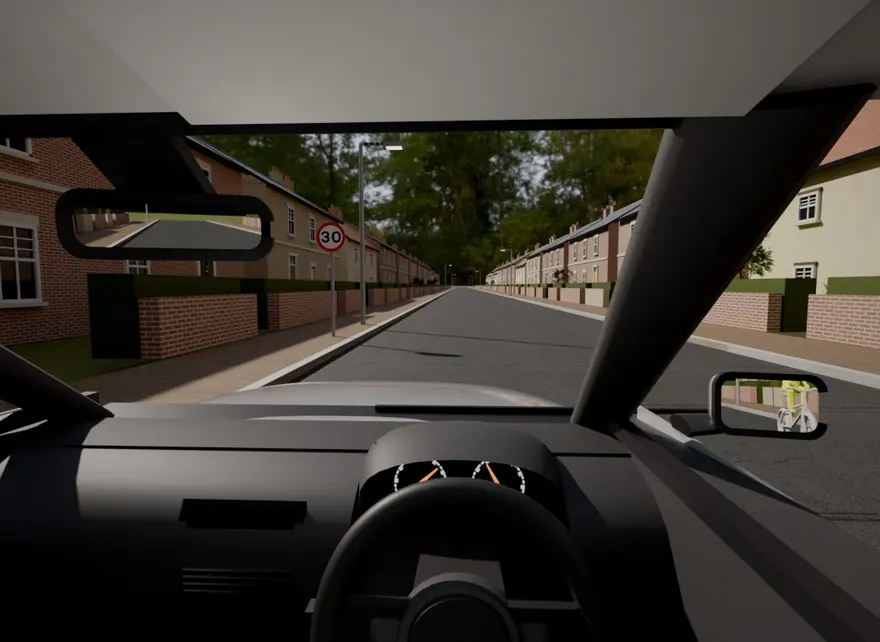
8You've stopped at the roadside in a right-hand-drive car and are about to open the driver's door. What does Rule 239 suggest, where you are able to do so?

Explanation

Rule 239 says you MUST ensure you do not hit anyone when you open your door, and where possible you should use the hand on the opposite side, here the left hand, so that you turn your head and look over your shoulder. A glance in a mirror is not enough because it leaves the blind spot beside the door unchecked.

Highway Code rule 239

The app has 275 more questions on this topic.

Other types of vehicle →Start the free mock test