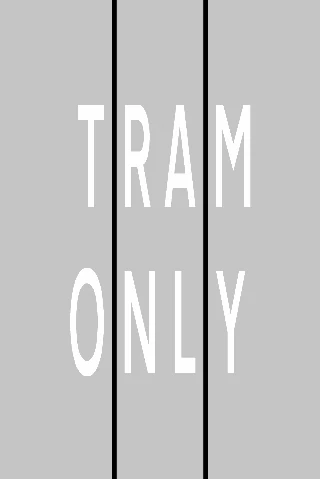
'Tram only' road marking
Road marking indicating the start of a route for trams only.
Memory trick Words on the track: not your lane.
56 signs
Road marking indicating the start of a route for trams only.
Memory trick Words on the track: not your lane.
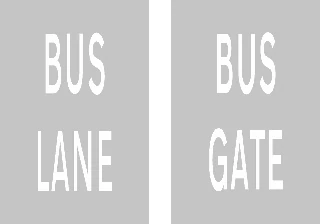
Road markings indicating the start of a route for buses and other permitted vehicles shown on upright blue circular signs.
Memory trick A gate in paint only: if you are not on the blue sign, do not go through.
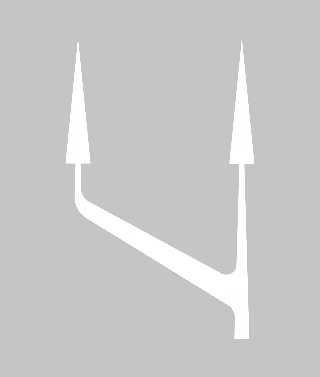
Traffic may use both lanes at the end of a bus lane.
Memory trick Bus line stops, angled arrow starts: the lane is open to you.
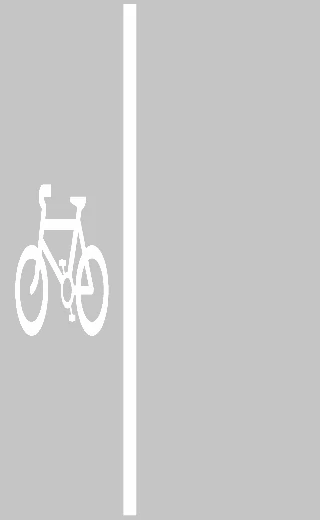
Road markings for a mandatory pedal cycle lane.
Memory trick Solid line and bicycle: motor traffic stays out during its hours.
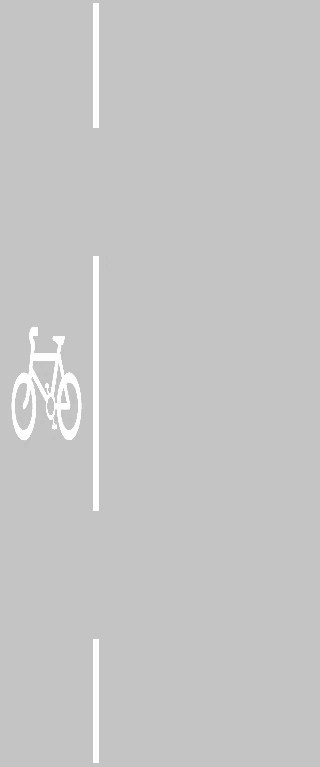
Road markings for an advisory pedal cycle lane. Other vehicles should not use this part of the carriageway unless it is unavoidable.
Memory trick Broken line: keep out unless you cannot avoid it. Solid line: keep out.

Road marking indicating the end of a cycle lane, track or route.
Memory trick Same message as the blue sign, painted on the surface.

Road marking separating cyclists and pedestrians on a shared route. It may be a raised line up to 20 mm high.
Memory trick Painted or raised line: cyclists one side, pedestrians the other.
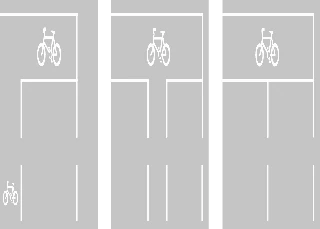
Advance stop line for pedal cycles at traffic signals. When the signals are red, drivers of other vehicles must wait behind the first stop line. Drivers should allow time and space for cyclists to move off when the signals change to green.
Memory trick Two stop lines: yours is the first, the box in front is for bikes.
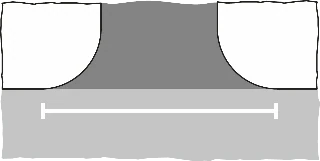
Length of road to be kept clear of stationary vehicles, at entrances to off-street premises or where the kerb is dropped to provide a convenient crossing place for pedestrians.
Memory trick Dropped kerb or driveway: leave it clear, day or night.

Parking bay with individual spaces, parallel to the kerb.
Memory trick T-shaped marks divide the bay into one-car slots.

Continuous parking bay next to the kerb. Words may be added outside the bay to describe the type of parking.
Memory trick A long box with no T marks: park anywhere inside it.
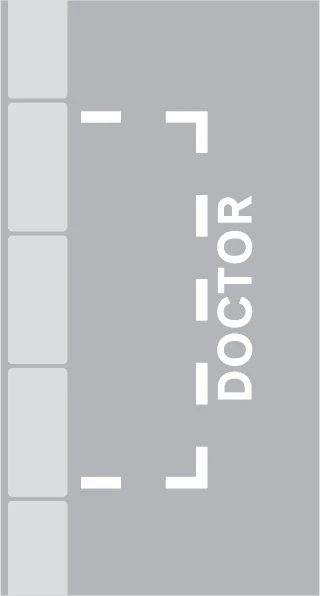
Parking space reserved for vehicles named.
Memory trick The word on the bay names who it is for.

Loading bay. The conditions of use are shown on an upright sign.
Memory trick Broken white box with the words on the road: check the sign beside it.

Keep the entrance clear of stationary vehicles, even if picking up or setting down children. Yellow zig-zag markings outside schools, hospitals or fire, police or ambulance stations indicate the length of road where you should not stop. Where there is an upright sign, there is a mandatory prohibition of stopping during the times shown.
Memory trick Not even for a quick drop-off.
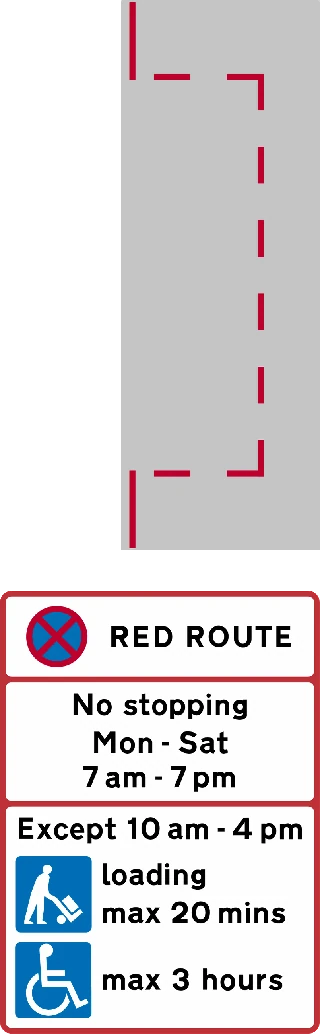
A bay marked with red lines means that it is available for use for only part of the time that the red route 'no stopping' rule applies.
Memory trick Red box: only sometimes. White box: all day.
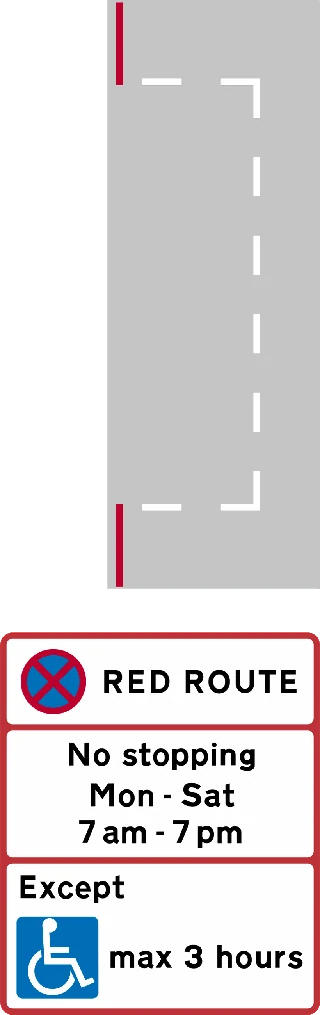
A bay marked with white lines means that it is available for use at all times that the red route 'no stopping' rule applies. The upright sign shows who may use it.
Memory trick White box: free of the time window, so read who it is for.
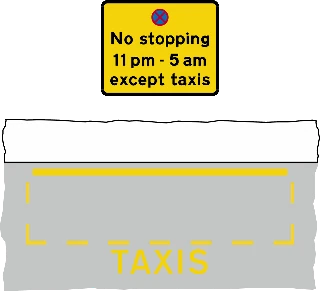
Taxi ranks usually have yellow bays marked with the word 'TAXIS'. A broad continuous line indicates the prohibition of stopping.
Memory trick Yellow bay with TAXIS on it: leave it for them.
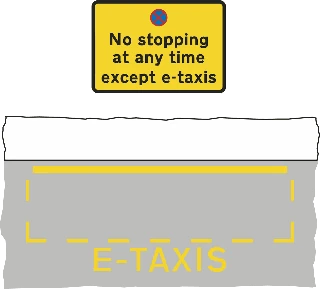
No stopping in an e-taxi rank at any time. The bay includes a broad continuous line to indicate the prohibition of stopping.
Memory trick E for electric: a normal taxi does not count.
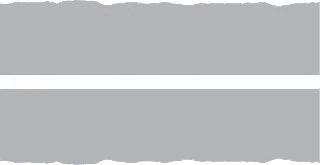
Stop line at signals or police control.
Memory trick One thick solid line: stop here when told to.
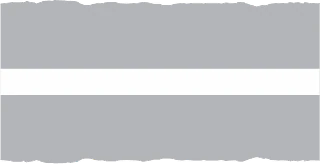
Stop line at a 'Stop' sign.
Memory trick Even thicker line: a full stop, every time.
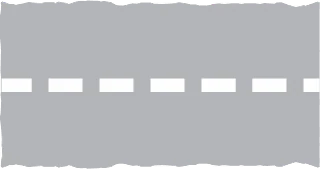
Stop line for pedestrians at a level crossing.
Memory trick Square dashes: it is a stop line for people, not for cars.
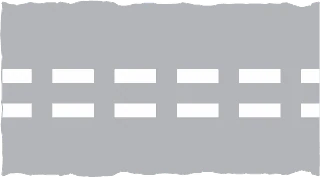
Give way to traffic on the major road. It can also be used at mini-roundabouts.
Memory trick Double broken line: the other road comes first.
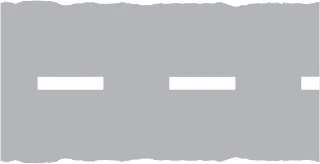
Give way to traffic from the right at a roundabout.
Memory trick Single broken line of long dashes: look right.

Give way to traffic from the right at a mini-roundabout.
Memory trick Square dashes: treat it just like a full-size roundabout.

Warning of 'Give Way' just ahead.
Memory trick A triangle on the road, point towards you: be ready to give way.

Centre line on a single carriageway road.
Memory trick Long gap, short dash: nothing urgent, normal road.

Lane line separating traffic travelling in the same direction, on a single or dual carriageway road.
Memory trick Shortest dash, separating lanes going the same way.

Hazard warning line, replacing a centre line or a lane line. An upright sign may indicate the nature of the hazard, such as a bend. The marking is used also on the approach to a junction.
Memory trick More paint than gap: something is coming. Do not cross unless you can see it is safe.

Diagonal white lines (hatched markings) bounded by broken lines may be used in the centre of the road to separate opposing flows of traffic. You should not enter any hatched area bounded by a broken line unless it is safe to do so.
Memory trick Broken border: stay out unless it is safe. Solid border: stay out.
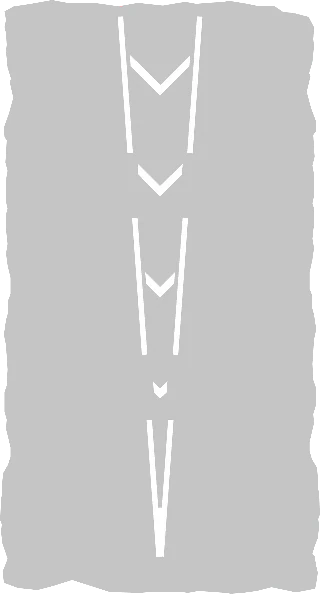
Part of the carriageway where traffic passes in the same direction on either side of the chevron marking. Vehicles should not enter the area unless it is safe to do so.
Memory trick Chevrons with broken edges point the way traffic flows either side.
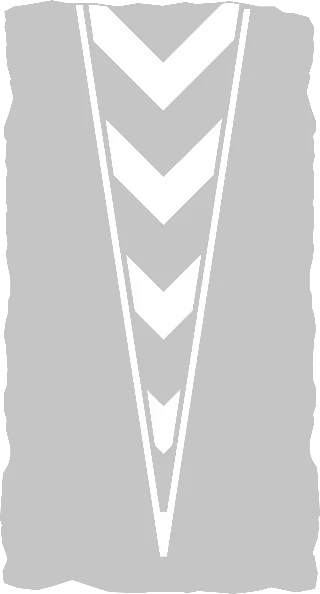
Chevron marking with a continuous boundary, with traffic passing in the same direction on either side. The continuous boundary line means that vehicles must not enter the area except in an emergency. This marking is used where slip roads leave and join motorways and many dual carriageway roads.
Memory trick Solid edge: the law, not advice. Only in an emergency.
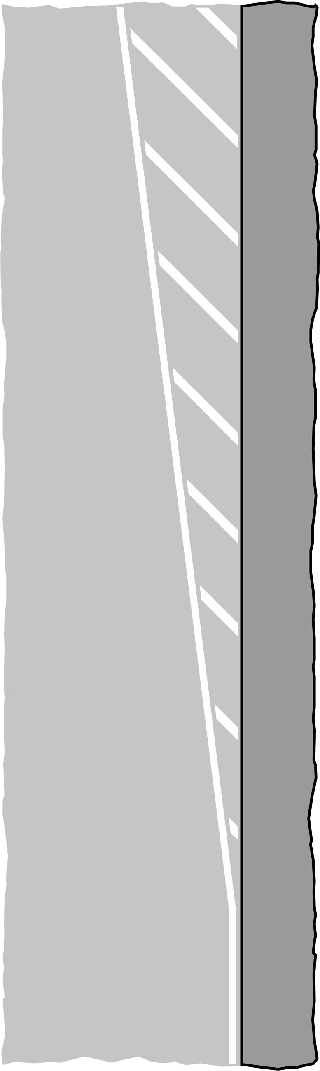
Reduction in the number of lanes, or an area not available to traffic. Vehicles must not cross the continuous white line except in an emergency. Used on the right-hand side of a motorway, dual carriageway road or slip road.
Memory trick Diagonal lines shrinking the right side: your lane is fading away.

Arrow indicating the direction in which to pass hatched markings and double white lines, or the route that high vehicles should take under a low arch bridge. It may be reversed.
Memory trick Curving white arrow: move back in, the marking ahead is coming.
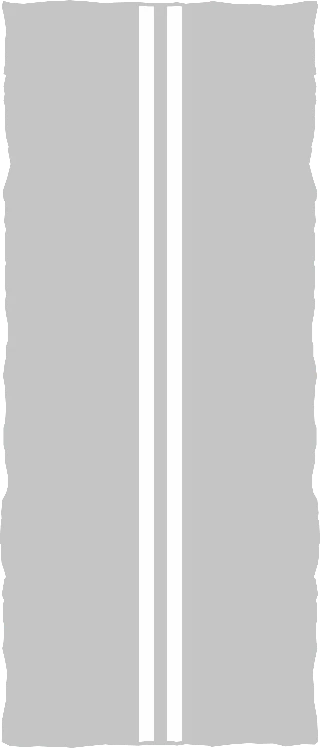
Double continuous white lines are used to prevent overtaking where visibility is restricted. You must not cross or straddle them unless it is safe and you need to enter adjoining premises or a side road, or, if the road is clear, to pass a stationary vehicle or overtake a pedal cycle, horse or road maintenance vehicle going at 10 mph or less.
Memory trick Solid nearest you: stay your side.
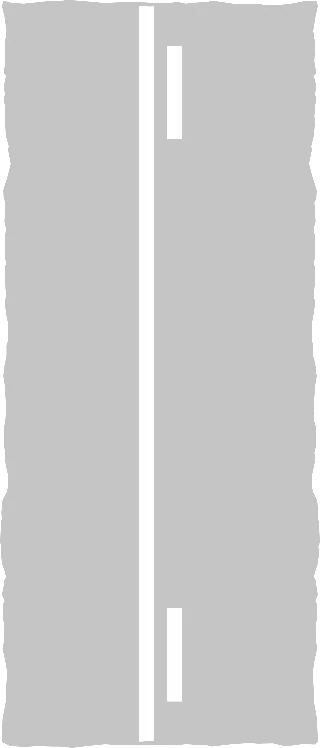
Double white lines where the line nearest you is broken. You may cross the lines to overtake if it is safe, provided you can complete the manoeuvre before reaching a solid white line on your side.
Memory trick Broken line on your side: you may cross if safe. Solid on your side: no.

Edge of carriageway, other than at junctions, exits from private drives and lay-bys. Used on the left-hand side of the road and alongside the central reservation of dual carriageway roads.
Memory trick Solid along the side of the road: this is where the road ends.
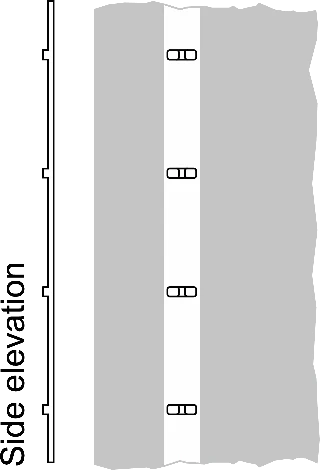
Alternative edge of carriageway marking, with raised ribs to provide audible and tactile warnings when the line is being crossed. Used on motorways and other roads with hard shoulders or hard marginal strips.
Memory trick If your wheels drum, you are drifting off the lane.
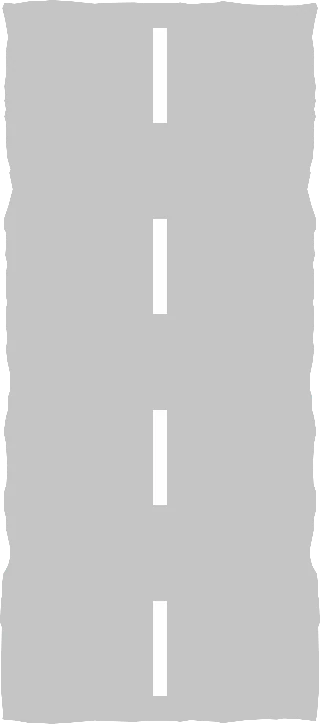
Edge of the main carriageway at a junction where a slip road or lane leaves or joins, at an exit from a private drive or at a lay-by.
Memory trick The edge line breaks where something joins or leaves.
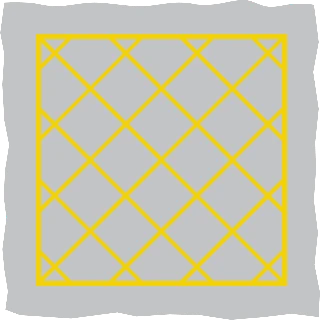
Where stationary traffic would be likely to block a junction, a yellow box may be marked on the road, covering all or part of the junction. You must not enter the box if your exit is not clear. If turning right, you may enter the box to wait for a gap in the oncoming traffic, but only if the right-turn exit is clear.
Memory trick Exit first, then enter. The right turn is the only exception.

A mini-roundabout is normally found on a road with a speed limit of 30 mph or less. It should be treated the same as a conventional roundabout. You must give way to traffic from the right, and keep to the left of the white circle unless the size of your vehicle or the junction layout makes driving over it unavoidable.
Memory trick Painted circle, same rules as a kerbed one.

Appropriate traffic lanes for different movements at the junction ahead. A double-headed arrow is used where 2 different movements may be made from the same lane or where that lane divides into 2 or more lanes ahead.
Memory trick Pick your lane from the arrow before you reach the junction.
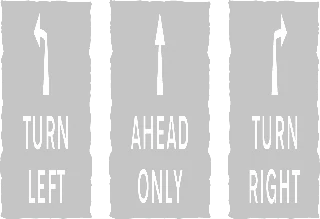
Compulsory traffic movements at a junction ahead. These may apply to a specific traffic lane or to all traffic approaching the junction.
Memory trick 'Only' painted on the lane: not a suggestion.

Direction to be taken by traffic turning within a junction.
Memory trick An arrow inside the junction shows the curve to follow.
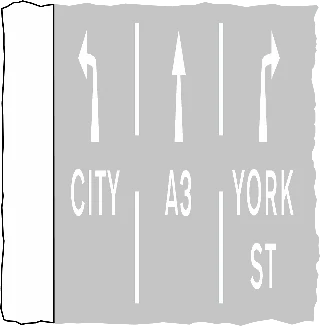
Appropriate traffic lanes for particular destinations.
Memory trick The name in your lane is where the lane takes you.
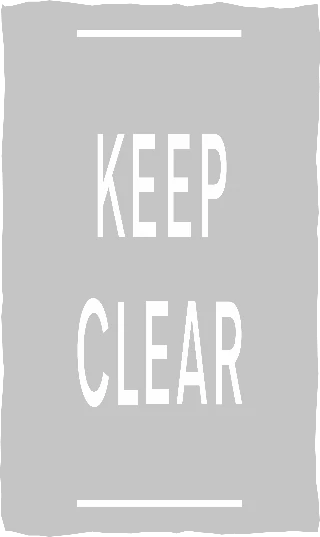
Area of carriageway to be kept clear of stationary traffic, usually to allow the passage of vehicles into or out of a side road or access. The white bars may be omitted.
Memory trick You may drive across it. You just must not stop on it.
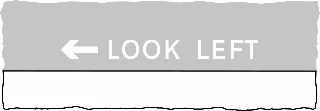
Direction in which pedestrians should look before crossing the road, particularly in a one-way street or where there is a contraflow bus lane.
Memory trick On the kerb, facing people on foot, not you.

Vehicles must not pass this marking. It may be used with the upright 'no entry' sign.
Memory trick Words on the road carry the same rule as the red disc.
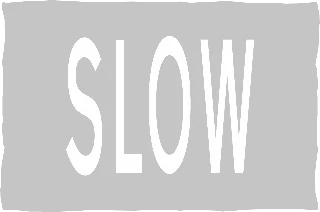
Associated with a hazard. There will normally be an upright warning sign.
Memory trick Painted SLOW means something is just ahead.
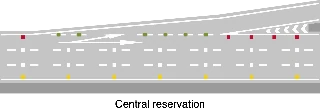
Coloured road studs help drivers at night, especially on wet roads, or in poor visibility. White studs mark traffic lanes or the centre of the road. The left-hand side of the carriageway is marked by red studs, and the edge of the central reservation of a motorway or dual carriageway road by amber studs. Green studs are used to mark lay-bys and the entrances to, and exits from, slip roads.
Memory trick Red left, amber right, white between, green at the slip roads.
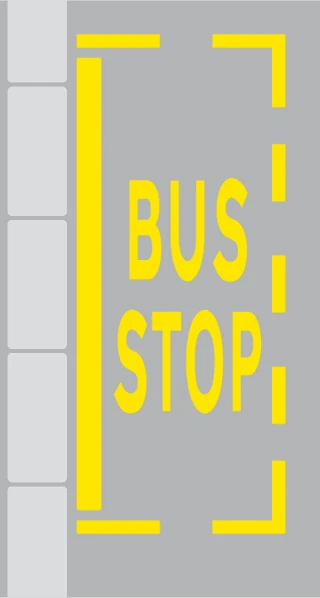
Road marking for a bus stop. Keep it clear.
Memory trick Yellow box with the words: leave it for buses.
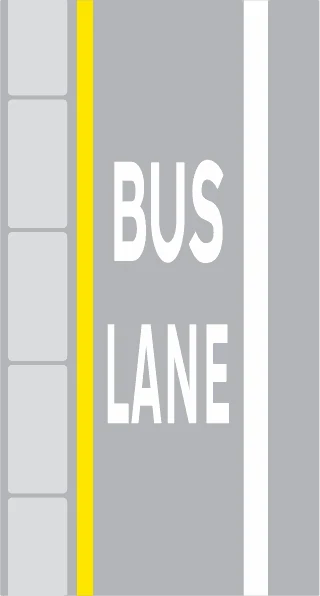
Words marking a bus lane. Do not drive in it during its period of operation unless signs show that you may.
Memory trick Check the blue sign for its hours.
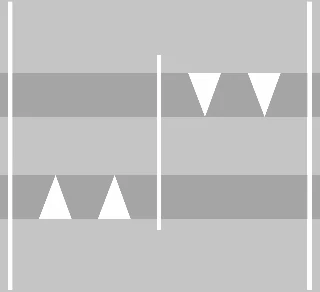
A road hump is normally marked with white triangle and edge line markings.
Memory trick White triangles on a raised bar: the hump starts here.
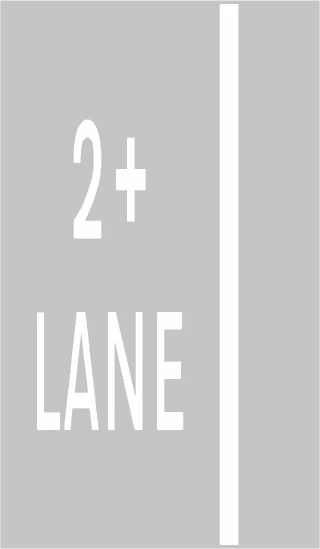
HOV lane road marking.
Memory trick 2+ painted on the surface says the same as the sign.
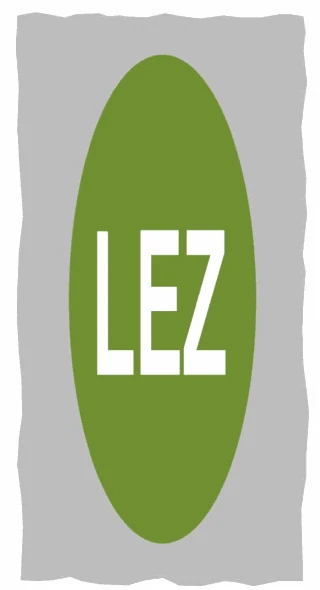
Road marking indicating the commencement of a Low Emission Zone in Scotland.
Memory trick Green oval with the letters: this is where it starts.
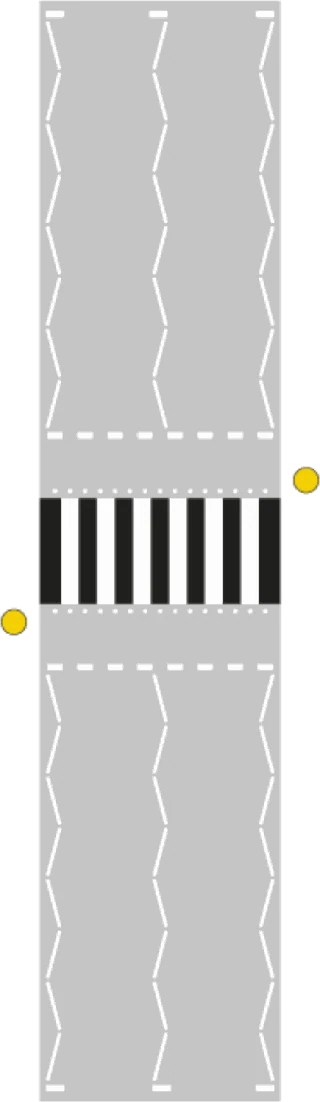
Pedestrians should never cross the road within the zig-zag area. Drivers should stop at the broken 'give way' line, about 1 metre before the crossing, when pedestrians are using the crossing.
Memory trick Broken line before the stripes is your stopping point.
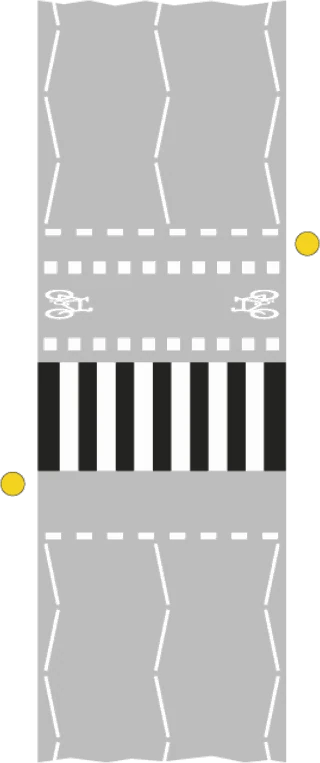
Parallel crossings are similar to zebra crossings, but include a cycle route alongside the black and white stripes.
Memory trick Zebra and cycle route side by side. Give way to both.