UKTheory Hub
English

Information: UK road signs and meanings

68 signs

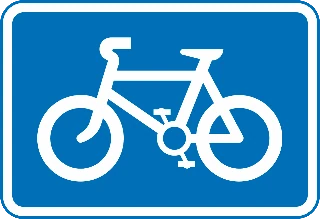
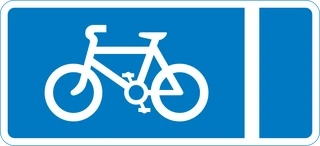
With-flow pedal cycle lane

With-flow pedal cycle lane

A cycle lane running in the same direction as the traffic. Do not drive or park in a cycle lane marked by a solid white line during its hours of operation.

Memory trick Bike arrow pointing the same way as yours — ride with the flow.

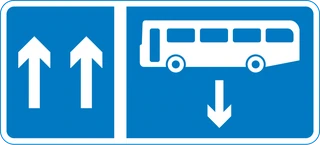
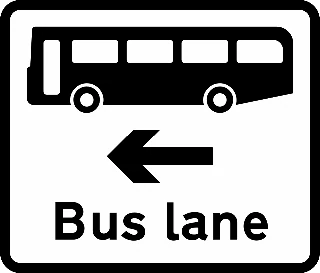
Contra-flow bus lane

Contra-flow bus lane

Buses run in the opposite direction to the other traffic in this lane. Expect buses coming towards you on what looks like a one-way street.

Memory trick Bus arrow pointing against the traffic arrows — buses coming at you.

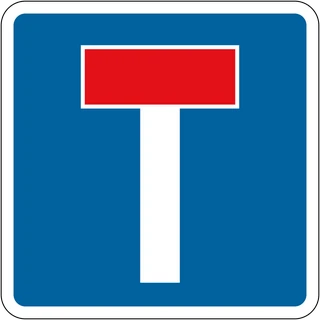
No through road

No through road

The road ahead is a dead end for vehicles; you will have to turn round. There may still be a way through for pedestrians or cyclists.

Memory trick A red bar across the top of the T — the road stops.

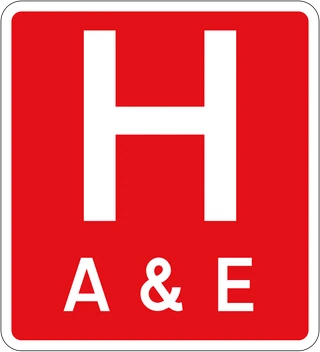
Hospital with Accident and Emergency

Hospital with Accident and Emergency

A hospital with an A&E department is ahead or in the direction shown. Expect ambulances and pedestrians near the entrance.

Memory trick The red H with 'A&E' — emergency hospital.

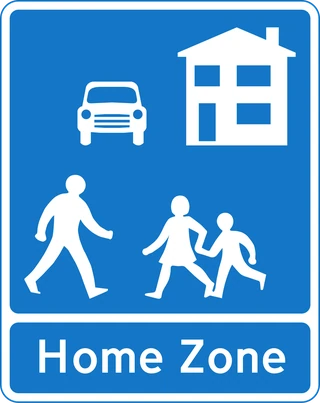
Home Zone entry

Home Zone entry

You are entering a residential Home Zone where the street is shared by people and vehicles. Drive at walking pace and expect children playing.

Memory trick A house, a tree and people — their street, you are a guest.

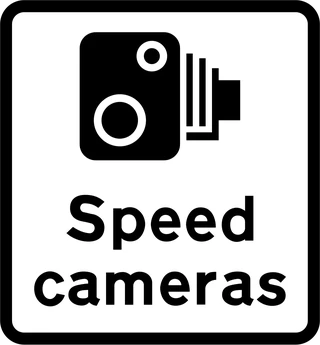
Area in which cameras enforce traffic regulations

Area in which cameras enforce traffic regulations

Speed or traffic cameras operate in this area. The sign informs you that enforcement is in place — keep within the speed limit.

Memory trick The old-fashioned camera symbol — smile, and slow down.

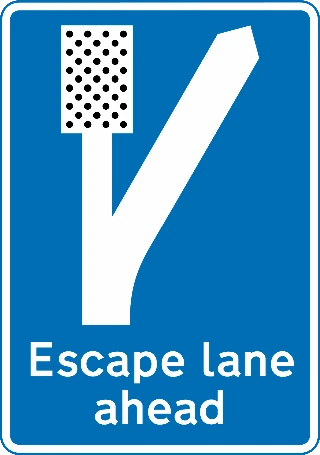
Escape lane ahead

Escape lane ahead

Sign used with 'steep hill' or 'try your brakes' signs. It shows an escape lane for a vehicle that has lost its brakes.

Memory trick Blue arm going off the hill into a gravel patch: a way out if your brakes fail.

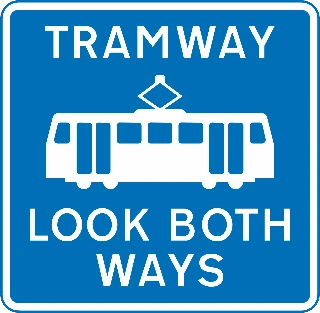
Pedestrian crossing point over a tramway

Pedestrian crossing point over a tramway

A crossing point over a tramway, reminding pedestrians to look out for trams approaching from both directions.

Memory trick Trams run in both directions on one strip.

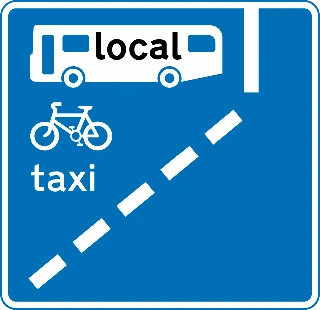
With-flow bus lane ahead

With-flow bus lane ahead

With-flow bus lane ahead that can also be used by pedal cycles and taxis. Hours of operation may be shown.

Memory trick Diagonal broken line: the lane is about to start.

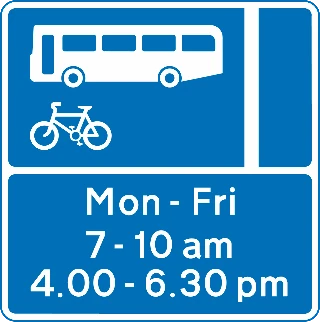
With-flow bus and cycle lane with hours

With-flow bus and cycle lane with hours

With-flow bus and pedal cycle lane sign showing hours of operation. Where no times are shown, the bus lane operates at all times.

Memory trick Times shown means part-time. No times means all the time.

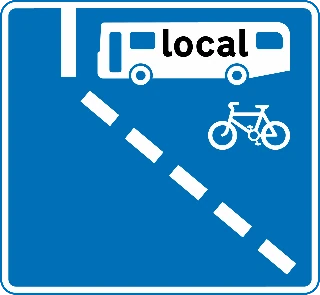
Off-side bus lane ahead

Off-side bus lane ahead

Off-side with-flow bus lane ahead that can also be used by pedal cycles.

Memory trick Lane on the right of the panel means lane on the right of the road.

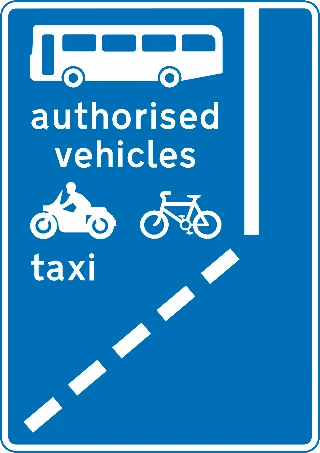
Near-side bus lane for authorised vehicles

Near-side bus lane for authorised vehicles

Near-side with-flow bus lane ahead that can also be used by authorised vehicles, solo motorcycles, pedal cycles and taxis.

Memory trick Everything listed on the panel can use it. Nothing else can.

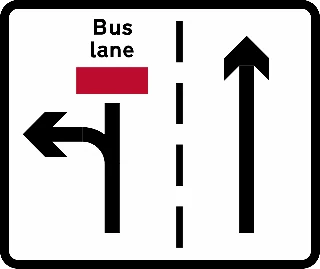
Break in a bus lane at a junction

Break in a bus lane at a junction

Where there is a break in a bus lane at a junction, other traffic may use the left-hand lane for turning left only.

Memory trick Gap in the bus lane: for left turners, not a short cut.

Bus lane on road at junction ahead

Bus lane on road at junction ahead

Bus lane on the road at the junction ahead.

Memory trick Bus with an arrow on white: the road you are turning into has a bus lane.

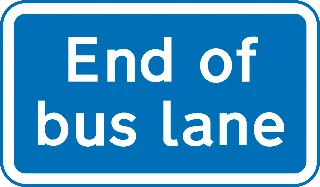
End of bus lane

End of bus lane

End of bus lane.

Memory trick Blue panel with words: the lane is finished, other traffic may use it.

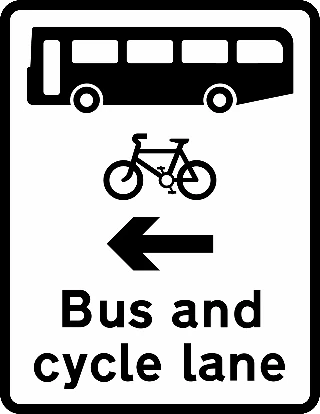
Contraflow bus and cycle lane at junction ahead

Contraflow bus and cycle lane at junction ahead

Contraflow bus and pedal cycle lane on the road at the junction ahead.

Memory trick Bus and cycle coming against the traffic on the road you are about to meet.

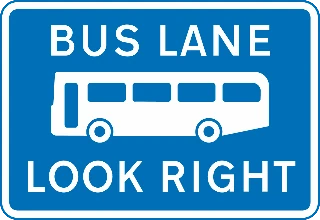
Bus lane: look right

Bus lane: look right

Reminder to pedestrians to look out for buses approaching from the right.

Memory trick Pedestrian reminder: in a contraflow, danger comes from the side you did not expect.

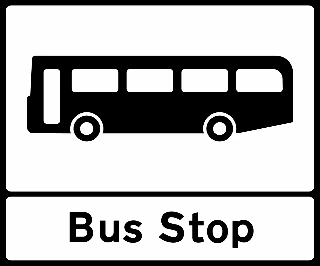
Bus stop flag

Bus stop flag

Stopping place for buses.

Memory trick You know this one from a pavement: it marks where the bus stops.

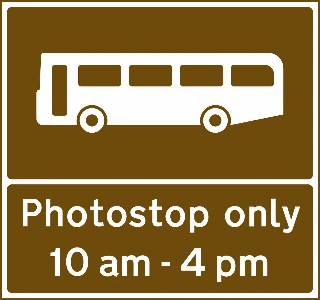
Photostop

Photostop

Stopping place for tourist buses to allow passengers to take photographs.

Memory trick Brown means tourism. The word says what it is for.

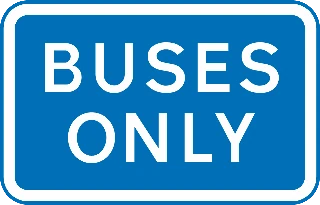
'Buses only' entrance

'Buses only' entrance

Entrance to a bus station, depot or garage.

Memory trick A blue panel: the road goes to where the buses go.

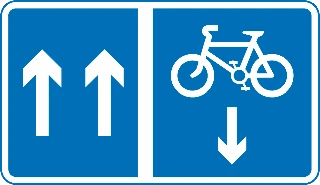
Mandatory contraflow cycle lane

Mandatory contraflow cycle lane

Mandatory contraflow pedal cycle lane. The upward arrows indicate the number of traffic lanes available.

Memory trick Arrow down beside the cycle: riders come towards you, and the up arrows are your lanes.

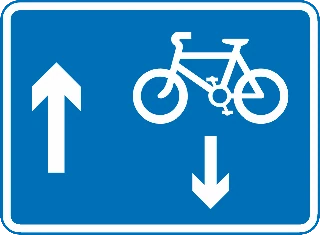
Contraflow cycles in a one-way street

Contraflow cycles in a one-way street

Contraflow pedal cycles in a one-way street, other than a mandatory contraflow cycle lane. This may be marked by a broken line on the carriageway or there may be no line at all.

Memory trick One-way for you, not for cycles. Expect a bike heading your way.

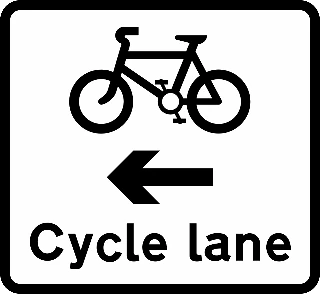
Cycle lane at junction ahead

Cycle lane at junction ahead

Pedal cycle lane on the road at the junction ahead or, where 'lane' is varied to 'track', a cycle track crossing the road at the junction ahead.

Memory trick Check the mirror for bikes before you turn in.

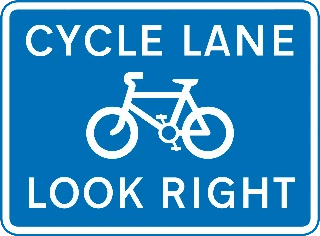
Cycle lane: look right

Cycle lane: look right

Reminder to pedestrians to look out for pedal cycles approaching from the right.

Memory trick Cycles are quiet, so pedestrians are told where to look.

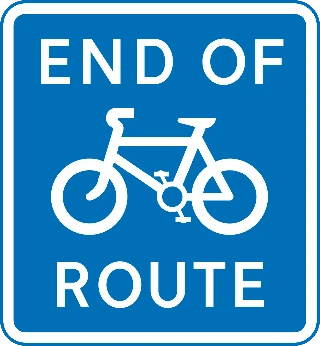
End of cycle route

End of cycle route

End of a cycle lane, track or route.

Memory trick Rider on blue with 'end': bikes rejoin the traffic.

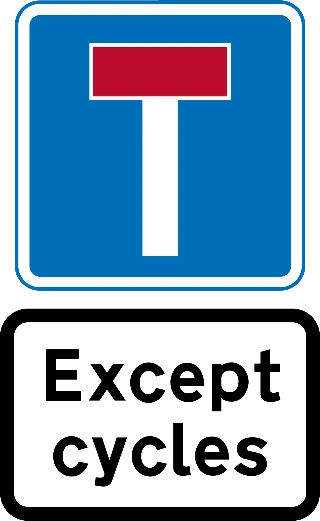
No through road except cycles

No through road except cycles

No through road except for pedal cycles.

Memory trick The bar blocks cars. Bikes get through.

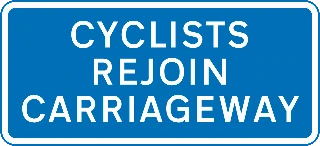
Cyclists rejoin carriageway

Cyclists rejoin carriageway

Pedal cyclists rejoin the main carriageway at the end of, or a break in, a cycle track or route shared with pedestrians.

Memory trick Be ready for riders moving out to join you.

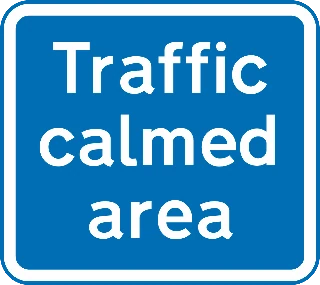
Traffic calmed area

Traffic calmed area

Entrance to a traffic-calmed area. The name of the area may be shown.

Memory trick Blue rectangle: expect humps or narrowings throughout.

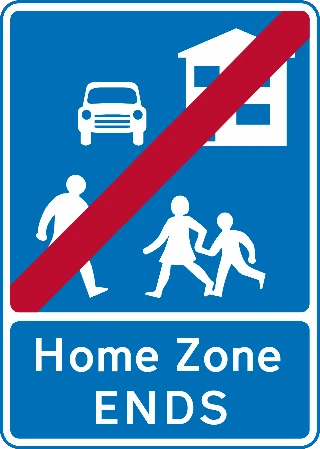
End of Home Zone

End of Home Zone

End of Home Zone.

Memory trick Red diagonal across the Home Zone picture: the zone ends here.

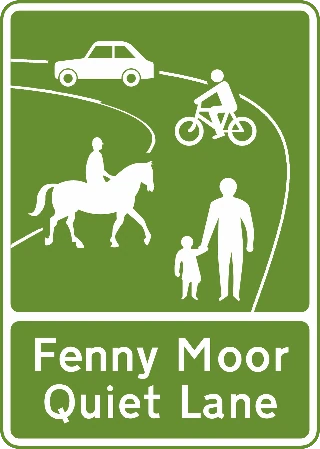
Quiet Lane

Quiet Lane

Start of a designated Quiet Lane. Quiet Lanes are appropriate for shared use by walkers, cyclists, horse riders and motor vehicles.

Memory trick Green panel with everyone on it: share the road and drive slowly.

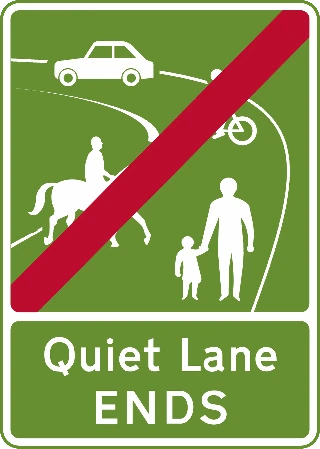
End of Quiet Lane

End of Quiet Lane

End of a Quiet Lane.

Memory trick Red diagonal across the green panel: the shared lane has finished.

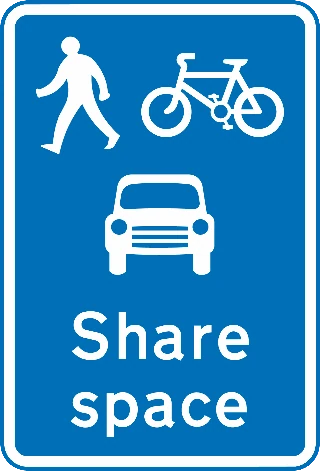
Share space

Share space

Share space road or place ahead. Motorists, cyclists and pedestrians should expect to share the same space. Motorists should drive slowly and carefully and be prepared to stop.

Memory trick No separate lanes here: go slowly and be ready to stop.

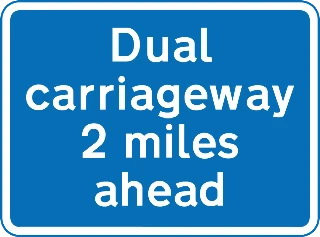
Dual carriageway ahead

Dual carriageway ahead

Distance to the beginning of a dual carriageway road ahead.

Memory trick Blue panel with a distance: the dual carriageway starts after that.

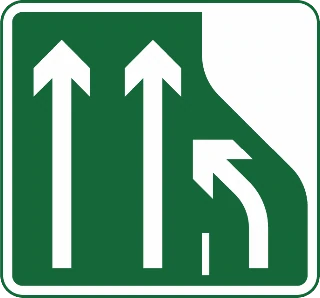
Lane loss on a primary route

Lane loss on a primary route

These signs indicate the loss of the right-hand lane on a dual carriageway road or one-way street. The signs may be reversed to indicate the loss of the left-hand lane.

Memory trick Short arrow bending into the next one: that lane stops.

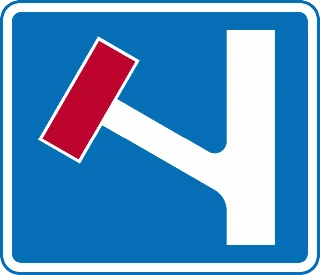
No through road from junction ahead

No through road from junction ahead

No through road for vehicular traffic in the direction indicated from the junction ahead.

Memory trick Red tip on one arm: that way leads nowhere for cars.

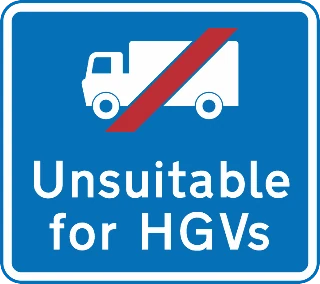
Unsuitable for HGVs

Unsuitable for HGVs

Route unsuitable for heavy goods vehicles.

Memory trick Blue panel, not a red ring: a warning about the route.

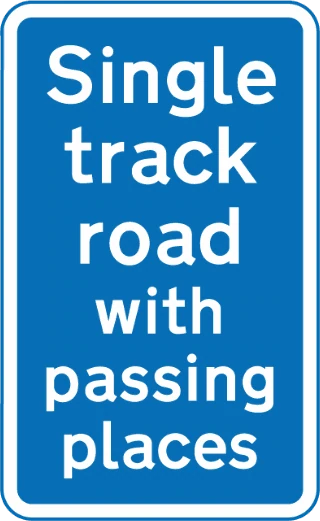
Single track with passing places

Single track with passing places

Narrow road ahead with passing places at intervals.

Memory trick You use the passing place, so that the other driver gets by.

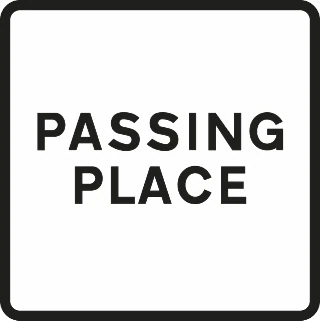
Passing place

Passing place

Passing place on a narrow road.

Memory trick Pull in to let others pass.

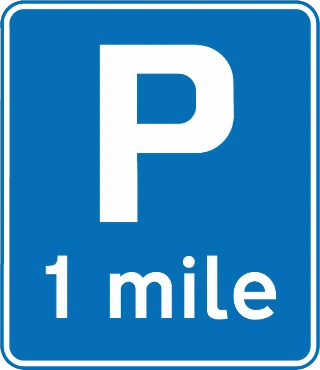
Parking place ahead

Parking place ahead

Distance ahead to a parking place.

Memory trick Big P on blue with a distance.

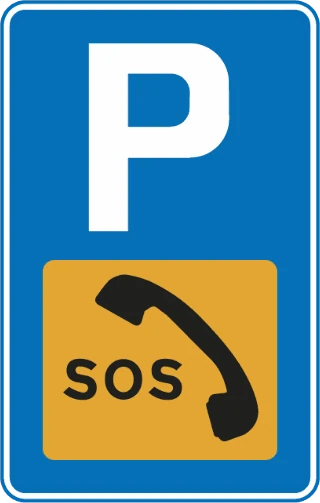
Parking with emergency telephone

Parking with emergency telephone

Location of a parking place with an emergency telephone. It may include an arrow.

Memory trick P plus SOS: both are here.

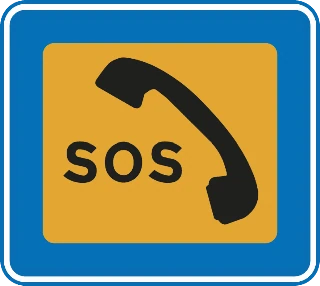
Emergency parking only

Emergency parking only

Location of a parking place for emergency use only. It may include an arrow.

Memory trick SOS with no P: not for a rest, only for a real problem.

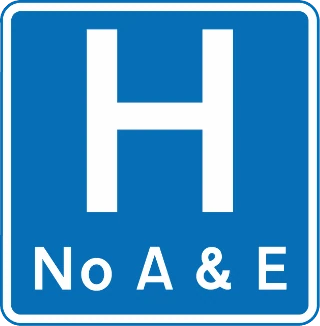
Hospital with no A&E

Hospital with no A&E

Blue signs indicate hospitals without accident and emergency facilities.

Memory trick Blue H: not the one for an emergency. Red H: yes.

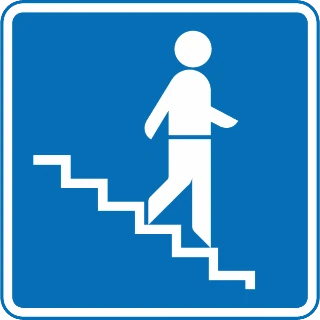
Stepped entrance to a subway

Stepped entrance to a subway

Stepped entrance to a subway.

Memory trick Figure going downstairs: to a tunnel under the road.

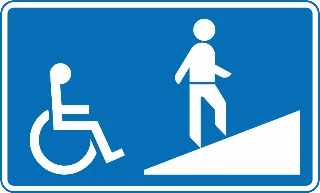
Ramped approach to a footbridge

Ramped approach to a footbridge

Ramped approach to a footbridge.

Memory trick Going uphill with a wheelchair symbol: over the road, not under.

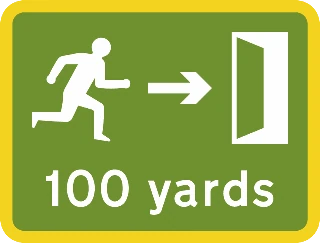
Emergency exit from a tunnel

Emergency exit from a tunnel

Direction and distance to an emergency exit from a road tunnel.

Memory trick Green running figure and a door: that is the way out on foot.

One way sign for pedestrians

One way sign for pedestrians

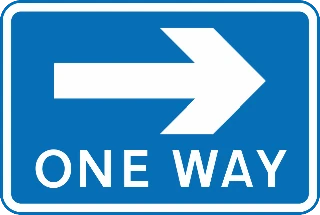
This sign advises pedestrians crossing the road that traffic is one-way in the direction shown.

Memory trick White arrow on blue: which way to look before stepping out.

Check point, get in lane

Check point, get in lane

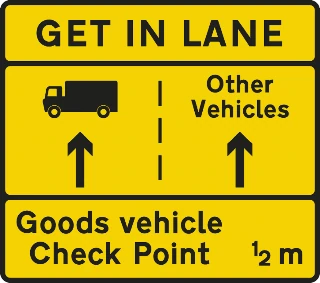
Temporary signs are put out when vehicles are to be stopped for an excise licence check or vehicle inspection. These signs may apply to specific types of vehicle and may indicate which lanes to use.

Memory trick Temporary yellow sign: goods vehicles here, others there.

DVSA check point ahead

DVSA check point ahead

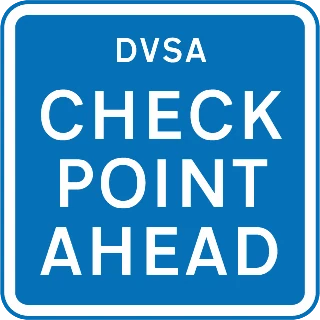
Temporary signs are put out when vehicles are to be stopped for a check. This one warns of a DVSA check point ahead.

Memory trick You may be directed in: follow the officer's signal.

Police temporary sign

Police temporary sign

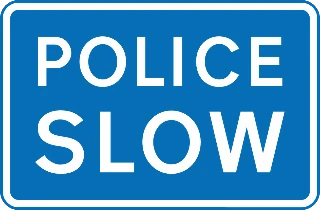
These temporary signs are put out by the police to warn of potential danger or an accident ahead and the need to proceed with caution.

Memory trick Blue and white, usually on a stand by the road: do what it says.

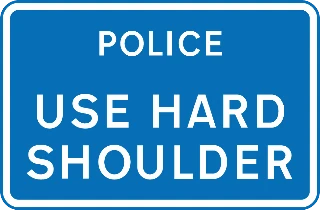
Police: use hard shoulder

Police: use hard shoulder

In an emergency, drivers may be diverted onto the hard shoulder and told when to rejoin the main carriageway.

Memory trick Hard shoulder is out of bounds unless you are told to use it. This tells you.

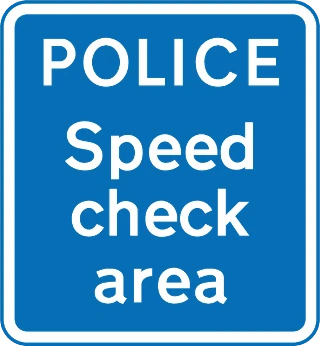
Police speed check area

Police speed check area

Area where, from time to time, police carry out checks on the speed of vehicles.

Memory trick 'From time to time': it can be any day.

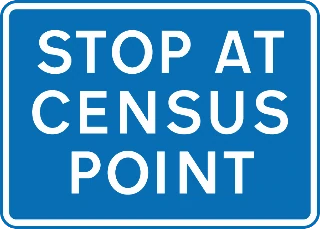
Stop at census point

Stop at census point

These temporary signs are used when traffic surveys are taking place. Vehicles may be directed to stop at the census point.

Memory trick A census counts traffic. A surveyor may wave you in.

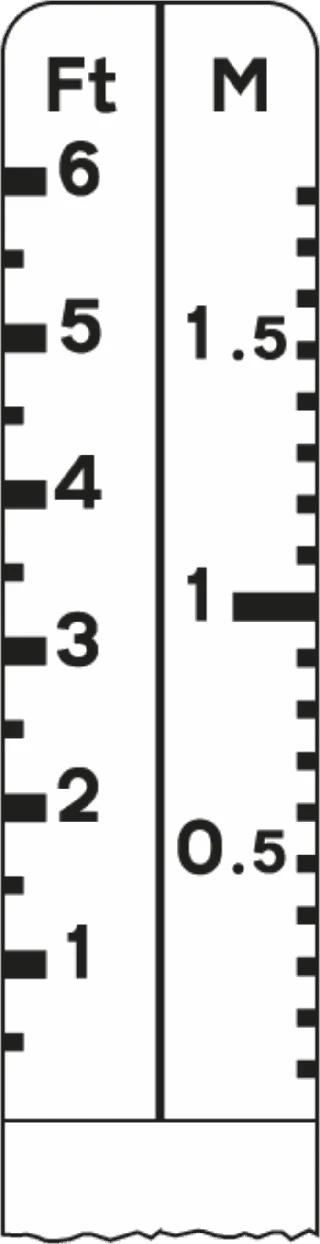
Water depth gauge at a ford

Water depth gauge at a ford

The depth of water at a ford may be shown in both metric and imperial units, or in imperial units only.

Memory trick Read the post before you drive in, and if in doubt, do not go.

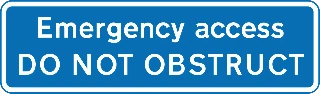
Emergency access: do not obstruct

Emergency access: do not obstruct

Where a road is physically closed part-way along its length to prevent its use by through traffic, this sign may be erected at the closure point. Vehicles should not be parked so as to obstruct any gateway or opening that allows access for emergency vehicles.

Memory trick A gate may look unused, but a fire engine might need it.

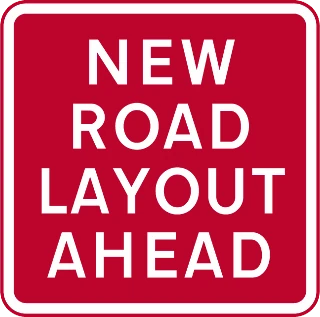
New road layout ahead

New road layout ahead

A temporary sign may be provided for up to three months following a permanent change to the road layout ahead.

Memory trick The road you think you know has changed.

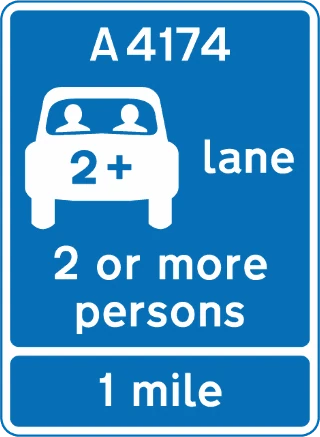
HOV lane ahead

HOV lane ahead

This sign gives advance warning of a HOV lane ahead.

Memory trick 2+ on a car: at least one passenger with the driver.

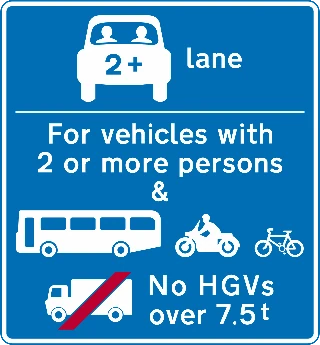
Vehicles permitted in an HOV lane

Vehicles permitted in an HOV lane

Another sign indicates which vehicles may use the HOV lane ahead.

Memory trick Read the small symbols. Lorries over the weight shown are out.

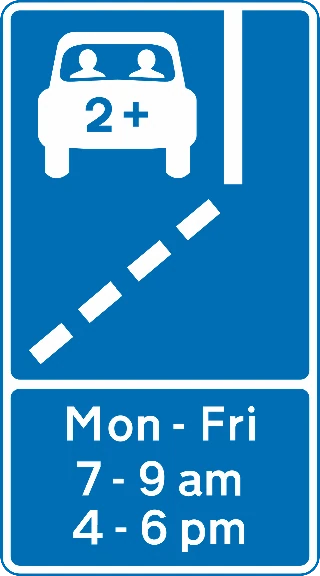
Start of HOV lane

Start of HOV lane

Start of a HOV lane, on the near side.

Memory trick Diagonal line, then a solid line.

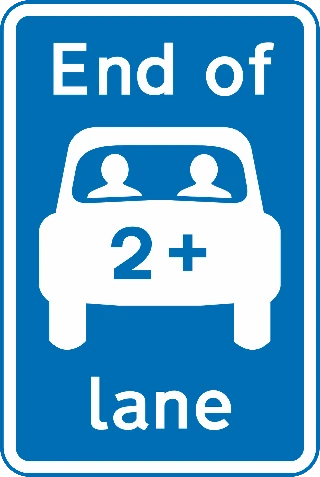
End of HOV lane

End of HOV lane

End of a HOV lane.

Memory trick Words on a panel again: this one has finished.

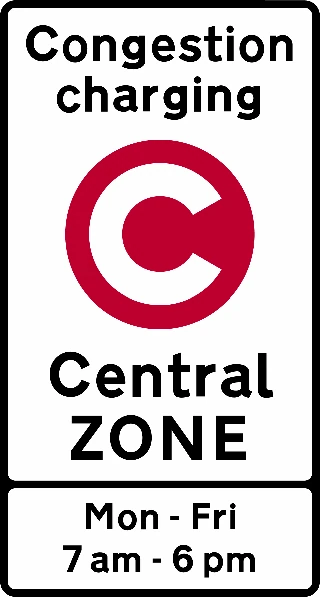
Congestion charging zone

Congestion charging zone

This example shows a typical zone entry sign. The charging period is shown in the lower panel. The name of the traffic authority may be shown at the top of the sign.

Memory trick White on red C: if you enter during the hours, a charge is due.

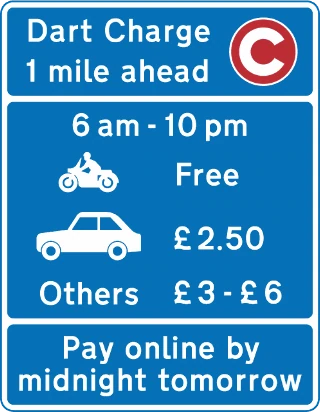
Tolled crossing information

Tolled crossing information

This information sign for a tolled crossing shows the distance to the crossing in the top panel, the charging period and charge in the middle panel and the method of payment in the bottom panel.

Memory trick Top: how far. Middle: when and how much. Bottom: how to pay.

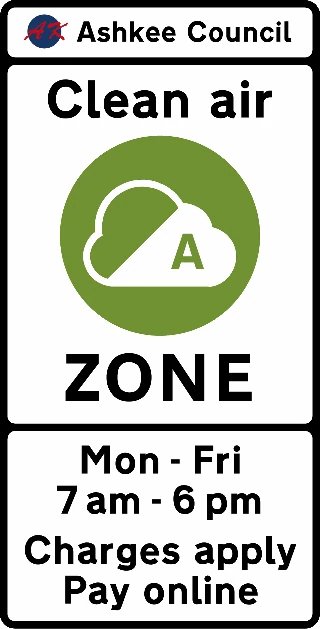
Clean air zone entry

Clean air zone entry

This zone entry sign shows the name of the traffic authority in the top panel, the class of the CAZ in the middle panel and the period of operation and details of the method of payment in the bottom panel. In CAZs, some drivers may be required to pay a daily charge to enter, or move within, a zone if their vehicle does not meet the standard.

Memory trick Green cloud and a letter: the letter says which vehicle classes are affected.
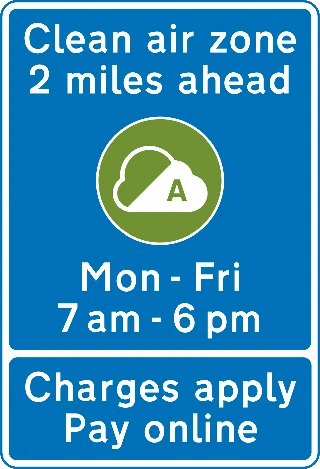
Clean air zone ahead

Clean air zone ahead

This advance information sign shows the distance to the start of a CAZ, the class of the CAZ and the period of operation in the top panel. The bottom panel shows details of the method of payment.

Memory trick Blue version: you still have time to reroute or pay.

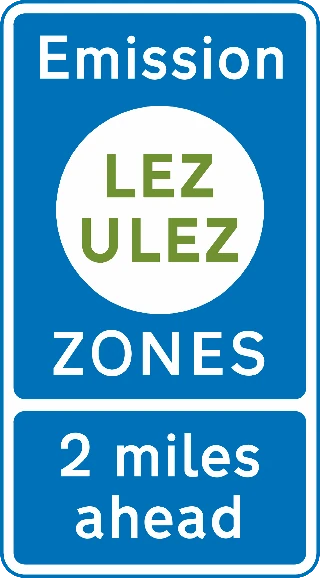
LEZ and ULEZ ahead

LEZ and ULEZ ahead

This advance information sign shows the distance to the start of the Low Emission Zone and Ultra Low Emission Zone. Details of the charges and payment methods are available from the appropriate traffic authority.

Memory trick LEZ and ULEZ in the circle: London's two emission zones.

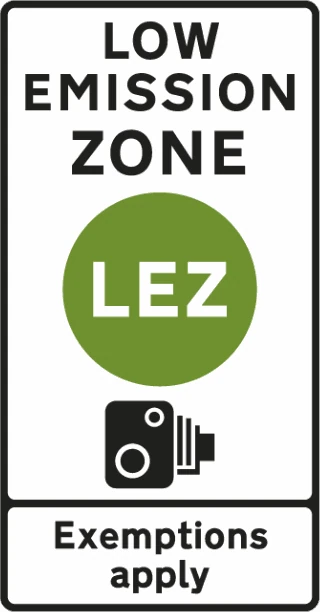
Low emission zone in Scotland

Low emission zone in Scotland

Entrance to a Low Emission Zone in Scotland. A vehicle will be in contravention of Scottish LEZ requirements if it does not meet the emission standard, unless it is exempt.

Memory trick Driving a non-compliant vehicle in it is not permitted, and cameras watch.
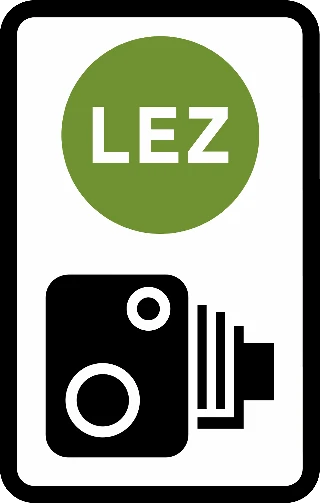
LEZ cameras

LEZ cameras

Reminder to drivers within a Low Emission Zone in Scotland in which cameras are used to enforce traffic regulations.
Memory trick Camera beneath the LEZ letters: the zone is enforced by camera.

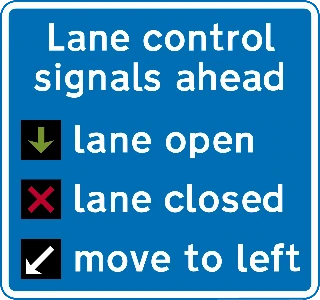
Lane control signals ahead

Lane control signals ahead

Special signs explain what the signals mean. On some busy roads, lane control signals are used to vary the number of lanes available to give priority to the main traffic flow.

Memory trick The number of lanes changes with the main traffic flow, so read the signals every time.

See all road signs