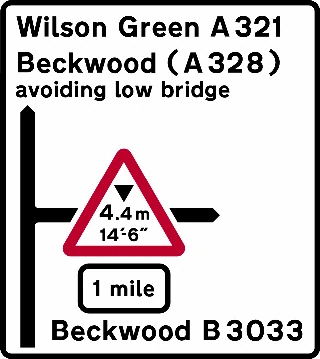
Height warning in a direction sign
Warning triangles are sometimes incorporated into directional signs that may also indicate an alternative route to avoid the low bridge.
Memory trick A red triangle on a route sign: that branch has a low bridge.
65 signs
Warning triangles are sometimes incorporated into directional signs that may also indicate an alternative route to avoid the low bridge.
Memory trick A red triangle on a route sign: that branch has a low bridge.
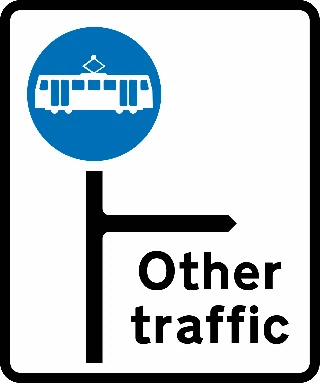
Indication of a tram-only route at a junction ahead.
Memory trick Follow the arm that says 'Other traffic'.
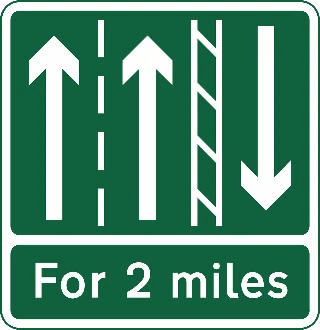
Overtaking lane continues for the distance shown, with single lane traffic in the opposite direction.
Memory trick Up arrows beside a broken line: this lane is for you to pass, for this far.
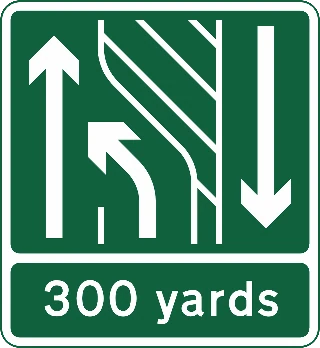
End of the overtaking lane ahead.
Memory trick Left arrow bends in: the extra lane is about to go.
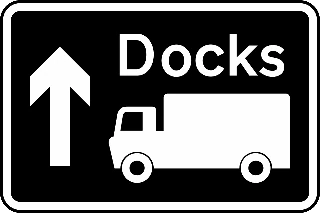
Direction of the route recommended for goods vehicles.
Memory trick Black panel, white lorry: this is the best way for a big vehicle.
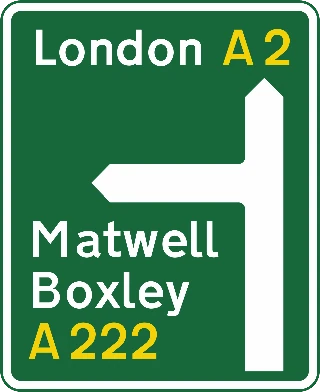
Junction ahead between 2 primary routes. Primary routes have green backgrounds with white lettering and yellow route numbers.
Memory trick Green and yellow: the main roads.
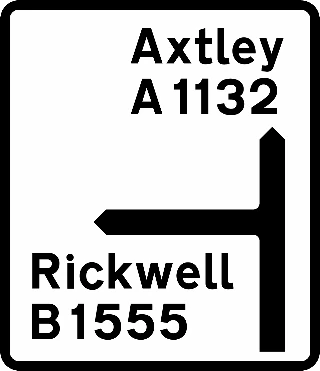
Junction ahead between 2 non-primary routes. Direction signs on these roads have white backgrounds, with black route numbers and a black border.
Memory trick White with a black border: local or non-primary road.
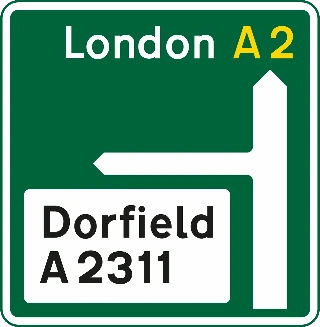
Sign on a primary route indicating a non-primary route.
Memory trick White panel on green: that branch is the local road.
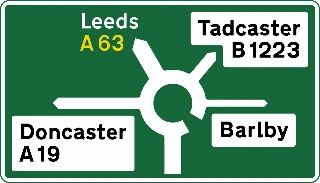
Map-type sign on a primary route indicating a roundabout ahead.
Memory trick It is a map of the junction: find your exit before you get there.
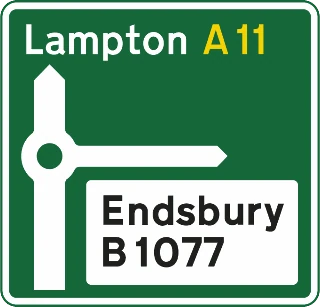
Map-type sign for a mini-roundabout.
Memory trick Small dot in the middle: painted circle, not a big island.
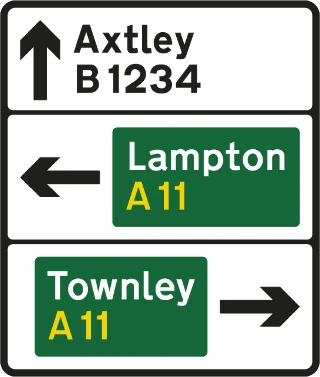
A stack-type sign shows directions at a junction ahead, but not the road layout. Arrows indicate the direction of exits from the junction ahead.
Memory trick A stack gives directions, not a picture of the junction.
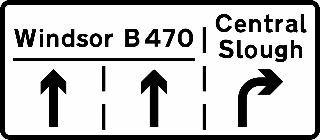
A sign that indicates the appropriate lanes to use for turning movements at a junction ahead.
Memory trick Get in lane now, as it will be too late at the line.
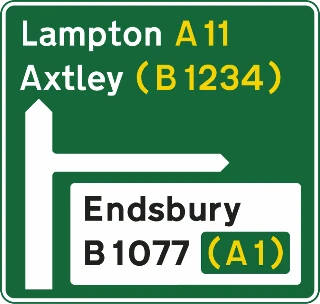
Route numbers in brackets are roads that will be reached by following the route indicated.
Memory trick Brackets mean not yet: you reach it later along that road.
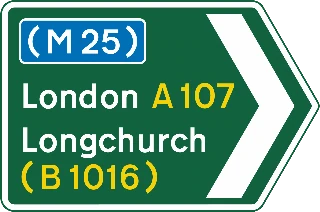
Flag-type sign indicating a primary route that leads to a motorway and to a non-primary route. Signs located at a junction and pointing along a road have chevrons rather than arrows.
Memory trick Pointed end: it is at the turn itself, pointing at the road.
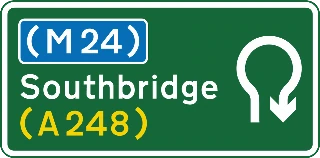
This sign indicates that a U-turn should be made at a roundabout ahead in order to follow the route to the destinations shown.
Memory trick Curved arrow in the panel: go round and come back.
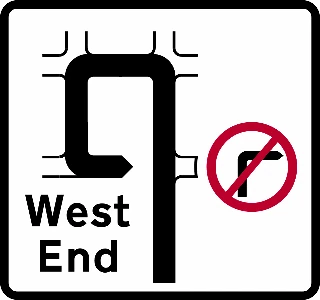
Where a turning movement is prohibited, signs may show an alternative route.
Memory trick Red ring on the map, and the bent road around it shows you how.
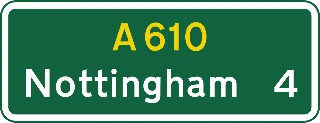
Route confirmatory sign. It is provided after a junction, with distances to destinations ahead.
Memory trick Just after the junction: yes, this is the road.
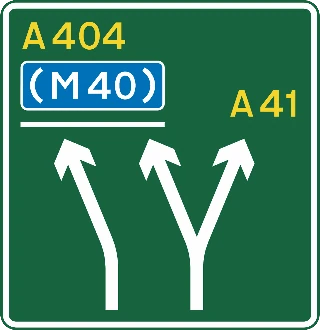
Signs incorporating a 'Y arrow' are used on motorways and in other high-speed situations where a lane divides to reach different routes.
Memory trick The Y arrow: one lane, then two ways, so you have a choice.
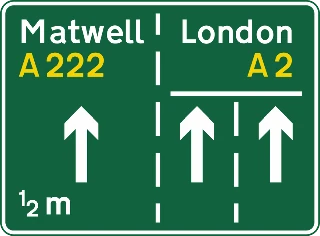
Signs mounted at the side of the carriageway in advance of the junction, where a lane leaves the main carriageway to become the exit slip road.
Memory trick Upward arrows with a dividing line: pick by where you are going.

Tourist destinations may be shown on separate signs with brown backgrounds, or on brown panels incorporated into other direction signs.
Memory trick Brown means a place to visit.
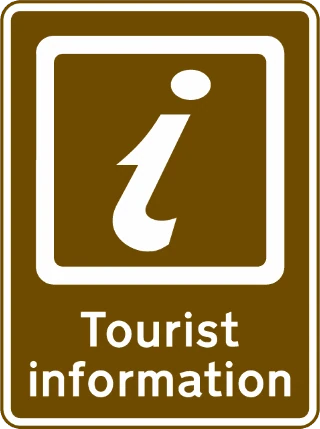
Location of a tourist information point or centre.
Memory trick White 'i' on brown or blue: ask here.

A castle, on a brown tourist sign.
Memory trick Battlements: a castle.

A historic house, on a brown tourist sign.
Memory trick Grand front door and columns: a stately home.
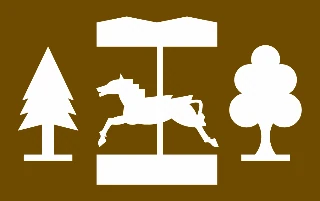
A theme park, on a brown tourist sign.
Memory trick Carousel horse and trees.

A country park, on a brown tourist sign.
Memory trick A person with arms and tree branches up.

A bird garden, on a brown tourist sign.
Memory trick A parrot in profile.
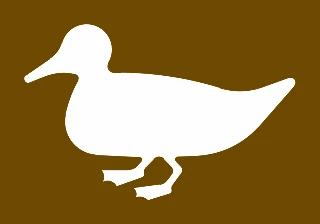
A nature reserve, on a brown tourist sign.
Memory trick A duck on a brown panel: a place for wildlife.
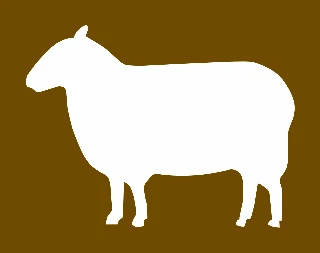
A farm park, on a brown tourist sign.
Memory trick A sheep on brown is a place to visit. On a red triangle, it is a warning.
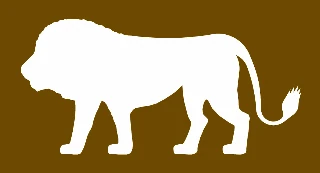
A safari park, on a brown tourist sign.
Memory trick A lion means a safari park.
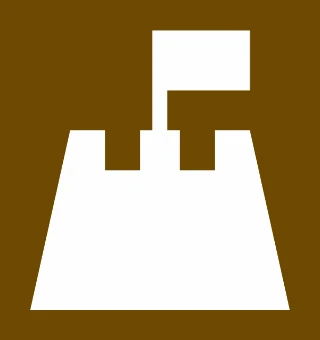
A beach, on a brown tourist sign.
Memory trick Sandcastle and a flag.

A museum, on a brown tourist sign.
Memory trick Columns and an M.

Remains from Roman times, on a brown tourist sign.
Memory trick A soldier's helmet with a crest.

An aviation museum, on a brown tourist sign.
Memory trick A propeller: history of flight.

A football ground, on a brown tourist sign.
Memory trick A ball: match day traffic.
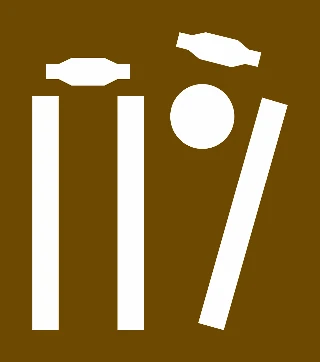
A cricket ground, on a brown tourist sign.
Memory trick Stumps, ball and bat.

A sports centre, on a brown tourist sign.
Memory trick Figure on brown.
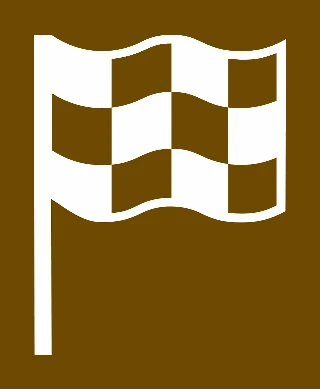
Motor sport, on a brown tourist sign.
Memory trick Chequered flag.

A golf course, on a brown tourist sign.
Memory trick A pennant flag on a pole.
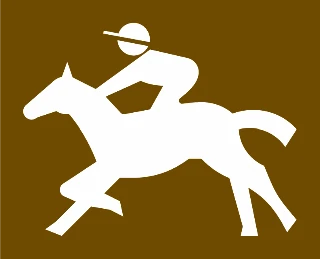
A race course, on a brown tourist sign.
Memory trick A jockey at a gallop.

Fishing, on a brown tourist sign.
Memory trick Fish on a hook.
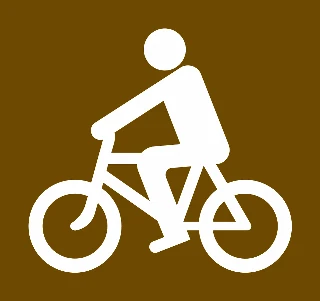
Cycle hire, on a brown tourist sign.
Memory trick Rider on a bike on brown: to rent. On blue, it is a route.

Ten-pin bowling, on a brown tourist sign.
Memory trick Pin and ball.
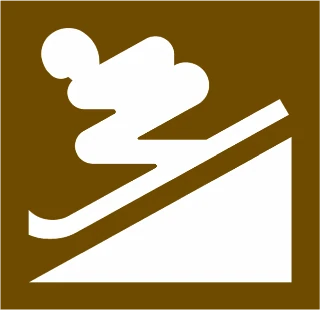
A ski slope, on a brown tourist sign.
Memory trick A figure heading down a slope.
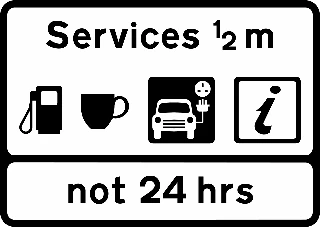
Distance to services. Services grouped together at a single location on primary and non-primary routes may be signed where parking, toilets, fuel and refreshments are available.
Memory trick The small symbols show what you will find.
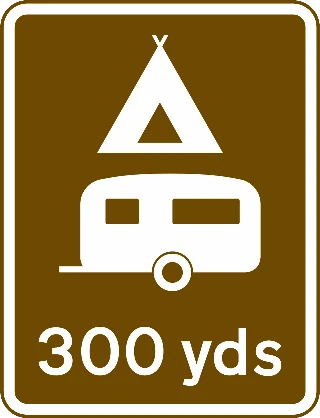
Camping and caravan site. The tent or the caravan symbol may be omitted, depending on the facilities available.
Memory trick Tent, caravan, or both: what the site takes.
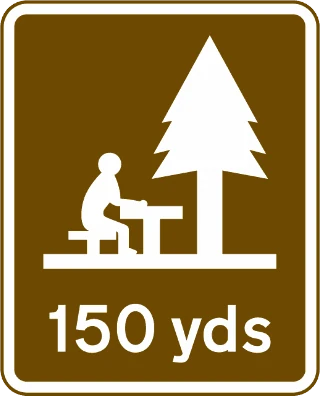
Picnic area. It may include a name.
Memory trick Bench and tree.
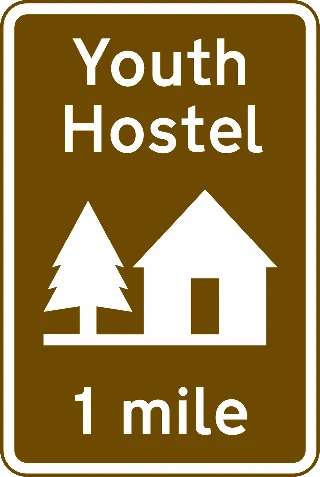
Youth hostel.
Memory trick A hut with a triangle-shaped tree.
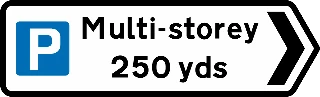
Direction and distance to a multi-storey car park. Direction signs indicating parking places have white backgrounds, even on primary routes.
Memory trick White panel with a P, even on a green road.
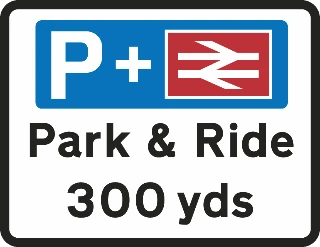
Signs may indicate the location of parking places associated with 'Park and Ride' schemes.
Memory trick Park here, ride in.
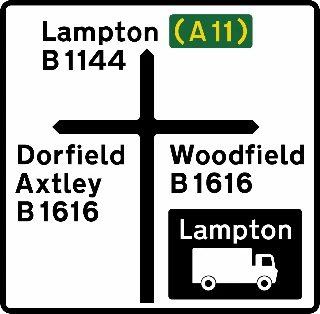
Routes recommended for goods vehicles have black signs with a white lorry symbol.
Memory trick Black patch with a white lorry: the lorry way.
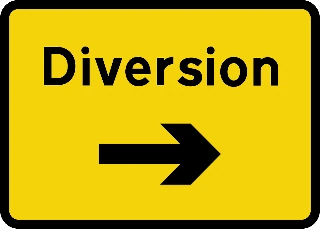
Temporary diversion signs may be required when a road is closed for reasons other than an emergency, for example to carry out works.
Memory trick Yellow and black word sign: a temporary way round.
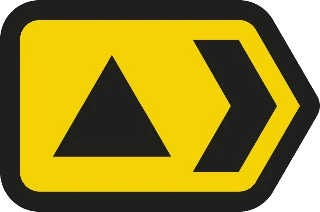
Separate signs indicating a diversion route, which may be permanently displayed. In an emergency, drivers may be told to follow a symbol.
Memory trick Follow the shape you were told about, wherever it goes.
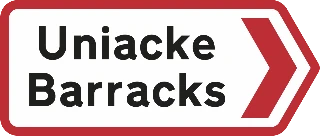
Ministry of Defence establishments may also be shown on separate signs with red borders, arrows and chevrons. The background colour is always white.
Memory trick Red chevron on white: a military site.

Direction to an airport. The aircraft symbol usually points in the same direction as the arrow.
Memory trick Plane on the sign: the way to the airport.

Direction to a car ferry. The car symbols are replaced by the words 'Pedestrian ferry' when the ferry is for foot passengers only.
Memory trick Car shapes on a boat: you can take the car with you.
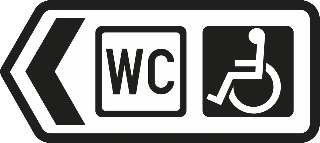
Direction to public toilets with facilities for disabled people.
Memory trick WC and wheelchair: both are there.
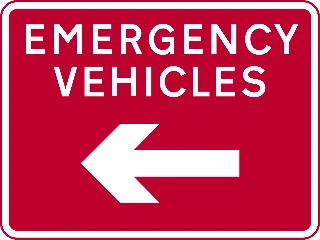
Signs with a red background are used to indicate the route for emergency vehicles to a temporary incident control point.
Memory trick Red panel: a route for those vehicles to use during an incident.
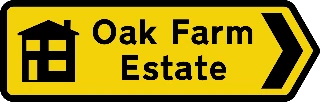
Signs indicating the direction to a new housing development may be left in place for up to six months after completion of the development.
Memory trick Yellow with a little house, and it is temporary.
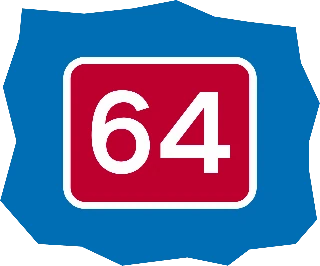
Number of a national cycle route. White numerals on a red patch show the route forms part of the National Cycle Network.
Memory trick Red patch: national. Blue patch: regional.
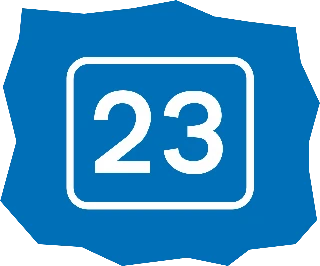
Number of a regional cycle route.
Memory trick Blue with a white number.
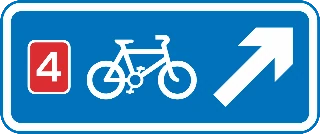
Direction of a national cycle route.
Memory trick Blue rectangle with arrow: the way to ride.
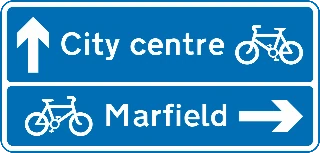
Sign indicating 2 different cycle routes leading from a junction ahead.
Memory trick Where it is shown, a cycle symbol means a recommended route for bikes.
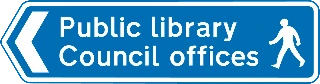
Direction signs for pedestrians generally have a blue background with white lettering and include the walking figure symbol.
Memory trick Walking figure on a sign: it is for people on foot.
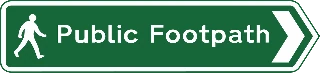
Direction signs for pedestrians. This one shows a public footpath.
Memory trick Green sign, walking figure: a right of way on foot.
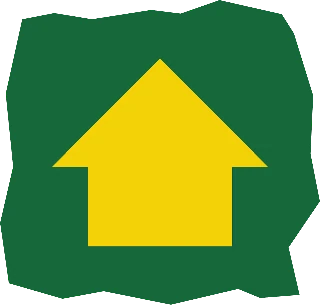
A public footpath may be indicated by a yellow waymarker. A blue arrow is used for public bridleways. The background may be of a different colour.
Memory trick Yellow: footpath. Blue: bridleway.