UKTheory Hub
English

Vehicle handling: UK theory test questions and answers

Free questions with answers. No sign-up needed.

1To save fuel you are thinking of coasting through a series of bends with the clutch pressed down. Which problem does Rule 122 link especially to bends and corners?

Explanation

Rule 122 lists coasting effects: engine braking is eliminated, speed downhill increases quickly, footbrake effectiveness can reduce, steering response is affected particularly on bends and corners, and gear selection may be harder. The other options describe problems the Code does not link to coasting.

Highway Code rule 122
2You are driving a heavily loaded car slowly uphill with vehicles building up behind you, and a climbing lane is provided. What does the Highway Code advise?

Explanation

Rule 139 says to use a climbing or crawler lane if you are driving a slow-moving vehicle or if there are vehicles behind you wishing to overtake, and to be aware of signs and markings showing when the lane ends. Rule 169 adds that you should not hold up a queue of traffic.

Highway Code rule 139

3You are driving a large vehicle through a tunnel where visibility is reduced, and the traffic ahead then stops. Which gaps does Rule 126 give for moving and stopped traffic?

Explanation

Rule 126 says to allow at least a two-second gap in tunnels where visibility is reduced, and a four-second gap if driving a large vehicle in a tunnel, with at least a 5-metre gap if you have to stop. The two-second option is the figure for cars.

Highway Code rule 126

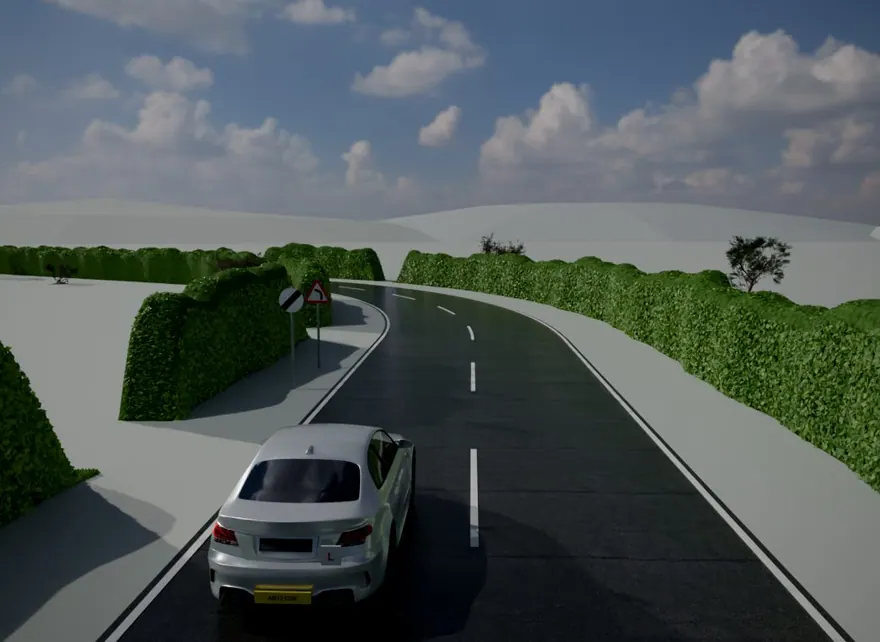
4You are approaching a bend on an icy road at a slow speed. How does the Highway Code say you should take it?

Explanation

Rule 231 says to drive particularly slowly on bends where loss of control is more likely, brake progressively on the straight before you reach the bend, then steer smoothly round avoiding sudden actions. Braking on the bend itself, as in the last option, is what the rule tells you to avoid.

Highway Code rule 231

5On a fast dry road you keep the two-second gap. By Rule 126, what gap should you leave in the rain and, at most, on ice?

Explanation

Rule 126 says the two-second gap should be at least doubled on wet roads, so 4 seconds, and up to ten times greater on icy roads, so 20 seconds. The second option doubles correctly for rain but forgets that the ten times applies to the 2-second base.

Highway Code rule 126

6Which of these is permitted under Rule 123 on engine use when your vehicle is stationary?

Explanation

Rule 123 says you MUST NOT leave a parked vehicle unattended with the engine running, and that a vehicle likely to stay stationary for more than a couple of minutes should have the parking brake on and the engine off. Leaving the engine running is permissible if stationary in traffic or diagnosing faults.

Highway Code rule 123

7In normal circumstances, which braking pattern does Rule 117 describe as the safest way to stop?

Explanation

Rule 117 says the safest way to brake is early and lightly, braking more firmly as you begin to stop, then easing the pressure off just before the vehicle comes to rest to avoid a jerky stop. The other options reverse or flatten that pattern.

Highway Code rule 117

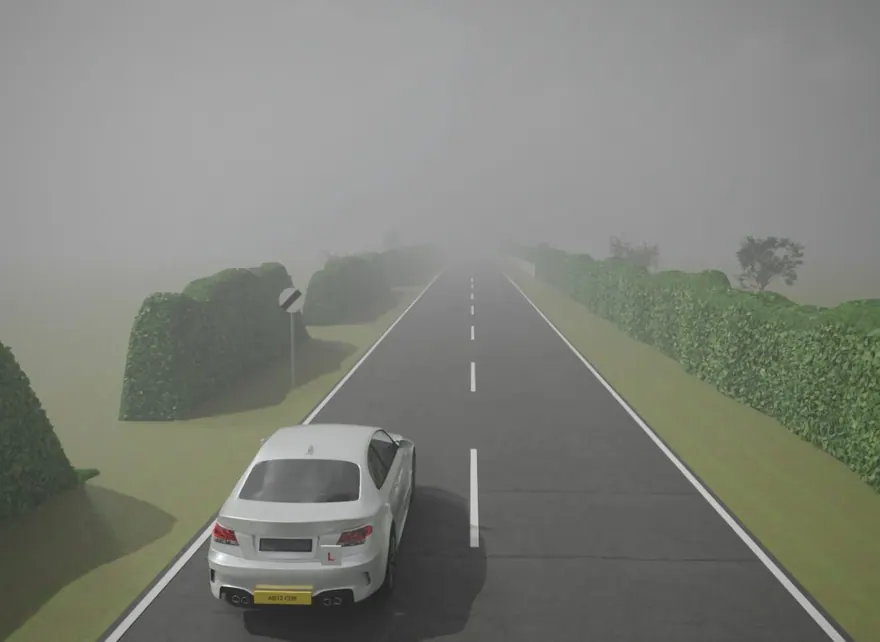
8You are driving in fog and need to slow down for a hazard ahead. Which order does the Highway Code give?

Explanation

Rule 235 says to check your mirrors before you slow down and then use your brakes so your brake lights warn drivers behind you. Rule 116 forbids hazard lights while driving except on a motorway or unrestricted dual carriageway to warn of a hazard ahead, so they are not a substitute for the brake lights.

Highway Code rule 235

The app has 160 more questions on this topic.

Motorway rules →Start the free mock test