UKTheory Hub
English

Road and traffic signs: UK theory test questions and answers

Free questions with answers. No sign-up needed.

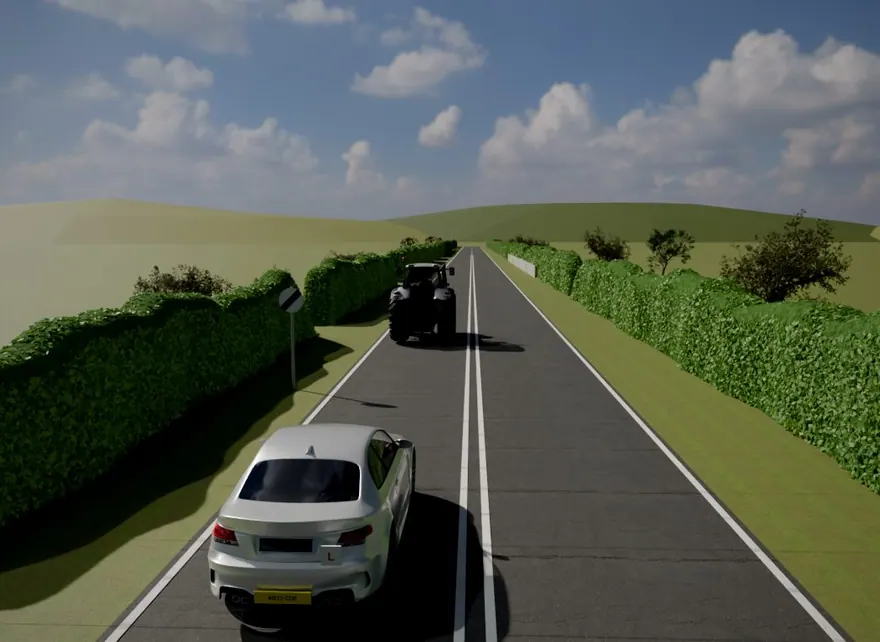
1The white line nearer to you in a pair of double white lines is solid. A farm tractor ahead is travelling at 8 mph and the road is clear. Which statement is correct?
Explanation

Rule 129 lets you cross a solid nearer line only to pass a stationary vehicle or to overtake a pedal cycle, horse or road maintenance vehicle travelling at 10 mph or less. A farm tractor is not on the list, so low speed alone is not enough.

Highway Code rule 129
2You're approaching a yellow box junction and want to turn right. Oncoming traffic is heavy, and the queue in the road you want to enter has backed up to the junction. What should you do?

Explanation

The right-turn exception only covers being stopped by oncoming traffic or by other right-turners. It applies only when your own exit road is clear, so with a blocked exit you must stay out of the box (rule 174).

Highway Code rule 174

3You're at the stop line waiting to turn right. The full green signal goes out and is replaced by a green arrow pointing ahead. What should you do?

Explanation

Turning right on a full green is allowed, but once it is replaced by an ahead or left-turn arrow you must wait until the right-turn arrow shows. The arrow now limits the movements allowed.

Know your traffic signs, Traffic signals

4You approach traffic lights where the signal head at the stop line is dark, but the duplicate signal on the far side of the junction shows red. What should you do?

Explanation

Most junctions have secondary signals that repeat the primary ones, and you must obey them if the primary signal fails. The 'treat it as an unmarked junction' advice in rule 176 is for when the traffic lights are not working at all.

Know your traffic signs, Traffic signals

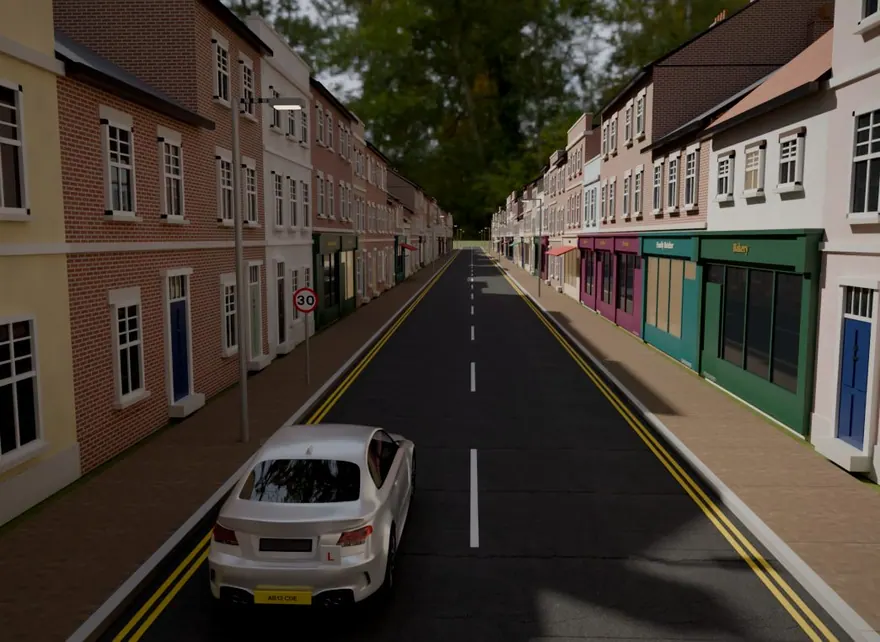
5Double yellow lines run along a street and the kerb has no yellow marks on it. You need to stop for a few minutes to load heavy boxes into your car. What do the markings allow?

Explanation

Double yellow lines mean no waiting at any time, but the Code says you may still stop to load or unload (or for passengers) unless separate kerb marks and plates prohibit loading. Plates with times belong to single yellow lines and kerb marks, not to this case.

Highway Code, Road markings (waiting restrictions)

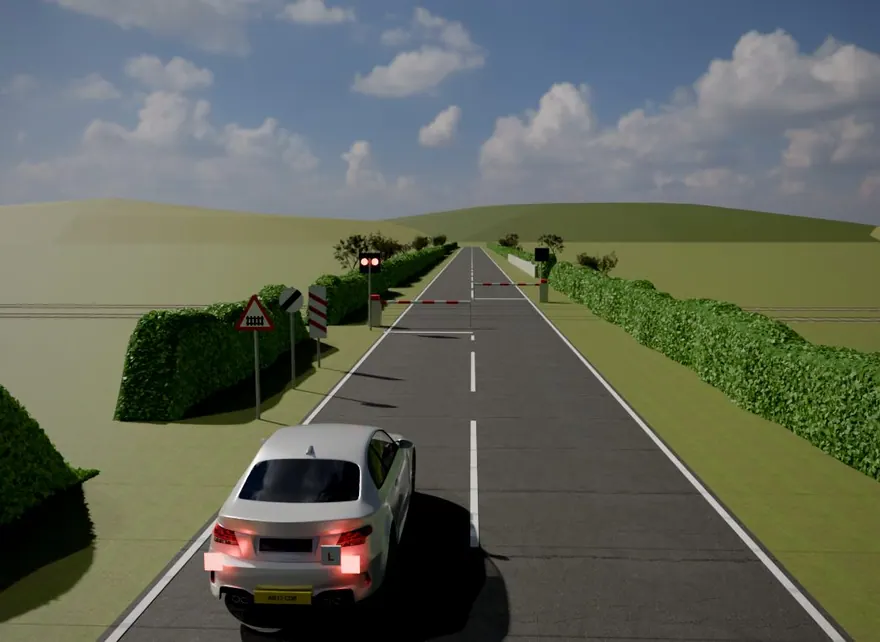
6You're stopped at an automatic half-barrier level crossing. The red lights have been flashing for over 3 minutes and no train has come. What should you do?

Explanation

Flashing red for more than 3 minutes without a train (at crossings other than full-barrier ones) is a fault, so phone the signal operator. Crossing on your own judgement, or waiting forever, are both wrong.

Know your traffic signs, Level crossing signs and signals

7You're driving a long, low vehicle at risk of grounding and reach a level crossing where a sign tells you to use the railway telephone. What must you do?

Explanation

Rule 294: drivers of large or slow-moving vehicles, long low vehicles at risk of grounding and people herding animals MUST obey a sign to phone for permission. A train could arrive before you are clear, so looking and listening is not enough.

Highway Code rule 294

8On a motorway in England, a traffic officer's vehicle behind you flashes amber lights and the officer points to the left with the left indicator on. What must you do?

Explanation

Rule 108: traffic officers on most motorways can stop you on safety grounds, and you MUST pull over and stop as soon as it is safe, then switch off your engine. Stopping at once in a live lane would itself be dangerous.

Highway Code rule 108

The app has 989 more questions on this topic.

Essential documents →Start the free mock test