AETheory Hub
English

Road markings & signals: UAE theory test questions and answers

Free questions with answers. No sign-up needed.

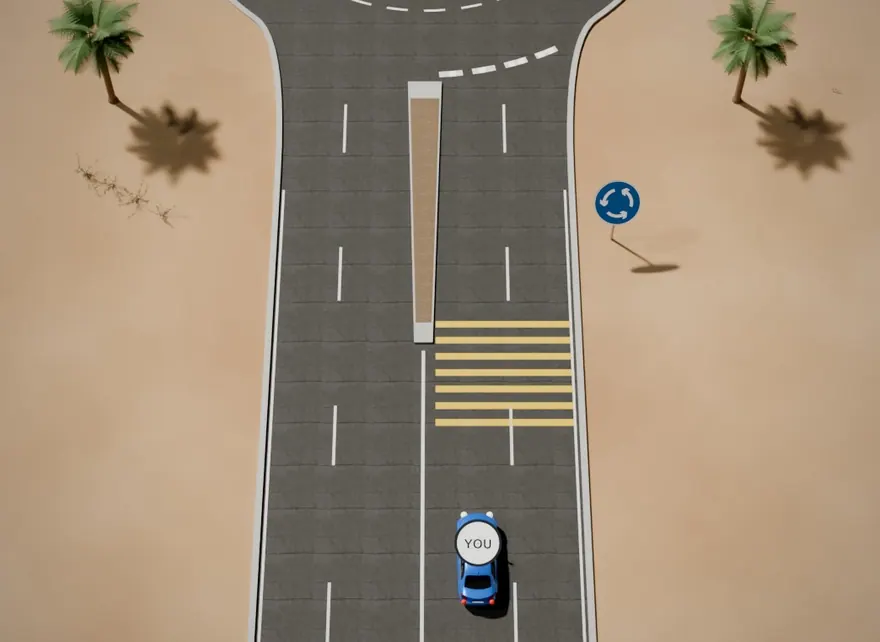
1On the approach to a roundabout you drive over several raised strips across the lane that make the car vibrate and hum. What are they for?
Explanation

Rumble strips are a warning you can feel and hear. They are laid before roundabouts, junctions and toll or inspection points so that a driver who is not looking still slows down.

RTA Light Motor Vehicle Handbook, Part 5
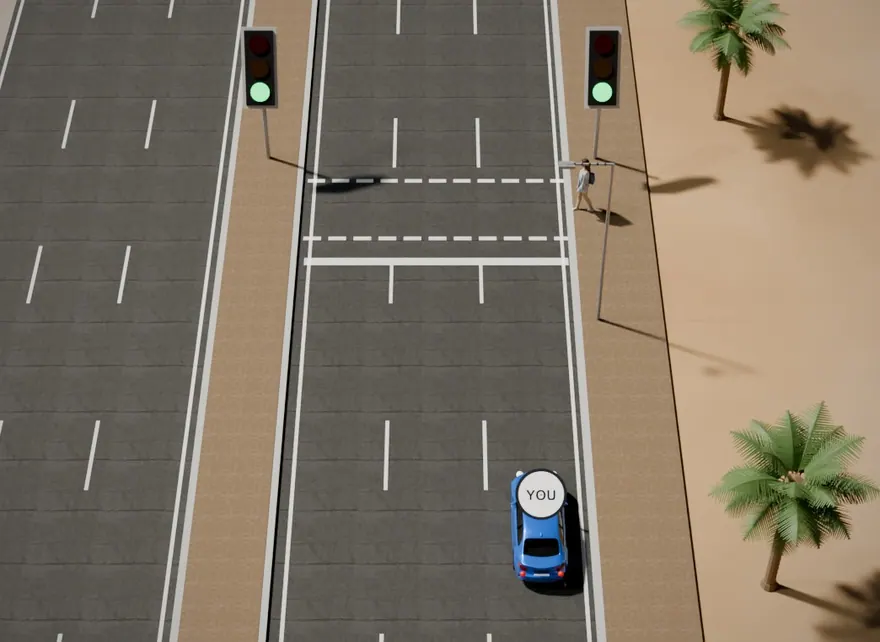
2The pedestrian signal shows a red figure while your light is green. A pedestrian at the kerb looks ready to step out anyway. What does the handbook advise?

Explanation

Pedestrians must obey their signals, but the handbook tells drivers to watch out for those who do not and who try to beat the lights. Crossing against the signal costs the pedestrian AED 400, but the driver must still avoid them.

RTA Light Motor Vehicle Handbook (rta.ae PDF), Part 5 — Traffic Control Signals — Pedestrian Traffic Signals

3A learner says: 'Only road signs are legally binding; road markings are just advice.' Is this correct?

Explanation

False. Regulatory road markings, such as stop lines, give-way lines and solid no-passing lines, must be obeyed by law; the handbook states you are breaking the law if you do not.

RTA Light Motor Vehicle Handbook (rta.ae PDF), Part 5 — Road Markings

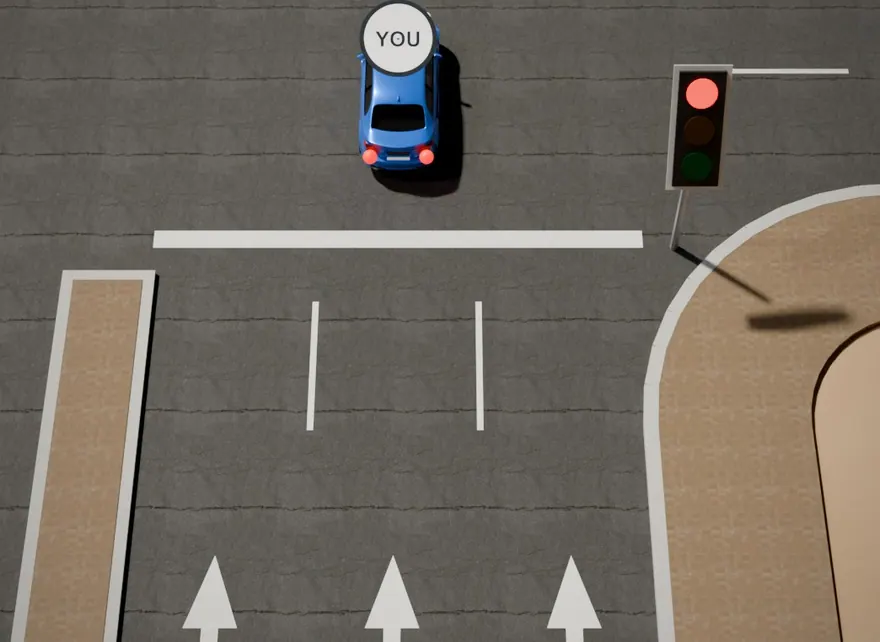
4The light turns red just as you reach the junction. You cross the stop line, realise your mistake and stop in the middle of the junction without crossing it. How is this treated?

Explanation

The offence is committed when the vehicle crosses the stop line while the signal is red, which is exactly what the camera records. Stopping in the junction afterwards also blocks crossing traffic. Slow down on amber so you never have to choose.

Ministerial Resolution 178/2017 — jumping a red light (AED 1,000, 12 pts, 30-day impound); red-light cameras record crossing the stop line

5Besides a temporary speed limit, what kind of information can an electronic Variable Message Sign (VMS) over the road give you?

Explanation

VMS are information signs about conditions ahead: lane choice, road opening times, weather, heavy traffic, crashes or construction. Any speed limit they show overrides the posted limit for that time.

RTA Light Motor Vehicle Handbook (rta.ae PDF), Part 5 — Variable Message Signs

6True or false: an elderly man is crossing slowly on a pedestrian crossing while a queue builds behind you. A short tap on the horn to make him hurry is an acceptable use of the horn.

Explanation

False. The horn may be used only when necessary to warn others of your approach or position, not to rush or intimidate. A pedestrian on the crossing has priority; wait patiently until he reaches the kerb.

RTA Light Motor Vehicle Handbook (3rd ed.), Part 5 — Warning Others of Your Approach (horn); Part 4 — Unacceptable Driving Behaviors

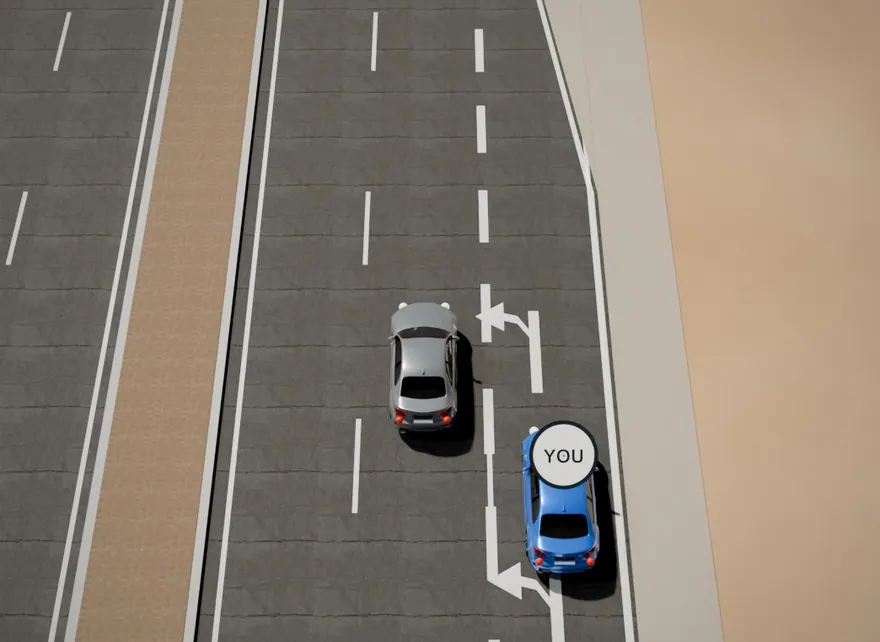
7Your lane ends ahead and a broken line shows where it merges into the lane next to you. Who has priority?

Explanation

The handbook says the lane-change rules also apply whenever you cross a broken line that shows a lane ending: you must give way to vehicles already in the lane you move into.

RTA Light Motor Vehicle Handbook (rta.ae PDF), Part 5 — Changing Lanes

8Which of these signals mean you must NOT proceed in the direction you intend? Select all that apply.

Select all that apply

Explanation

Red in any form (full light, arrow or lane-control X) prohibits the movement it applies to. A flashing amber light allows you to continue, but with caution and giving way as the signs and markings require.

RTA Light Motor Vehicle Handbook, Part 5; Vienna Convention on Road Signs and Signals, Art. 23 — red arrow and lane-control signals

The app has 148 more questions on this topic.

Right of way & roundabouts →Start the free mock test