UKTheory Hub
English

UK theory test in Spanish (Español)

Can you take the UK driving theory test in Spanish, and how do you prepare if English is not your first language? The short answer, then free practice in Spanish.

Empezar el test de práctica gratis

Can you take the UK theory test in Spanish?

In England, Scotland and Wales: no. Since 7 April 2014 the theory test is only given in English or Welsh, with British Sign Language for deaf candidates. Voiceovers in other languages and interpreters are no longer allowed.

In Northern Ireland there is no voiceover in Spanish. Voiceovers there are offered in Arabic, Cantonese, English, Farsi, Polish, Portuguese and Turkish. For other languages you can ask for an interpreter-assisted test through an agency approved by the DVA; you arrange the date with the agency and pay its fees.

If you have dyslexia or another reading difficulty, you can ask for an English voiceover and extra time when you book.

So the best way to prepare is to understand every rule in your own language first, and then practise the same questions in English. That is how this site and the app work.

Sources: GOV.UK and nidirect, checked in November 2026.

Free theory test practice in Spanish

Sample questions in Spanish, with English one tap away

Each question is shown in Spanish. Tap "Mostrar en English" under a question to see the same question in English, the way it is worded in the real test.

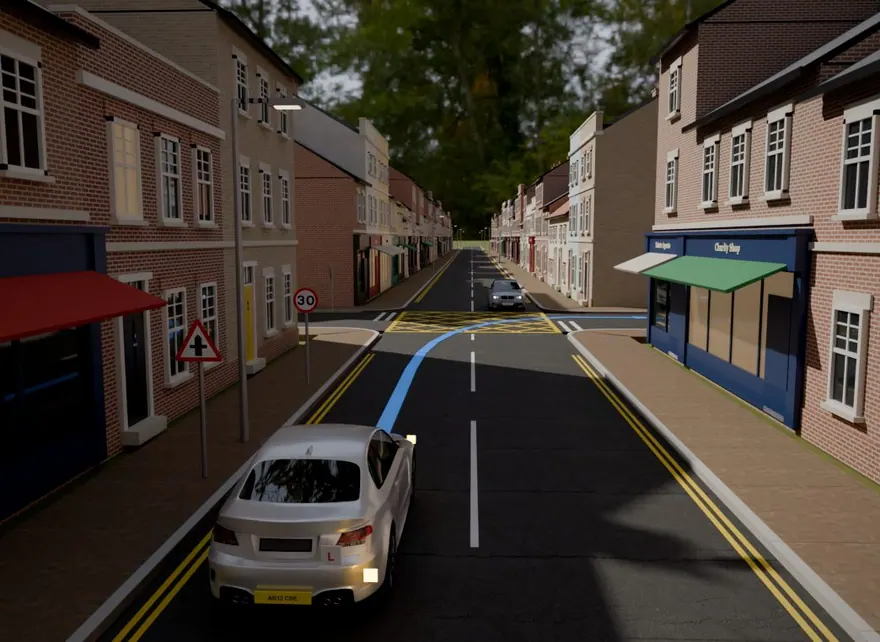
1Quieres girar a la derecha en una intersección con cuadrícula amarilla (box junction). Puedes entrar en la cuadrícula y esperar solo si te detiene cuál de estos?

Explicación

Regla 174: al girar a la derecha puedes esperar dentro de la cuadrícula solo si te detiene el tráfico que viene de frente, u otros vehículos que esperan para girar a la derecha. Una cola en la vía de salida no está en esa lista: NO DEBES entrar hasta que tu vía de salida o tu carril estén libres.

Highway Code rule 174

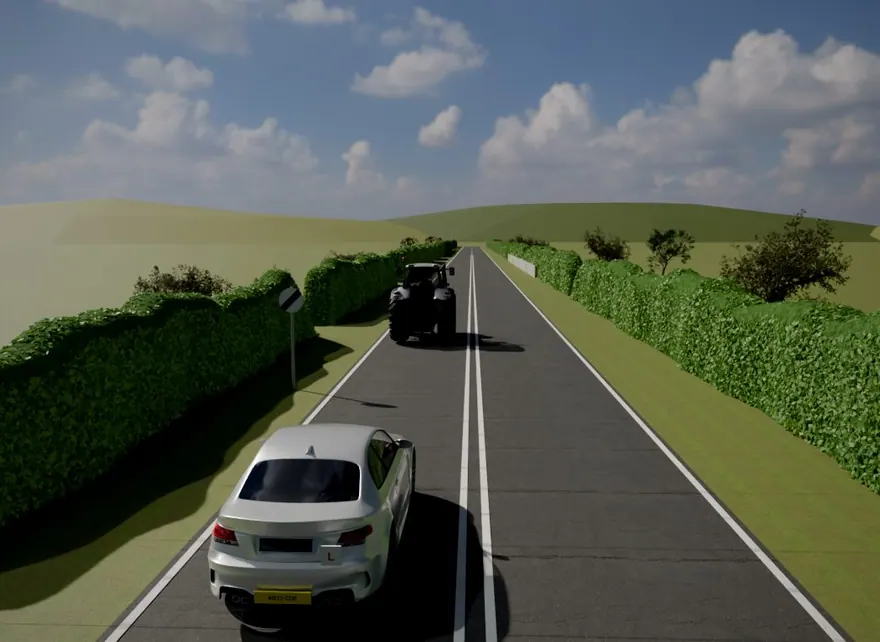
2La línea blanca más cercana a ti de un par de líneas blancas dobles (double white lines) es continua. Un tractor agrícola delante circula a 8 mph y la vía está libre. ¿Cuál de estas afirmaciones es correcta?

Explicación

La regla 129 te permite cruzar la línea continua más cercana solo para adelantar un vehículo parado o para adelantar una bicicleta, un caballo o un vehículo de mantenimiento de carreteras que circule a 10 mph o menos. Un tractor agrícola no está en la lista, así que la velocidad baja por sí sola no basta.

Highway Code rule 129

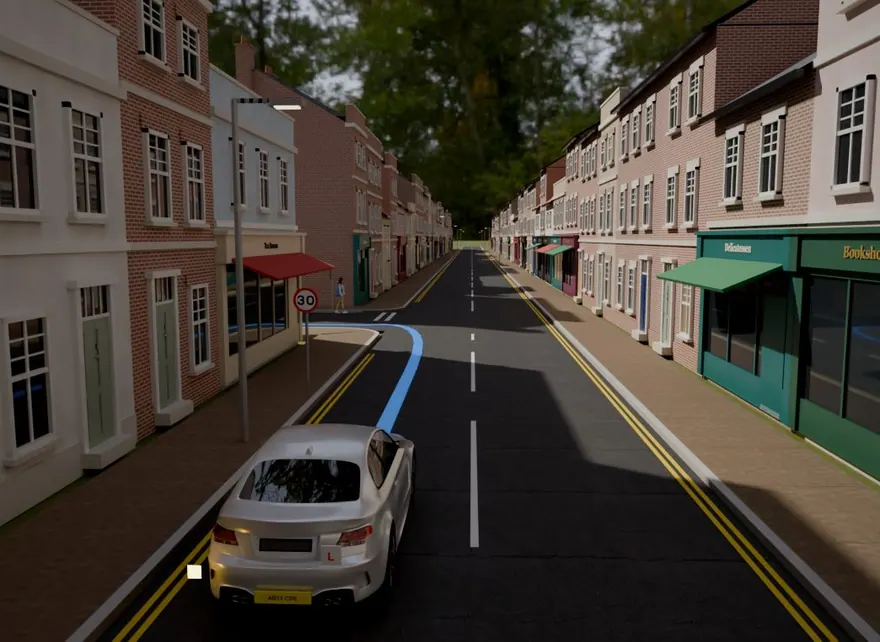
3Giras a la izquierda hacia una calle lateral. Un peatón está en el bordillo de esa calle, claramente esperando para cruzar, pero aún no ha dado un paso. ¿Qué esperan de ti las reglas H2 y 170?

Explicación

H2 dice que en un cruce debes ceder el paso a los peatones que cruzan o esperan para cruzar la vía en la que vas a girar. La regla 170 subraya que quienes ya han empezado a cruzar tienen prioridad, pero eso no te exime de ceder el paso a quienes esperan, que es el error habitual.

Highway Code rules H2 and 170

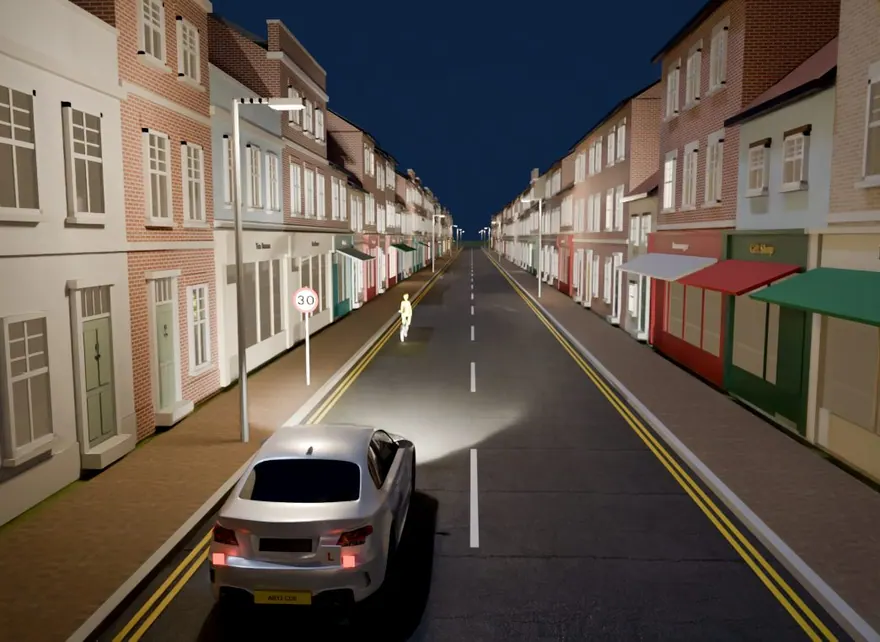
4De noche, en una vía de 30 mph, alcanzas a un ciclista que circula cerca del bordillo. De día adelantarías con unos 1.5 metros. ¿Qué debes hacer ahora?

Explicación

La regla 163 da 1.5 m como guía hasta 30 mph y dice que dejes más espacio de noche y con mal tiempo, o que esperes detrás si no puedes cumplirlo. El 2 m es la cifra para jinetes y peatones en la calzada, no una norma nocturna para ciclistas.

Highway Code rules 163 and 212

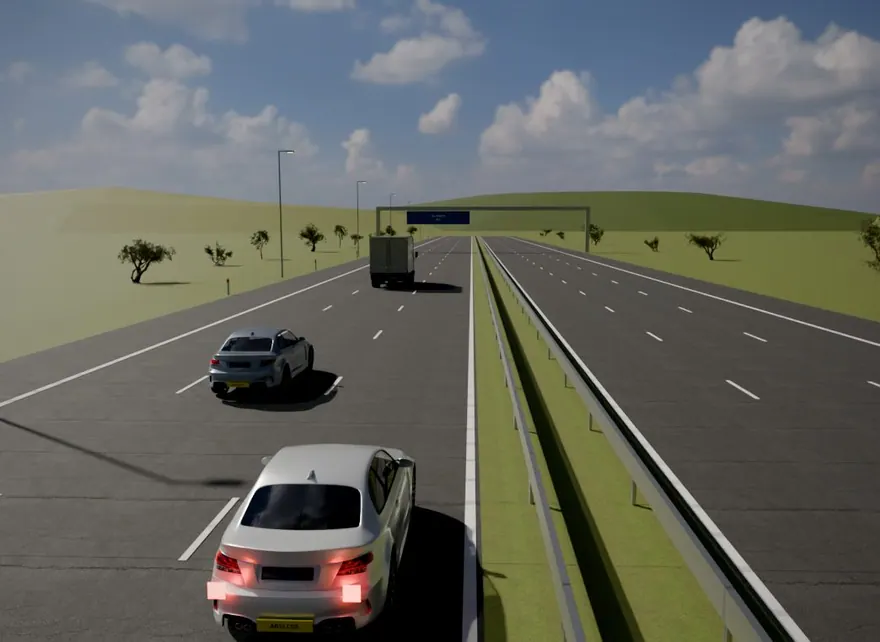
5Tu coche se avería en el carril de la derecha de una autopista muy transitada. No puedes llegar al carril izquierdo ni salir de forma segura. ¿Qué te indica el Highway Code que hagas?

Explicación

If you cannot reach the left lane or a place of relative safety and cannot exit safely, you stay in the vehicle, keep the belt and hazards on and call 999 asking for the police (rule 277). Calling the breakdown service first is wrong, and the triangle must never be placed on a carriageway.

Highway Code rule 277

Common questions

Can you take the UK theory test in Spanish?

In England, Scotland and Wales: no. Since 7 April 2014 the theory test is only given in English or Welsh, with British Sign Language for deaf candidates. Voiceovers in other languages and interpreters are no longer allowed. In Northern Ireland there is no voiceover in Spanish. Voiceovers there are offered in Arabic, Cantonese, English, Farsi, Polish, Portuguese and Turkish. For other languages you can ask for an interpreter-assisted test through an agency approved by the DVA; you arrange the date with the agency and pay its fees.

Can I bring a translator or interpreter to the theory test?

Not in England, Scotland or Wales: interpreters have not been allowed since 7 April 2014. In Northern Ireland you can ask for an interpreter-assisted test through an agency approved by the DVA; you arrange the date with the agency and pay its fees.

How many questions are in the UK theory test?

50 multiple-choice questions in 57 minutes, and you need 43 correct answers. After that comes the hazard perception part: 14 video clips, with a pass mark of 44 out of 75. You must pass both parts.

How much does the theory test cost?

The car theory test costs £23. Book it on GOV.UK, or on nidirect in Northern Ireland, and not on other websites that add fees.

Are these the real test questions?

No. The real test questions are confidential. Every question here is original, written from The Highway Code and Know Your Traffic Signs, and shows the rule it is based on.