UKTheory Hub
English

UK theory test in Portuguese (Português)

Can you take the UK driving theory test in Portuguese, and how do you prepare if English is not your first language? The short answer, then free practice in Portuguese.

Começar o simulado grátis

Can you take the UK theory test in Portuguese?

In England, Scotland and Wales: no. Since 7 April 2014 the theory test is only given in English or Welsh, with British Sign Language for deaf candidates. Voiceovers in other languages and interpreters are no longer allowed.

In Northern Ireland you can ask for a voiceover in Portuguese when you book, if English is not your first language or you cannot read written English well. Voiceovers there are offered in Arabic, Cantonese, English, Farsi, Polish, Portuguese and Turkish.

If you have dyslexia or another reading difficulty, you can ask for an English voiceover and extra time when you book.

So the best way to prepare is to understand every rule in your own language first, and then practise the same questions in English. That is how this site and the app work.

Sources: GOV.UK and nidirect, checked in November 2026.

Free theory test practice in Portuguese

Sample questions in Portuguese, with English one tap away

Each question is shown in Portuguese. Tap "Mostrar em English" under a question to see the same question in English, the way it is worded in the real test.

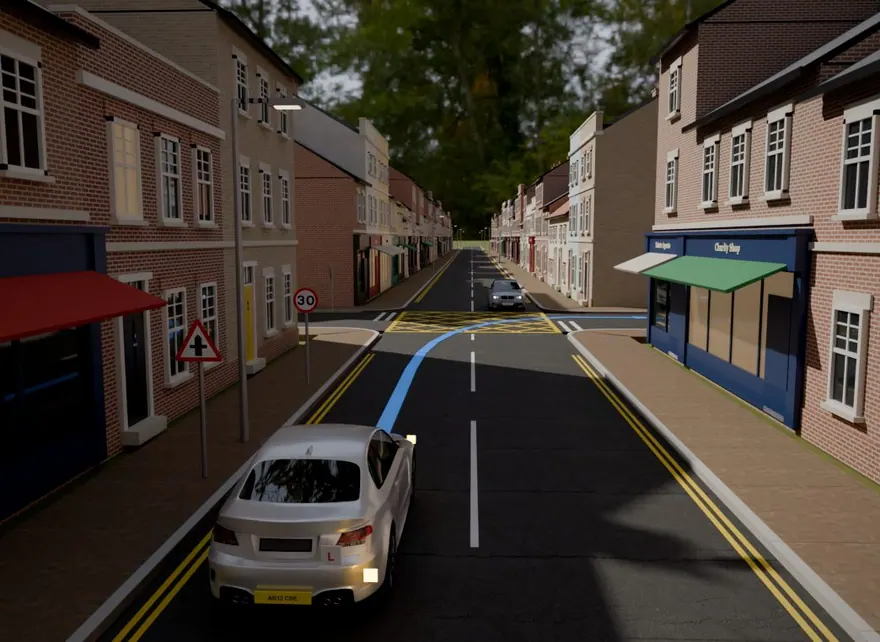
1Você quer virar à direita em uma área de cruzamento (box junction) com linhas amarelas cruzadas. Você pode entrar na área e esperar, mas só se for parado por qual destes?

Explicação

A regra 174 permite que você espere na área ao virar à direita somente se for parado pelo trânsito que vem em sentido contrário ou por outros veículos esperando para virar à direita. Uma fila na sua via de saída não está nessa lista: você NÃO DEVE entrar até que sua via ou faixa de saída esteja livre.

Highway Code rule 174

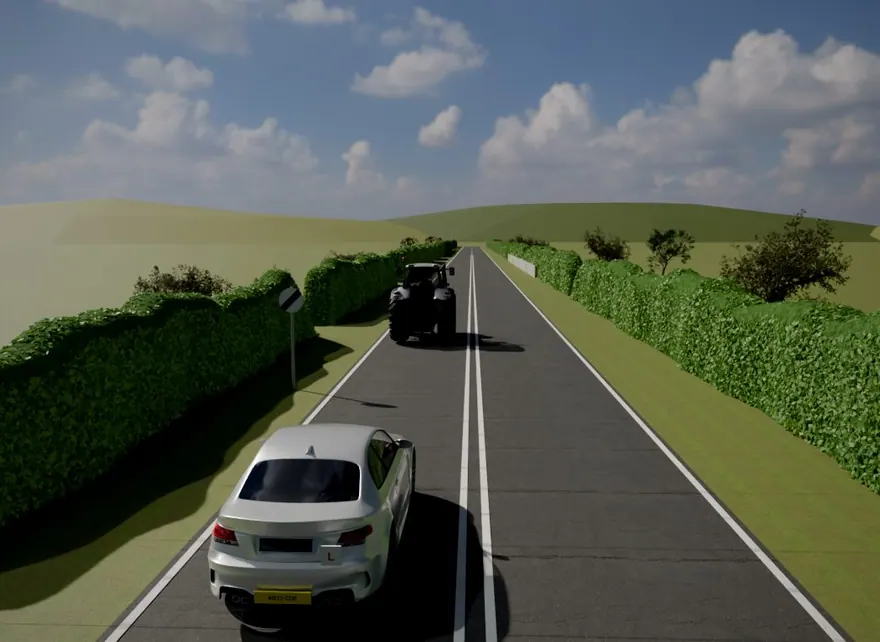
2A linha branca mais próxima de você, em um par de linhas brancas duplas, é contínua. Um trator agrícola à frente trafega a 8 mph e a via está livre. Qual afirmação está correta?

Explicação

A Regra 129 permite cruzar a linha contínua mais próxima apenas para ultrapassar um veículo parado ou para ultrapassar uma bicicleta, um cavalo ou um veículo de manutenção de estradas que trafegue a 10 mph ou menos. Um trator agrícola não está nessa lista, portanto a baixa velocidade sozinha não basta.

Highway Code rule 129

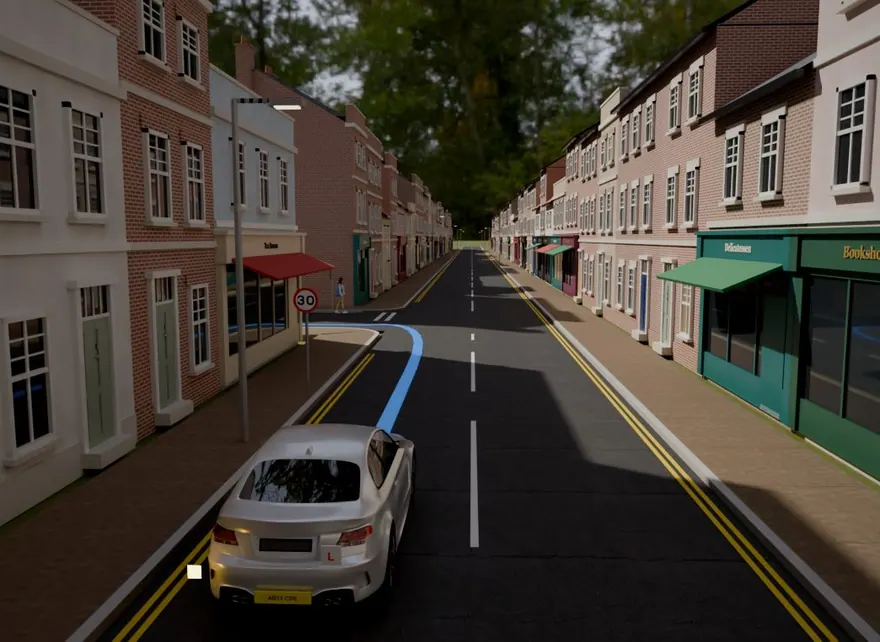
3Você está virando à esquerda para uma via lateral. Um pedestre está na guia dessa via lateral, claramente esperando para atravessar, mas ainda não desceu. O que as Regras H2 e 170 esperam de você?

Explicação

A H2 diz que, em um cruzamento, você deve dar a preferência a pedestres que atravessam ou esperam para atravessar a via em que você está entrando. A Regra 170 ressalta que quem já começou a atravessar tem prioridade, mas isso não dispensa você de dar a preferência a quem está esperando, que é o equívoco comum.

Highway Code rules H2 and 170

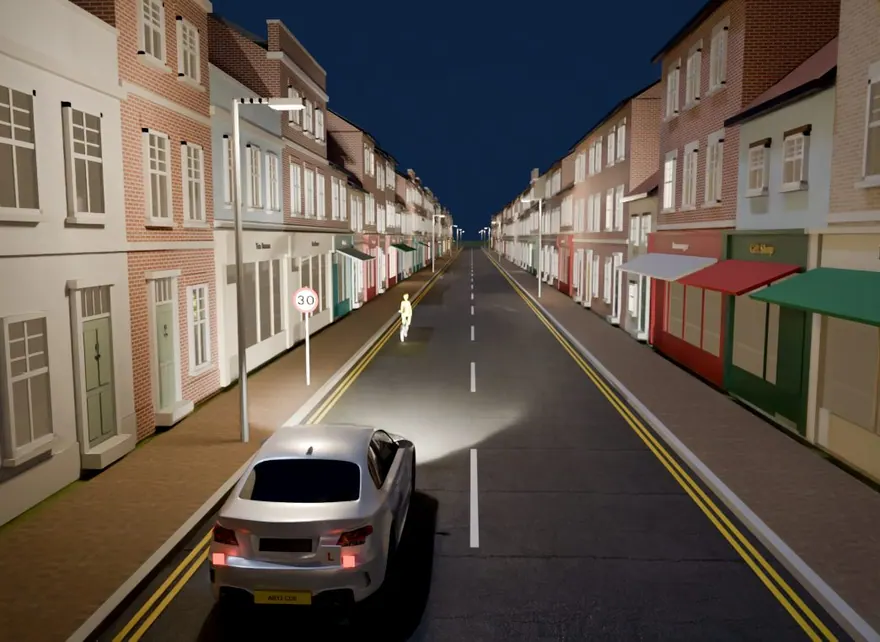
4À noite, em uma via de 30 mph, você alcança um ciclista que pedala perto do meio-fio. Durante o dia, você ultrapassaria com cerca de 1,5 metro. O que você deve fazer agora?

Explicação

A regra 163 dá 1,5 m como orientação até 30 mph e diz para dar mais espaço à noite e em mau tempo, ou aguardar atrás se não conseguir manter essa distância. 2 m é o valor para cavaleiros e pedestres na via, não uma regra para ciclistas à noite.

Highway Code rules 163 and 212

5Seu carro quebra na faixa da direita de uma rodovia (motorway) movimentada. Você não consegue chegar à faixa da esquerda nem sair com segurança. O que o Highway Code orienta você a fazer?

Explicação

Se você não conseguir chegar à faixa da esquerda ou a um lugar de relativa segurança e não conseguir sair com segurança, você permanece no veículo, mantém o cinto e o pisca-alerta ligados e liga para o 999 pedindo a polícia (regra 277). Ligar primeiro para o serviço de socorro está errado, e o triângulo nunca deve ser colocado na pista de rolamento (carriageway).

Highway Code rule 277

Common questions

Can you take the UK theory test in Portuguese?

In England, Scotland and Wales: no. Since 7 April 2014 the theory test is only given in English or Welsh, with British Sign Language for deaf candidates. Voiceovers in other languages and interpreters are no longer allowed. In Northern Ireland you can ask for a voiceover in Portuguese when you book, if English is not your first language or you cannot read written English well. Voiceovers there are offered in Arabic, Cantonese, English, Farsi, Polish, Portuguese and Turkish.

Can I bring a translator or interpreter to the theory test?

Not in England, Scotland or Wales: interpreters have not been allowed since 7 April 2014. In Northern Ireland you can ask for an interpreter-assisted test through an agency approved by the DVA; you arrange the date with the agency and pay its fees.

How many questions are in the UK theory test?

50 multiple-choice questions in 57 minutes, and you need 43 correct answers. After that comes the hazard perception part: 14 video clips, with a pass mark of 44 out of 75. You must pass both parts.

How much does the theory test cost?

The car theory test costs £23. Book it on GOV.UK, or on nidirect in Northern Ireland, and not on other websites that add fees.

Are these the real test questions?

No. The real test questions are confidential. Every question here is original, written from The Highway Code and Know Your Traffic Signs, and shows the rule it is based on.